Introduction
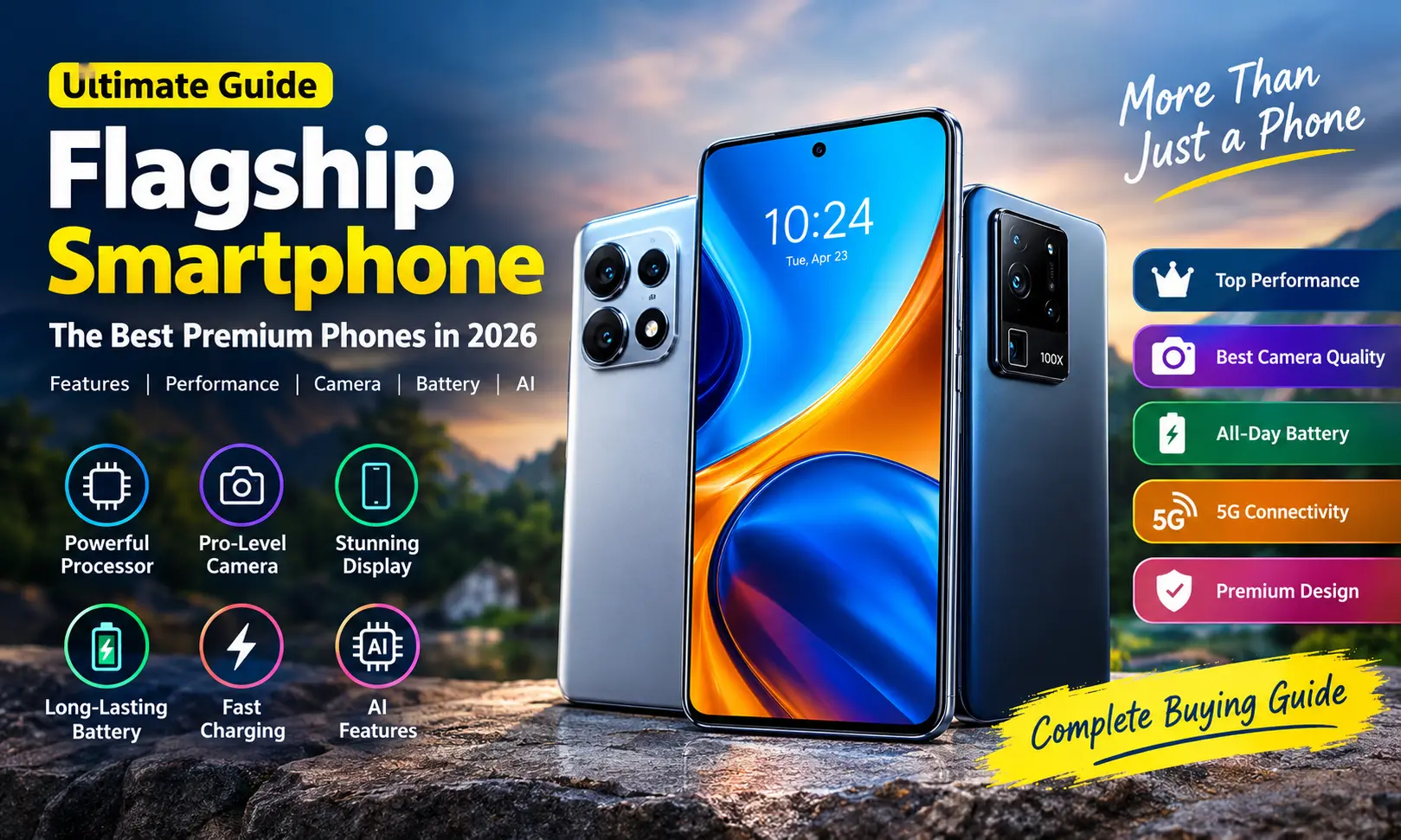
The smartphone market has changed dramatically over the past few years. Smartphones are no longer simple communication devices used mainly for calls, messages, and basic internet browsing. Today, a high-end smartphone can function as a powerful camera, gaming console, productivity machine, entertainment center, AI assistant, navigation device, and even a mobile workstation.
At the top of this market are flagship smartphones. A flagship smartphone represents the highest level of technology and engineering that a smartphone brand wants to offer. These devices generally combine powerful processors, advanced cameras, premium displays, high-quality materials, fast connectivity, sophisticated software, strong security, and long-term support.
However, choosing a flagship phone is not as simple as selecting the smartphone with the biggest processor number, the highest megapixel count, or the largest battery. A truly excellent flagship smartphone needs to deliver a balanced experience across performance, camera quality, display, battery life, software, durability, design, connectivity, and everyday usability.
Modern flagship phones are also becoming increasingly focused on artificial intelligence. AI features can assist with photography, writing, translation, productivity, search, editing, communication, and device personalization. As a result, the definition of a premium smartphone is expanding beyond traditional specifications.
This comprehensive guide explains what a flagship smartphone is, what makes a phone flagship-level, which features matter most, how flagship phones compare with mid-range devices, and how to choose the best flagship smartphone for your needs.
What Is a Flagship Smartphone?
A flagship smartphone is generally the highest-tier or most technologically advanced smartphone offered by a particular manufacturer or product family.
The word “flagship” originally comes from naval terminology, where a flagship was the vessel carrying the commander of a fleet. In the technology industry, the term evolved to describe a company’s leading product.
In smartphones, a flagship typically represents the manufacturer’s best combination of:
- Performance
- Camera technology
- Display quality
- Design
- Build quality
- Software
- Artificial intelligence
- Connectivity
- Battery technology
- Security
- Innovation
There is no single universal specification that officially makes a smartphone a flagship. Instead, flagship status is usually determined by the overall product experience and the position of the device within a manufacturer’s lineup.
For example, a manufacturer may have entry-level phones, budget phones, mid-range phones, premium phones, and a flagship series. The flagship normally sits at the top of that hierarchy.
Today’s flagship smartphone market includes traditional premium phones as well as foldable smartphones and specialized performance devices. Current buying guides show that flagship competition is increasingly divided among camera-focused, gaming-focused, compact, productivity-focused, and foldable devices.
Why Are Flagship Smartphones So Popular?
Flagship smartphones attract buyers because they provide an experience that goes beyond basic smartphone functionality.
A budget smartphone can perform everyday tasks extremely well. You can browse websites, use social media, watch videos, send messages, and make calls without spending a huge amount of money.
However, flagship smartphones target people who want more.
They may want:
- The fastest available processor
- Better photography
- Professional-quality video
- A brighter and smoother display
- Premium materials
- Better speakers
- Advanced AI features
- Faster storage
- Better gaming performance
- Wireless charging
- Advanced water resistance
- Longer software support
- More reliable performance over several years
The difference is especially noticeable for demanding users.
A photographer may value a flagship camera system. A gamer may prioritize sustained performance and cooling. A business user may care about multitasking and productivity. A content creator may need excellent video recording and editing capabilities.
Therefore, the best flagship smartphone is not necessarily the phone with the highest specifications. It is the phone that provides the best combination of features for a particular user’s needs.
Key Features of a Flagship Smartphone
1. Powerful Flagship Processor
The processor is one of the most important components inside a premium smartphone.
Flagship phones generally use high-end mobile chipsets designed to deliver excellent CPU performance, graphics performance, connectivity, power efficiency, and AI processing.
A powerful processor helps with:
- Multitasking
- Gaming
- Video editing
- Photography processing
- AI applications
- Augmented reality
- High-resolution video
- Fast application loading
- Advanced image processing
- Long-term performance
Modern smartphone processors are also increasingly designed around on-device AI. Instead of sending every task to a cloud server, some AI workloads can be processed directly on the smartphone.
This can improve responsiveness and may provide advantages for privacy, offline functionality, and latency.
However, processor performance should not be judged only by benchmark scores.
A phone may achieve an excellent peak benchmark result but still perform poorly under sustained workloads if its thermal management is inadequate.
For a flagship smartphone, sustained performance matters as much as peak performance.
 Gaming
AB Abhishek Gupta| Apr 01, 2026| 10 min read
Best AI Laptops in 2026: The Future of Smart Computing (Detailed Guide)
2. Advanced Display Technology
The display is the part of a smartphone that users interact with constantly.
Flagship phones typically feature high-quality OLED or AMOLED-class panels with excellent contrast, deep blacks, high brightness, wide viewing angles, and smooth refresh rates.
Important display specifications include:
Resolution
Higher resolution can provide sharper text and images, particularly on larger screens.
However, resolution is only one part of display quality.
Refresh Rate
A high refresh rate makes scrolling, animations, gaming, and general navigation feel smoother.
Many premium smartphones now use high-refresh-rate displays with adaptive refresh technology.
Brightness
High peak brightness is particularly useful outdoors.
A display that looks excellent indoors may become difficult to see under direct sunlight if it lacks sufficient brightness.
Color Accuracy
Flagship displays often provide excellent color reproduction, which matters to photographers, video creators, designers, and people who simply want a more realistic viewing experience.
Adaptive Refresh Technology
Some premium displays can dynamically change their refresh rate depending on what the user is doing.
For example, the display may reduce the refresh rate when showing static content and increase it during scrolling or gaming.
This can help balance smoothness and battery efficiency.
A premium smartphone therefore needs more than a high-resolution screen. The overall display experience—including brightness, responsiveness, color, contrast, durability, and power efficiency—is what matters.
3. Professional-Level Smartphone Cameras
Camera quality is one of the biggest reasons people buy flagship smartphones.
Smartphone photography has progressed to the point where premium phones can produce impressive images in a wide variety of conditions.
A flagship camera system may include:
- Main wide camera
- Ultra-wide camera
- Telephoto camera
- Periscope telephoto camera
- Advanced autofocus
- Optical image stabilization
- Computational photography
- Night photography
- Portrait photography
- High-resolution video
- HDR video
- Advanced stabilization
- AI-powered editing
One common mistake is to judge a smartphone camera solely by megapixel count.
A 200MP camera is not automatically better than a 50MP camera.
Image quality depends on many factors, including:
- Sensor size
- Lens quality
- Optical stabilization
- Autofocus
- Image processing
- Dynamic range
- Low-light performance
- Color science
- Computational photography
- Video processing
Premium smartphones increasingly combine hardware and software to improve photography. AI can assist with subject recognition, noise reduction, image enhancement, object removal, portrait effects, and other editing tasks.
For buyers, the best approach is to evaluate real-world camera performance rather than relying exclusively on specifications.
4. Telephoto and Optical Zoom
Telephoto cameras are an important feature on many high-end smartphones.
Digital zoom enlarges an image using software, while optical zoom uses the camera’s lens system to capture distant subjects with less reliance on digital enlargement.
A dedicated telephoto camera can be particularly useful for:
- Portrait photography
- Travel photography
- Wildlife
- Sports
- Concerts
- Architecture
- Street photography
Some flagship smartphones use periscope-style telephoto systems to provide longer-range optical or near-optical zoom capabilities without requiring an extremely thick phone.
For people who frequently photograph distant subjects, a strong telephoto system can be more valuable than a larger megapixel number on the main camera.
5. Flagship Smartphone Video Recording
Photography is only half of the modern smartphone camera experience.
Video has become equally important.
A flagship phone may offer:
- High-resolution video
- High-frame-rate recording
- HDR video
- Advanced stabilization
- Cinematic modes
- Pro video controls
- Slow motion
- Improved microphones
- Better low-light video
- High-quality front-camera video
Content creators increasingly use smartphones to record YouTube videos, short-form content, travel videos, interviews, product demonstrations, and social media content.
A flagship smartphone can therefore act as a compact content-creation device.
When evaluating video performance, look beyond maximum resolution. Stabilization, autofocus, dynamic range, audio quality, exposure consistency, and color reproduction can have a greater impact on the final result.
 Comparison
AD admin| Mar 26, 2026| 16 min read
Gaming Laptop vs Desktop: Which One Should You Choose in 2026?
6. Premium Build Quality and Design
A flagship smartphone should feel premium in the hand.
Manufacturers often use high-quality materials such as:
- Aluminum
- Titanium
- High-strength glass
- Ceramic
- Advanced composite materials
The exact materials vary by manufacturer and model.
Build quality is not only about appearance. A good design should also provide:
- Comfortable ergonomics
- Strong structural integrity
- Good button placement
- Reliable haptics
- Resistance to everyday wear
- Protection against dust and water
Premium design is increasingly becoming more practical rather than simply decorative.
7. Water and Dust Resistance
Durability is especially important when buying an expensive smartphone.
A flagship device may include an official IP rating indicating a certain level of resistance to dust and water under specified testing conditions.
However, buyers should not interpret an IP rating as meaning a phone is completely waterproof.
Water resistance can also decline after physical damage or repairs.
For expensive smartphones, a protective case and screen protection can still be worthwhile even when the device has strong durability certifications.
8. Long Battery Life
A powerful smartphone is not very useful if its battery cannot last through the day.
Battery performance depends on more than battery capacity.
Important factors include:
- Battery size
- Processor efficiency
- Display technology
- Software optimization
- Network conditions
- App usage
- Gaming
- Camera usage
- Screen brightness
A phone with a smaller battery can sometimes last longer than a phone with a larger battery if its hardware and software are more efficient.
This is why real-world battery testing is more useful than simply comparing milliamp-hour numbers.
For users who spend long hours away from chargers, battery life should be one of the highest priorities when selecting a flagship smartphone.
9. Fast Charging Technology
Fast charging can dramatically improve the smartphone experience.
Instead of waiting for a phone to charge for several hours, modern premium smartphones can replenish significant amounts of battery in a relatively short period.
Charging technologies vary significantly between manufacturers.
Some focus on extremely fast wired charging, while others prioritize a balance between charging speed, heat management, and battery longevity.
Wireless charging is another premium feature.
It is particularly convenient for:
- Desk charging
- Bedside charging
- Car charging
- Charging accessories
- Cable-free setups
The ideal charging system depends on your lifestyle.
Someone who frequently forgets to charge their phone may benefit more from extremely fast wired charging, while someone who keeps a charger on a desk may prefer convenient wireless charging.
 Gaming
AD admin| Mar 26, 2026| 15 min read
High Performance Gaming Laptops (2026 Guide): Ultimate Buying Guide for Gamers
10. Advanced Artificial Intelligence Features
Artificial intelligence has become a major part of the flagship smartphone experience.
Modern AI-powered smartphones can assist with:
- Writing
- Summarization
- Translation
- Image editing
- Photo enhancement
- Voice transcription
- Search
- Note organization
- Productivity
- Communication
- Personalization
AI is also being integrated into camera systems.
For example, computational photography can use machine learning to recognize scenes, subjects, lighting conditions, and faces.
The most useful AI features are not necessarily the ones that generate the most impressive demonstrations.
A good AI feature should solve a real problem.
For example, automatic transcription can save time during meetings. Translation can help travelers. AI image editing can improve photographs without requiring professional software.
The premium smartphone market is increasingly moving toward AI that is integrated into everyday workflows rather than existing merely as a marketing feature.
11. Storage and RAM
Storage is another important consideration when buying a flagship smartphone.
Premium phones often offer more storage than budget devices, with higher-capacity configurations available for users who store large amounts of:
- Photos
- 4K or high-resolution videos
- Games
- Documents
- Music
- Offline movies
- Applications
Fast storage also contributes to a responsive experience.
RAM is important for multitasking, although more RAM does not automatically mean better performance.
A well-optimized operating system can provide excellent multitasking with less RAM than a poorly optimized system.
Therefore, buyers should consider RAM together with processor performance, storage speed, operating system optimization, and long-term software support.
12. Gaming Performance
Flagship smartphones can provide an excellent gaming experience.
High-end hardware can support demanding mobile games with:
- High graphics settings
- High frame rates
- Fast loading
- Advanced visual effects
- Low latency
- Better thermal management
However, sustained gaming performance is more important than a short benchmark result.
Gaming generates significant heat. If a smartphone becomes too hot, it may reduce performance to protect the hardware.
Therefore, gaming-focused buyers should look for:
- Efficient processors
- Large cooling systems
- Vapor chambers
- High-refresh-rate displays
- Touch responsiveness
- Stable frame rates
- Strong battery performance
Current premium gaming phones demonstrate how flagship smartphone hardware is increasingly being designed around sustained performance and advanced thermal management.
13. 5G and Modern Connectivity
Connectivity is another major advantage of premium smartphones.
Depending on the model and region, flagship devices can support advanced versions of:
- 5G
- Wi-Fi
- Bluetooth
- NFC
- GPS
- USB connectivity
- Satellite communication features
A high-quality modem is especially important for people who travel frequently or live in areas with demanding network conditions.
Connectivity specifications can vary by country, so buyers should always check the exact regional model before purchasing.
 Gaming
AD admin| Mar 25, 2026| 16 min read
Top 10 Gaming Laptops Under ₹50,000 (2026 Updated)
14. Software Experience
Hardware alone does not make a flagship smartphone.
Software plays an equally important role.
A premium phone should provide:
- Smooth animations
- Reliable updates
- Strong security
- Good multitasking
- Useful customization
- Stable applications
- Good accessibility
- Efficient battery management
Long-term software support is particularly important.
If you plan to keep a smartphone for several years, the manufacturer’s update policy should be part of the buying decision.
A smartphone that receives regular operating-system and security updates can remain useful for much longer than a device that quickly becomes outdated.
15. Security and Privacy
Flagship smartphones often include advanced security features such as:
- Biometric authentication
- Secure hardware
- Encryption
- App permissions
- Secure payment technologies
- Privacy controls
- Device tracking
Privacy has become increasingly important because smartphones contain highly personal information.
Your smartphone may store:
- Photos
- Messages
- Passwords
- Financial information
- Personal documents
- Location history
- Contacts
- Work information
A good flagship smartphone should therefore provide strong security not only at launch but throughout its supported lifespan.
Flagship Smartphone vs Mid-Range Smartphone
One of the most important questions is whether you actually need a flagship phone.
Mid-range smartphones have improved dramatically.
Many mid-range devices now offer:
- High-refresh-rate displays
- Good cameras
- Fast processors
- Large batteries
- 5G
- Fast charging
- Attractive designs
For ordinary users, a good mid-range phone may provide everything they need.
The biggest advantages of a flagship often become noticeable when you demand more from the device.
Flagship smartphones generally provide advantages in:
- Peak performance
- Camera consistency
- Zoom quality
- Video recording
- Display quality
- Build materials
- Haptics
- Speakers
- Wireless charging
- AI capabilities
- Gaming performance
- Software support
- Connectivity
However, the price difference can be substantial.
Therefore, buyers should ask:
Do I need flagship performance, or do I simply want a premium experience?
Both are valid reasons to buy a flagship, but understanding the difference can help you spend your money wisely.
Are Flagship Smartphones Worth the Money?
Whether a flagship smartphone is worth the money depends on the user.
A flagship can be worth buying if you:
- Keep phones for several years
- Take lots of photos and videos
- Play demanding games
- Need high performance
- Use your phone for work
- Want premium materials
- Need excellent display quality
- Want advanced AI features
- Want the best available camera experience
- Prefer long-term software support
A flagship may be unnecessary if you mainly use your phone for:
- Calls
- Social media
- Web browsing
- YouTube
- Basic photography
- Light gaming
For these users, a strong mid-range smartphone may provide better value.
The key is to buy according to your actual usage rather than buying specifications simply because they look impressive.
How to Choose the Best Flagship Smartphone
Choosing a flagship phone becomes easier when you follow a structured process.
Step 1: Decide Your Budget
Start with your maximum comfortable budget.
Do not assume that the most expensive phone is automatically the best phone for you.
Premium smartphones can range significantly in price depending on:
- Storage
- Brand
- Camera technology
- Foldable design
- Materials
- Processor
- Region
Step 2: Identify Your Most Important Feature
Ask yourself what matters most.
Is it:
Camera?
Look for strong sensors, stabilization, telephoto capability, image processing, and video quality.
Gaming?
Prioritize processor performance, cooling, display refresh rate, touch response, and battery life.
Battery?
Focus on endurance, charging speed, efficiency, and battery management.
Productivity?
Look at screen size, multitasking, software features, AI tools, accessories, and ecosystem integration.
Compact design?
Look for a smaller flagship with powerful hardware rather than buying the largest model.
Step 3: Compare Real-World Performance
Do not rely only on specifications.
Read independent reviews and look for testing related to:
- Battery endurance
- Camera quality
- Thermal performance
- Gaming
- Display brightness
- Charging speed
- Speaker quality
- Software
- Network performance
A phone can look exceptional on paper but deliver an average real-world experience.
Current flagship comparisons increasingly evaluate multiple areas rather than simply ranking devices by benchmark speed.
Step 4: Check Software Support
Before buying, find out how long the phone is expected to receive software and security updates.
This is especially important if you plan to keep your device for four or five years.
Long-term support can make a more expensive phone a better investment.
Step 5: Choose the Right Storage
Think about how much storage you currently use.
If you regularly record high-resolution videos or install large games, higher storage may be worthwhile.
If you mainly stream content and use cloud storage, you may not need the highest storage option.
Step 6: Consider the Ecosystem
Your existing devices can influence which smartphone is best.
Consider whether you already use:
- Wireless earbuds
- Smartwatches
- Tablets
- Laptops
- Cloud services
- Smart-home products
Staying within an ecosystem can provide easier device synchronization and a smoother overall experience.
Flagship Smartphone Buying Mistakes to Avoid
Mistake 1: Buying Based Only on Megapixels
More megapixels do not automatically mean better photography.
Sensor quality, lenses, stabilization, image processing, and software are equally important.
Mistake 2: Choosing the Fastest Processor Without Considering Battery Life
A powerful chip is useful, but efficiency matters too.
Mistake 3: Ignoring Software Updates
A smartphone is a long-term investment. Update support should be considered before purchase.
Mistake 4: Buying More Storage Than You Need
Higher storage is useful, but unnecessary capacity can significantly increase the price.
Mistake 5: Ignoring Size and Weight
A large smartphone may offer an excellent display and battery but can be uncomfortable for one-handed use.
Mistake 6: Trusting Marketing Numbers Blindly
Marketing specifications are useful starting points, but independent testing and real-world reviews provide better insight.
Flagship Smartphone Trends
The flagship smartphone category continues to evolve.
Several trends are shaping premium smartphones.
AI-Powered Smartphones
AI is becoming deeply integrated into mobile operating systems and applications.
Future flagship phones are likely to use AI for increasingly personalized and contextual experiences.
Better Camera Systems
Camera improvements are moving beyond megapixel increases toward:
- Larger sensors
- Better telephoto cameras
- Improved computational photography
- Better low-light performance
- Advanced video
- AI-powered editing
More Efficient Processors
Chip manufacturers continue to focus on performance per watt rather than raw speed alone.
This can help flagship smartphones become faster while maintaining better battery efficiency.
Foldable Flagships
Foldable phones are becoming an important part of the premium market.
They can offer:
- Large tablet-like displays
- Multitasking
- Compact folded dimensions
- New productivity experiences
However, foldables can still involve compromises related to price, durability, weight, thickness, and camera systems.
Larger Batteries
Battery capacity is becoming increasingly important as phones add more demanding AI, gaming, and camera capabilities.
The premium market is therefore focusing on improving both battery capacity and energy efficiency.
The Future of Flagship Smartphones
The next generation of flagship smartphones is likely to focus less on individual specifications and more on intelligent integration.
The smartphone of the future may understand the user’s habits, preferences, schedule, environment, and workflow more effectively.
AI could help users:
- Organize information
- Manage tasks
- Edit photos
- Summarize conversations
- Translate languages
- Search personal information
- Automate repetitive tasks
- Control connected devices
At the same time, hardware will continue to improve.
We can expect ongoing development in:
- Processor efficiency
- Camera sensors
- Displays
- Battery technology
- Charging
- Connectivity
- Foldable designs
- Security
- On-device AI
The most successful flagship smartphones will likely be the ones that combine these technologies without making the experience unnecessarily complicated.
Frequently Asked Questions About Flagship Smartphones
A flagship smartphone is generally a manufacturer’s highest-tier smartphone or one of its leading premium devices. It typically offers advanced performance, cameras, display technology, design, software, connectivity, and other premium features.
In many technical areas, flagship phones provide better performance, cameras, displays, materials, and additional features. However, a mid-range phone can offer better value for users who do not need premium capabilities.
Flagship phones can be expensive because they use advanced processors, camera systems, displays, materials, connectivity components, research and development, and software features.
Generally, flagship smartphones offer more advanced camera systems, especially in areas such as image processing, telephoto photography, video, stabilization, and low-light photography. However, camera quality varies between models.
No. RAM is important for multitasking, but overall smartphone performance depends on RAM, processor performance, storage speed, software optimization, and other components.
The ideal amount depends on usage. Casual users may be comfortable with a lower storage configuration, while gamers, photographers, and video creators may benefit from significantly more storage.
Yes. Flagship phones generally offer powerful processors, advanced graphics capabilities, fast displays, and better thermal systems. Gaming-focused smartphones may provide additional cooling and performance features.
Not necessarily. A flagship phone may have advanced hardware but also a demanding display and processor. Battery life depends on the complete hardware and software configuration rather than battery capacity alone.
Fast charging can be extremely useful for people who frequently need to recharge their phone quickly. However, charging speed should be considered alongside battery capacity, efficiency, heat management, and battery longevity.
If you want excellent cameras, high performance, premium construction, advanced software, strong displays, and long-term usability, a flagship smartphone can be a good investment. If you mainly perform basic tasks, a quality mid-range phone may provide better value.
Final Verdict: Is a Flagship Smartphone Right for You?
A flagship smartphone represents much more than a high price tag or impressive specifications.
The best flagship smartphone combines performance, camera quality, display technology, battery life, charging, software, security, connectivity, design, and long-term reliability into one complete package.
The most important lesson for buyers is simple: do not buy specifications; buy the experience.
A smartphone with an extremely powerful processor may not be the best choice if you care more about photography. A phone with the highest-resolution camera may not be ideal if you prioritize gaming. A device with a massive display may not be suitable if you prefer compact phones.
The right flagship depends on how you use your smartphone.
Before making a purchase, consider your budget, preferred operating system, camera requirements, gaming needs, battery expectations, storage requirements, display preferences, software support, ecosystem, and long-term ownership plans.
Premium smartphones continue to push the boundaries of mobile technology. In 2026, flagship devices are increasingly defined not only by speed and specifications but also by AI, computational photography, battery efficiency, software intelligence, privacy, durability, and the overall user experience.
Whether you are a photographer, gamer, content creator, professional, traveler, student, or everyday smartphone user, understanding what makes a flagship phone different can help you make a smarter purchasing decision.
Ultimately, the best flagship smartphone is not necessarily the most expensive smartphone available. It is the device that delivers the features you actually need, the performance you can use, and the long-term experience you expect from a premium phone.
Leave a Reply