Table of Contents
- Introduction
- The Early History of Nokia
- Nokia’s Entry Into Mobile Phones
- The Golden Era of Nokia
- Why Nokia Became So Popular
- Nokia’s Innovation and Technology Leadership
- The Beginning of Trouble
- The iPhone Revolution
- The Rise of Android
- Problems With Symbian OS
- Nokia’s Partnership With Microsoft
- Microsoft Acquires Nokia
- Major Reasons Behind Nokia’s Fall
- Nokia’s Legacy in the Mobile Industry
- Nokia’s Comeback Attempts
- Lessons Businesses Can Learn From Nokia
- The Emotional Connection People Still Have With Nokia
- Nokia and the Evolution of Mobile Technology
- Could Nokia Have Survived?
- Nokia’s Influence on Modern Smartphones
- Conclusion
Introduction
For more than a decade, Nokia was one of the most powerful and recognizable technology brands in the world. The company dominated the mobile phone market and became a symbol of reliability, innovation, and durability. Millions of people trusted Nokia devices because they were simple to use, affordable, and almost impossible to break. Before the smartphone revolution changed the technology industry, Nokia phones were everywhere. From school students and business professionals to rural users and international travelers, nearly everyone owned or used a Nokia device at some point.
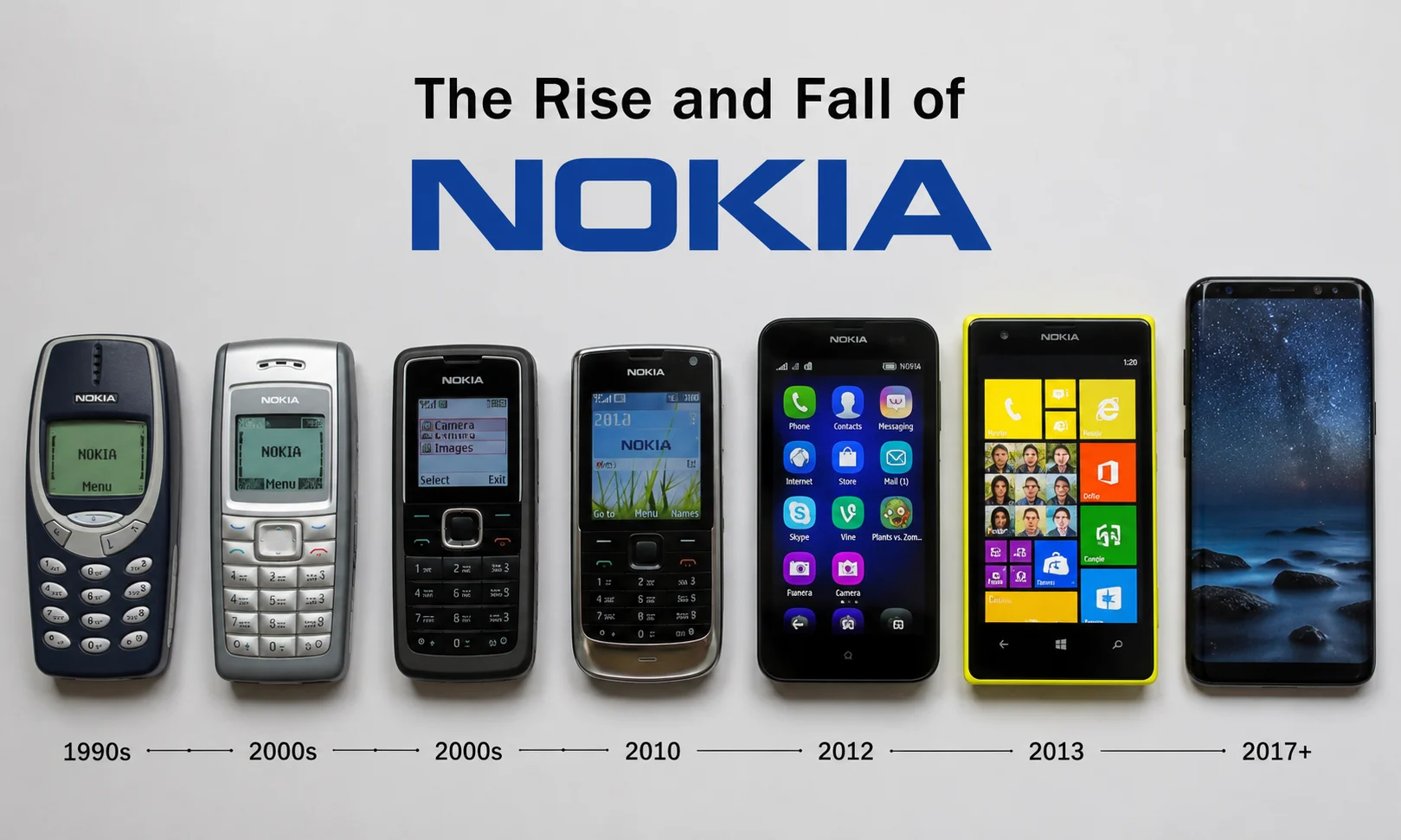
The story of Nokia is one of the most fascinating journeys in the history of technology. The company started as a small industrial business in Finland and later transformed into the global leader of mobile communication. Nokia introduced revolutionary mobile phones, built one of the strongest brand identities in the world, and played a major role in connecting people across countries and cultures. During its golden era, Nokia controlled more than half of the global mobile phone market.
However, the same company that once ruled the mobile industry eventually lost its position. The rise of smartphones, changing customer demands, competition from Apple and Android manufacturers, slow software innovation, and poor strategic decisions caused Nokia’s dramatic decline. Within a few years, the company that once seemed unstoppable was struggling to survive.
The rise and fall of Nokia is not just a story about mobile phones. It is also a lesson about innovation, leadership, technology trends, customer expectations, and business strategy. Many companies today study Nokia’s journey to understand how even the most successful businesses can fail if they do not adapt to changing markets.
This article explores Nokia’s complete journey, from its early beginnings and rise to global dominance to its eventual downfall and modern comeback attempts. It also examines the reasons behind Nokia’s success, the mistakes that led to its decline, and the lessons businesses can learn from one of the biggest transformations in technology history.
The Early History of Nokia
Nokia’s origins go back much further than mobile phones. The company was founded in 1865 in Finland by engineer Fredrik Idestam. Initially, Nokia operated as a paper mill company near the Nokianvirta River, from which the company later got its name. During the late nineteenth and early twentieth centuries, Nokia expanded into different industries, including rubber products, cables, electricity, and telecommunications.
Over time, Nokia evolved into a diversified industrial company. It manufactured products such as tires, televisions, military communication equipment, and electrical cables. The company’s ability to adapt to different industries helped it grow steadily over many decades.
In the 1960s and 1970s, telecommunications became an important focus for Nokia. The company started developing communication technologies and electronic systems. During this period, the global demand for telecommunications equipment was growing rapidly, and Nokia recognized the opportunity to invest in future communication technologies.
By the 1980s, Nokia had entered the mobile communication industry. At that time, mobile phones were large, expensive, and mainly used by business professionals. Nokia believed that mobile communication would eventually become accessible to ordinary people. This vision later became one of the key reasons behind the company’s success.
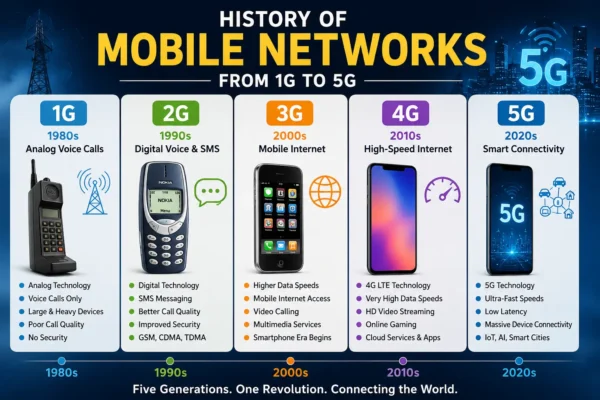
Nokia’s early investments in wireless communication technology helped the company build strong technical expertise. It became involved in developing GSM technology, which later became the global standard for mobile networks. This decision positioned Nokia perfectly for the mobile revolution of the 1990s.
History of Mobile Networks: From 1G to 5G
Nokia’s Entry Into Mobile Phones
Nokia officially entered the mobile phone business during the 1980s. One of its earliest mobile devices was the Mobira Senator, launched in 1982. This phone was extremely large and heavy, mainly designed for use inside vehicles. Although primitive by modern standards, it represented an important step toward mobile communication.
As technology improved, Nokia started producing smaller and more user-friendly mobile devices. In 1987, the company launched the Mobira Cityman, one of the first portable mobile phones. The phone became famous after Soviet leader Mikhail Gorbachev was photographed using it, which gave Nokia international publicity.
The company’s major breakthrough came in the early 1990s. Nokia decided to focus entirely on telecommunications and mobile phones. Instead of remaining a diversified industrial company, Nokia sold many of its non-telecommunication businesses. This bold strategic move allowed Nokia to concentrate its resources on mobile technology.
In 1992, Nokia launched the Nokia 1011, one of the first mass-produced GSM phones. GSM technology allowed better call quality, roaming capabilities, and improved network efficiency. Nokia quickly became a leader in this new generation of mobile communication.
The company’s slogan, “Connecting People,” became globally famous. Nokia phones were marketed as tools that could bring families, friends, and businesses closer together. The brand image focused on simplicity, reliability, and human connection.
Nokia’s mobile phones were also known for their strong battery life, durable design, and easy user interface. At a time when many electronic devices were complicated, Nokia offered products that were simple enough for anyone to use.
The Golden Era of Nokia
The late 1990s and early 2000s marked Nokia’s golden era. During this period, Nokia became the largest mobile phone manufacturer in the world. The company dominated global markets and achieved massive profits.
Nokia’s success was driven by several important factors. First, the company understood customer needs extremely well. It produced phones for every type of user, from budget-friendly models to premium business devices. Whether someone needed a basic phone for calls and messages or an advanced device with additional features, Nokia had a product for them.
Second, Nokia invested heavily in innovation and research. The company developed advanced mobile technologies, improved network systems, and introduced new design concepts. Nokia engineers continuously worked on making phones smaller, lighter, faster, and more efficient.
Third, Nokia built a strong global distribution network. Its phones were available in both developed and developing countries. In many regions, Nokia became the first mobile phone brand people ever used.
The Nokia 3310 became one of the most iconic phones in history. Released in 2000, the phone was famous for its durability, long battery life, and simple design. It included features such as SMS messaging, customizable ringtones, and the highly popular Snake game. Even today, the Nokia 3310 is remembered as one of the greatest mobile phones ever made.
Another successful series was the Nokia Communicator lineup, which targeted business users. These devices combined phone functionality with email, internet access, and productivity tools. They were early examples of smartphones before the modern smartphone era began.
Nokia also launched stylish devices such as the Nokia 1100, Nokia 6600, Nokia N95, and Nokia 7610. These phones became incredibly popular worldwide.
At its peak, Nokia controlled more than 50 percent of the global mobile phone market. The company’s market value was enormous, and its influence extended across continents. Nokia was not only a technology company but also a symbol of modern communication.
The Complete History of the iPhone
Why Nokia Became So Popular
Several key reasons explain why Nokia became one of the most loved mobile phone brands in history.
Durability and Build Quality
Nokia phones were famous for their durability. Many users joked that Nokia phones were stronger than bricks because they could survive falls, water exposure, and rough handling. This durability built strong customer trust.
In many developing countries, people preferred Nokia phones because they lasted for years without major problems. Customers felt confident investing their money in Nokia products.
Long Battery Life
Battery performance was another major advantage. Nokia phones could often run for several days on a single charge. This was extremely important in areas with limited electricity access.
Even advanced Nokia models consumed less power compared to competitors. Users appreciated the reliability of being able to use their phones without constantly worrying about charging.
User-Friendly Interface
Nokia’s software interface was simple and easy to navigate. The menu system was organized clearly, making it accessible for users of all ages.
People who had never used technology before could quickly learn how to operate a Nokia phone. This simplicity helped Nokia expand into global markets.
Affordable Options
Nokia offered phones at different price ranges. Students, workers, professionals, and business executives could all find suitable Nokia devices.
The company successfully balanced affordability with quality, making its products attractive to millions of consumers.
Strong Brand Identity
Nokia created one of the strongest brand identities in technology history. The “Connecting People” slogan emotionally connected with users. Nokia advertisements focused on communication, relationships, and human experiences.
The company became associated with trust, reliability, and innovation.
Wide Product Range
Nokia continuously released new models with different designs, colors, and features. Customers enjoyed having many choices.
Some Nokia phones focused on music, others on photography, gaming, or business productivity. This diversity helped Nokia dominate different market segments.
Nokia’s Innovation and Technology Leadership
For many years, Nokia was considered the global leader in mobile phone technology. The company became famous for creating durable, user-friendly, and innovative mobile devices that shaped the future of communication. During the late 1990s and early 2000s, Nokia controlled a huge portion of the global mobile phone market and was often seen as the symbol of mobile innovation.
One of Nokia’s biggest strengths was its ability to create phones for every type of customer. The company produced affordable phones for developing markets and premium devices for business professionals. Phones like the Nokia 3310 became legendary because of their long battery life, durability, and simplicity. Nokia’s devices were trusted by millions of users worldwide.
Nokia also played an important role in the development of mobile network technologies. The company contributed heavily to GSM technology, which became the global standard for mobile communication. Because of this, Nokia gained a strong position not only as a phone manufacturer but also as a telecommunications infrastructure company.
Another major area of innovation was mobile hardware design. Nokia introduced several unique phone designs, including slider phones, flip phones, and gaming-focused devices. The Nokia N-Gage attempted to combine gaming and communication in a single device long before mobile gaming became mainstream.
The company also focused heavily on camera technology and multimedia features. Nokia’s N-series smartphones, especially the Nokia N95, were far ahead of their time. These devices included advanced cameras, GPS navigation, music playback, internet browsing, and video recording when many competitors were still producing simple feature phones.
Nokia invested heavily in research and development. Thousands of engineers worked on improving mobile connectivity, battery technology, and software systems. The company held a large number of technology patents, making it one of the most innovative firms in the mobile industry.
At its peak, Nokia represented reliability, quality, and technological leadership. However, despite its success, the company struggled to adapt to the rapidly changing smartphone industry. The innovations that once made Nokia dominant were no longer enough to compete in a new era of touchscreen smartphones and app-based ecosystems.
The Future of Smartphones in 2030: How Mobile Technology Will Transform Human Life
The Beginning of Trouble
Although Nokia was once the world’s largest mobile phone company, signs of trouble began to appear during the mid-2000s. The mobile industry was changing rapidly, and Nokia struggled to respond quickly enough to new trends and consumer expectations.
One major issue was the company’s overconfidence. Because Nokia dominated the market for so many years, company leaders believed their position was secure. They underestimated how quickly smartphones would replace traditional feature phones. While competitors focused on software innovation and touchscreen technology, Nokia continued relying heavily on its older business strategies.
Another problem was the company’s complicated organizational structure. Decision-making inside Nokia became slow and inefficient. Teams often disagreed on software direction, hardware design, and future strategies. This created delays in launching competitive products while rivals moved forward much faster.
Nokia also faced increasing competition from companies such as Samsung Electronics, BlackBerry Limited, and later Apple. Consumers began demanding phones with better internet browsing, touchscreens, app stores, and advanced multimedia experiences.
The company continued producing many different phone models, but this strategy became a weakness. Instead of focusing on a smaller number of powerful smartphones, Nokia released too many similar devices, which confused customers and developers. Software updates and support also became inconsistent across devices.
Another challenge was the growing importance of software ecosystems. Mobile users increasingly wanted apps, cloud services, and smooth user experiences. Nokia’s focus remained heavily on hardware, while competitors built complete digital ecosystems around their devices.
The market was changing from “mobile phones” to “smartphones,” and Nokia did not react quickly enough. The company still sold millions of devices, but its leadership position was becoming weaker every year.
These early warning signs marked the beginning of Nokia’s decline. The company still had strong brand recognition and technological talent, but the smartphone revolution was about to create even bigger challenges.
The iPhone Revolution
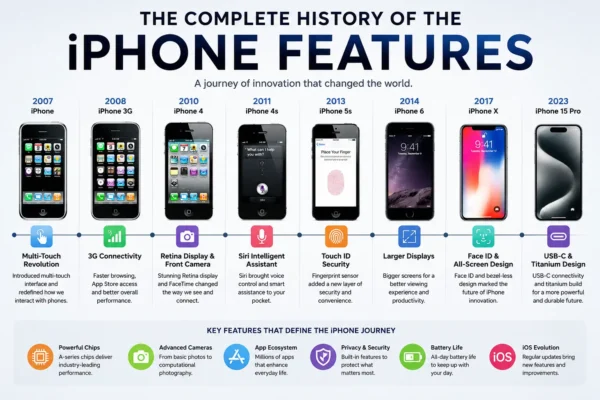
In 2007, Apple introduced the iPhone, completely changing the mobile phone industry. The launch of the iPhone became one of the most important moments in technology history and created serious problems for companies like Nokia.
Before the iPhone, most phones had physical keyboards, small screens, and limited internet capabilities. The iPhone introduced a modern touchscreen interface, smooth animations, and a full web browsing experience. It transformed smartphones into powerful pocket computers rather than simple communication devices.
Consumers quickly became interested in touchscreen technology. The iPhone’s design looked modern and premium compared to many traditional Nokia devices. Features like pinch-to-zoom, visual voicemail, and easy internet browsing created a new standard for smartphones.
Another revolutionary change was the launch of the App Store in 2008. The App Store allowed developers to create applications for the iPhone, leading to a massive ecosystem of games, productivity tools, and social media apps. Smartphones were no longer only for calling and texting—they became platforms for entertainment, business, and daily life.
Nokia initially underestimated the impact of the iPhone. Company executives believed touchscreen phones would remain a niche market and that consumers still preferred physical keyboards and traditional designs. This mistake allowed Apple to gain momentum rapidly.
The iPhone also changed consumer expectations regarding software quality. Users wanted smooth interfaces, regular updates, and easy app installation. Nokia’s software systems appeared outdated compared to Apple’s modern iOS platform.
The success of the iPhone inspired the entire industry to shift toward touchscreen smartphones. Companies around the world rushed to create similar devices, accelerating the decline of traditional mobile phones.
For Nokia, the iPhone revolution was a turning point. The company that once led the mobile industry suddenly found itself struggling to compete in a completely new smartphone era.
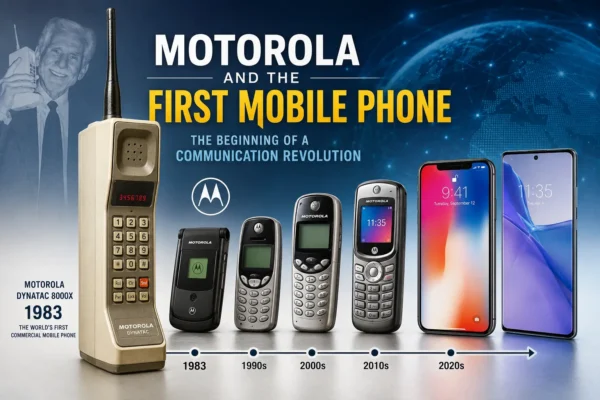
The Story of Motorola and the First Mobile Phone
The Rise of Android
While the iPhone transformed the premium smartphone market, Google introduced another major force that would further weaken Nokia—the Android operating system.
Android was designed as an open-source mobile platform that manufacturers could use freely. This allowed many companies, including Samsung Electronics, HTC Corporation, and Motorola Mobility, to quickly produce smartphones with advanced features.
Unlike Apple’s closed ecosystem, Android gave manufacturers flexibility in hardware design, pricing, and software customization. As a result, Android smartphones became available in every price category, making them accessible to millions of users worldwide.
The Android ecosystem grew extremely fast because developers could easily create apps for the platform. The Google Play Store soon offered millions of applications, attracting both consumers and developers.
Samsung became the biggest Android success story. The company released powerful smartphones with large screens, strong hardware, and modern software experiences. Samsung’s aggressive marketing helped Android dominate global smartphone sales.
Meanwhile, Nokia struggled to respond effectively. Instead of adopting Android early, Nokia continued focusing on its Symbian operating system. Company leaders feared losing control over software if they joined the Android ecosystem. Unfortunately, this decision isolated Nokia from the fastest-growing smartphone platform in the world.
As Android phones improved, consumers increasingly abandoned older Nokia devices. Touchscreen Android phones offered better app support, modern interfaces, and stronger internet capabilities. Nokia’s market share began falling rapidly in many countries.
The rise of Android completely reshaped the smartphone industry. Companies that adapted quickly became global leaders, while those that failed to embrace the new software-driven market faced serious decline.
For Nokia, Android represented both an opportunity and a missed chance. Many analysts later argued that adopting Android earlier could have helped Nokia remain competitive in the smartphone era.
Problems With Symbian OS
One of the biggest reasons behind the decline of Nokia was the failure of its operating system, Symbian OS. Although Symbian was once the world’s leading smartphone platform, it struggled badly against newer systems like iOS and Android.
Symbian had originally been designed during an earlier generation of mobile phones. It worked well for keypad-based devices but was not optimized for modern touchscreen smartphones. As the industry shifted toward larger displays and app-focused experiences, Symbian began to feel outdated and difficult to use.
The operating system had a complicated user interface that many consumers found confusing. Menus were often difficult to navigate, and the overall experience lacked the smoothness offered by competitors. In comparison, Apple’s iOS and Google’s Android provided cleaner designs and easier navigation.
Another major issue was software development. Developers found Symbian difficult to program for, which reduced the number of high-quality apps available on the platform. Since app ecosystems became increasingly important, this weakness seriously damaged Nokia’s competitiveness.
Performance problems also affected Symbian devices. Some phones experienced slow response times, software bugs, and inconsistent performance. Consumers who switched to iPhones or Android devices often noticed a significant improvement in user experience.
Nokia attempted to modernize Symbian with updates and redesigns, but these efforts were too slow. By the time improvements arrived, Android and iOS had already captured the attention of developers, manufacturers, and consumers.
The company later introduced new platforms such as MeeGo and partnered with Microsoft to use the Windows Phone operating system. However, these efforts came too late to reverse Nokia’s declining smartphone market share.
Symbian’s failure highlighted a major lesson in the technology industry: strong hardware alone is no longer enough. Modern smartphones depend heavily on software ecosystems, app support, and user experience. Nokia’s inability to modernize Symbian quickly became one of the most important reasons behind the company’s fall from global leadership.
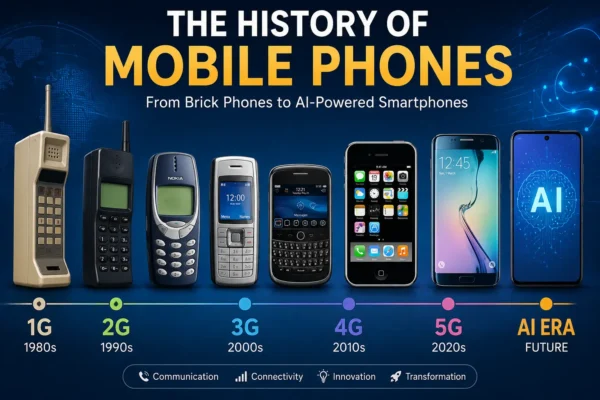
The History of Mobile Phones: From Brick Phones to AI-Powered Smartphones
Nokia’s Partnership With Microsoft
As competition in the smartphone market increased, Nokia realized that its aging Symbian operating system could no longer compete with Apple’s iPhone and Android-powered smartphones. In 2011, Nokia announced a major partnership with Microsoft to develop smartphones based on the Windows Phone operating system. This partnership was considered one of the biggest strategic decisions in Nokia’s history.
Under the agreement, Nokia would focus on hardware manufacturing while Microsoft provided software support through Windows Phone. Nokia hoped that the unique design of Windows Phones, combined with its strong hardware quality, could help the company regain its lost market share. The Lumia smartphone series became the symbol of this partnership and received praise for its camera quality, colorful design, and smooth performance.
Despite positive reviews, the partnership struggled in the market. Developers focused more on Android and iOS apps, leaving Windows Phone with a weak app ecosystem. Popular apps often arrived late or were missing entirely. Consumers preferred platforms that already had millions of users and applications.
Another issue was timing. By the time Nokia and Microsoft launched competitive products, Android brands like Samsung had already captured global markets. Nokia’s brand still had value, but consumer preferences had shifted rapidly. The partnership could not stop Nokia’s declining smartphone sales, and the company continued losing ground in the industry.
Although the collaboration failed to restore Nokia’s dominance, it remains an important chapter in mobile history because it showed how difficult it is for even powerful companies to compete against strong ecosystems like Android and iOS.
Microsoft Acquires Nokia
In 2013, Microsoft officially announced the acquisition of Nokia’s mobile phone business for approximately $7.2 billion. The deal included Nokia’s devices and services division, patents, and manufacturing operations. The acquisition aimed to strengthen Microsoft’s position in the smartphone industry and help expand the Windows Phone ecosystem.
For Nokia, the sale marked the end of an era. The company that once dominated global mobile phone sales was no longer capable of competing independently in the smartphone market. Thousands of Nokia employees joined Microsoft as part of the deal, and many manufacturing facilities were transferred as well.
Microsoft continued producing Lumia smartphones after the acquisition, but the results remained disappointing. Windows Phone failed to gain significant market share, and app developers continued focusing mainly on Android and iOS. Consumers were reluctant to switch to a platform with limited support and fewer applications.
Within a few years, Microsoft reduced its smartphone ambitions and eventually stopped producing Windows Phones. The acquisition became one of Microsoft’s biggest business failures, resulting in major financial losses and layoffs.
However, Nokia itself did not completely disappear. After selling its mobile division, the company shifted its focus toward telecommunications infrastructure, networking equipment, and 5G technology. Today, Nokia remains active in the technology sector, especially in telecom networks and enterprise solutions.
The Microsoft acquisition represents a turning point in tech history because it demonstrated how quickly market leaders can lose relevance when they fail to adapt to changing technology trends.
Major Reasons Behind Nokia’s Fall
The fall of Nokia was not caused by a single mistake. Instead, several major factors combined to weaken the company over time.
Failure to Adapt Quickly
One of Nokia’s biggest problems was its slow response to the smartphone revolution. The company underestimated the importance of touchscreen devices and modern software ecosystems. While Apple and Android focused on apps and user experience, Nokia remained dependent on older systems.
Weak Software Strategy
Symbian OS became outdated compared to iOS and Android. It was difficult for developers to build applications, and the user interface felt old-fashioned. Nokia also changed strategies multiple times, creating confusion inside the company.
Delayed Innovation
Although Nokia had strong engineering talent, decision-making processes were often slow. Internal management problems delayed the launch of competitive products. Rival companies introduced faster processors, better touchscreens, and advanced software while Nokia struggled to keep pace.
Underestimating Competitors
Nokia believed its strong brand reputation would protect it from competitors. However, companies like Apple and Samsung Electronics transformed the industry rapidly with innovative smartphones and app ecosystems.
Poor Ecosystem Support
Modern smartphones depend heavily on apps, services, and developer support. Android and iOS attracted millions of developers, while Nokia’s platforms failed to build a strong ecosystem. Consumers increasingly chose phones based on available apps rather than hardware quality alone.
Leadership and Organizational Issues
Reports from former employees suggested that internal politics and fear of failure slowed innovation. Some executives resisted major changes even when market conditions clearly demanded transformation.
Marketing Challenges
Nokia also struggled with marketing in the smartphone era. Competitors successfully promoted their products as lifestyle devices, while Nokia often focused more on hardware specifications than customer experience.
These combined problems caused Nokia’s market share to collapse rapidly during the early 2010s.

Best Phones Under ₹30,000 in 2026 – Complete Buying Guide
Nokia’s Legacy in the Mobile Industry
Despite its decline, Nokia left an extraordinary legacy in the mobile industry. For millions of people worldwide, Nokia phones represented their first experience with mobile communication.
Nokia helped popularize mobile phones globally by making devices affordable, durable, and easy to use. Models such as the Nokia 3310 became legendary for their strong battery life and reliability. The company also introduced features that later became standard in smartphones, including mobile gaming, cameras, internet browsing, and customizable interfaces.
The company played a major role in expanding mobile connectivity in developing countries. In many regions, Nokia phones connected people to communication services for the first time. Its affordable devices helped bridge the digital divide across the world.
Nokia was also known for exceptional hardware quality. Many older Nokia devices continued working for years, building enormous trust among customers. Even today, people often remember Nokia phones as some of the most durable mobile devices ever made.
Beyond hardware, Nokia contributed significantly to telecommunications research and innovation. The company invested heavily in mobile network technology and helped shape global communication standards.
Nokia’s influence can still be seen in modern smartphones. Concepts like app stores, mobile cameras, music phones, and mobile internet services were all areas where Nokia experimented long before competitors perfected them.
Although the company lost its leadership position, its impact on the evolution of mobile technology remains historic and highly respected.
Nokia’s Comeback Attempts
After the sale of its mobile division, Nokia attempted several comebacks in the smartphone market. The Nokia brand remained powerful and nostalgic, especially among longtime mobile users.
In 2016, HMD Global acquired the rights to manufacture Nokia-branded phones. HMD Global launched new Android-based Nokia smartphones and feature phones, hoping to combine Nokia’s trusted brand with modern Android software.
The company also revived classic models like the Nokia 3310, generating significant public attention. Many consumers appreciated the nostalgic appeal and durable design of these devices.
Modern Nokia smartphones focused on clean Android experiences, regular security updates, and affordable pricing. Some models received positive reviews for build quality and battery life. However, competition in the Android market was extremely intense.
Brands such as Xiaomi, Samsung Electronics, and OnePlus offered stronger specifications and aggressive pricing strategies. As a result, Nokia struggled to regain a significant share of the global smartphone market.
Even though Nokia did not fully return to its former dominance, the comeback attempts proved that the brand still carries emotional value for many users worldwide.
Meanwhile, Nokia itself achieved greater success in telecommunications infrastructure, 5G networks, and enterprise technologies rather than consumer smartphones.
Lessons Businesses Can Learn From Nokia
The story of Nokia offers valuable lessons for businesses in every industry.
Innovation Must Continue
No company can rely forever on past success. Even market leaders must continue innovating because technology and consumer expectations change rapidly.
Listen to Market Trends
Nokia underestimated the importance of touchscreen smartphones and app ecosystems. Businesses must pay close attention to changing customer behavior and emerging technologies.
Adapt Quickly
Slow decision-making can be dangerous in fast-moving industries. Companies that adapt quickly to market changes often survive, while those that delay transformation risk becoming irrelevant.
Software Matters as Much as Hardware
Nokia focused heavily on hardware quality, but modern consumers increasingly valued software experiences and ecosystems. Today, user experience often matters more than technical specifications alone.
Strong Leadership Is Essential
Clear leadership and strategic direction are critical during periods of change. Internal confusion and fear can prevent companies from making necessary decisions.
Competition Can Come From Anywhere
Nokia once dominated the market so completely that few believed it could fail. However, new competitors with fresh ideas changed the industry rapidly. Businesses should never underestimate emerging rivals.
Brand Power Alone Is Not Enough
Although Nokia had one of the world’s strongest technology brands, reputation alone could not save the company. Continuous improvement and innovation are necessary to maintain leadership.
Nokia’s rise and fall remains one of the most important business stories in technology history. It serves as both an inspiration and a warning for companies operating in rapidly changing industries.
The Emotional Connection People Still Have With Nokia
For millions of people around the world, Nokia was more than just a mobile phone brand. It was a part of daily life, family memories, and the beginning of mobile communication for an entire generation. Before smartphones became common, Nokia phones were trusted companions that people carried everywhere. Many users still remember their first Nokia phone with great nostalgia because it represented a major technological shift in personal communication.
One of the biggest reasons people still feel emotionally connected to Nokia is reliability. Nokia phones were known for their strong battery life, durable design, and simple user experience. Phones like the Nokia 1100, Nokia 3310, and Nokia N-series became symbols of trust and quality. People often joked that a Nokia phone could survive drops, water splashes, and years of heavy use. These stories became part of internet culture and helped build a legendary image around the brand.
Another important factor was accessibility. During the late 1990s and early 2000s, Nokia made mobile phones affordable for students, workers, families, and people in rural areas. In many developing countries, Nokia introduced people to mobile communication for the very first time. Because of this, Nokia became deeply connected with personal memories such as first calls, text messages, and long conversations with loved ones.
The classic Nokia ringtone also created a strong emotional identity. Hearing the tone even today instantly reminds people of simpler times. Nokia’s user-friendly keypad phones, colorful covers, and iconic games like Snake made the phones feel personal and fun. Unlike modern smartphones that often look similar, Nokia devices had unique personalities and recognizable designs.
Nokia also represented an era when technology felt exciting but uncomplicated. Users did not need to worry about constant app updates, social media pressure, or privacy concerns. Phones were mainly used for communication, and this simplicity is something many people miss today. As a result, Nokia continues to hold a special place in people’s hearts even decades later.
The emotional connection with Nokia is so powerful that whenever the company launches a nostalgic device, global interest immediately rises. The re-release of the Nokia 3310 proved that people still associate the brand with trust, durability, and emotional memories from the early mobile era.
Nokia and the Evolution of Mobile Technology
Nokia played one of the most important roles in the history of mobile technology. Long before the smartphone revolution, Nokia helped shape how people communicated through mobile devices. The company was not just a phone manufacturer; it was a major innovator in wireless communication and mobile infrastructure.
Nokia’s journey began in Finland as a paper mill company in the 19th century before expanding into electronics and telecommunications. By the 1980s and 1990s, Nokia became heavily involved in mobile networks and GSM technology. The company helped popularize mobile communication globally and contributed significantly to the spread of cellular networks.
One of Nokia’s greatest achievements was making mobile phones compact, affordable, and user-friendly. Early mobile phones were large, expensive, and difficult to use. Nokia transformed them into stylish and practical devices for ordinary consumers. The company focused on design, battery efficiency, and ease of use, which helped mobile phones become part of everyday life.
Nokia was also a leader in introducing new features. It helped popularize SMS texting, customizable ringtones, mobile gaming, and built-in cameras. The Nokia Communicator series introduced email and internet functions long before modern smartphones became mainstream. Later, the Nokia N-series pushed multimedia technology forward with improved cameras, music playback, and mobile internet capabilities.
Another major contribution from Nokia was the development of mobile network technology. The company played a key role in expanding GSM and later worked on 3G, 4G, and 5G infrastructure. Even after losing dominance in smartphones, Nokia remained important in the telecommunications industry because of its network equipment business.
Nokia also influenced mobile phone design trends. Interchangeable covers, physical keyboards, slider phones, foldable concepts, and compact form factors became popular partly because of Nokia’s creativity. The company experimented with many unique designs that made phones more expressive and personal.
Most importantly, Nokia helped connect billions of people worldwide. In many regions, Nokia phones were the first gateway to digital communication and internet access. This contribution had a huge social and economic impact, especially in developing countries.
Even though the smartphone market eventually shifted toward touchscreen devices and app ecosystems, Nokia’s influence on mobile technology remains undeniable. Many modern smartphone features evolved from ideas Nokia explored years earlier.
Could Nokia Have Survived?
The question of whether Nokia could have survived as the dominant smartphone leader is still widely debated. Many technology experts believe Nokia had the resources, brand recognition, and engineering talent needed to remain successful, but several strategic mistakes prevented the company from adapting quickly enough.
One of Nokia’s biggest problems was its slow response to the touchscreen smartphone revolution started by Apple and the rise of Google Android devices. Nokia underestimated how quickly consumer preferences would shift from keypad-based phones to touchscreen smartphones with advanced app ecosystems.
The company continued relying heavily on the Symbian operating system even when it became outdated. Symbian was powerful for its time, but it struggled to provide the smooth user experience developers and consumers wanted. While competitors focused on modern software ecosystems, Nokia remained too dependent on older technology.
Another challenge was internal management issues. Reports later revealed that Nokia faced organizational complexity, slow decision-making, and fear-based corporate culture. Teams struggled to innovate quickly because major decisions often took too long. In the fast-moving technology industry, speed is extremely important, and Nokia gradually fell behind competitors.
Could Nokia have survived if it had adopted Android earlier? Many analysts believe the answer is yes. Nokia had one of the strongest global brands and excellent hardware quality. If the company had embraced Android before competitors became dominant, it might have become one of the world’s biggest Android manufacturers. Instead, Nokia partnered with Microsoft and shifted toward Windows Phone, which failed to gain enough market share.
The Microsoft partnership itself was risky. While Windows Phone offered a fresh design, it lacked app support and developer interest compared to Android and iOS. Consumers increasingly preferred platforms with large app stores, and Nokia could not compete effectively without a strong ecosystem.
However, survival does not always mean remaining number one. Even after losing smartphone dominance, Nokia did survive as a telecommunications and network infrastructure company. Today, Nokia continues to work on 5G networks, cloud technologies, and enterprise communication systems. This proves the company was able to reinvent itself even after losing the mobile phone war.
In another timeline, Nokia could have remained one of the world’s leading smartphone brands. With faster innovation, better software strategy, and earlier adaptation to Android, the company might have successfully competed against Apple and Samsung. Nevertheless, Nokia’s story remains an important lesson about how quickly technology industries can change.
Nokia’s Influence on Modern Smartphones
Modern smartphones owe a surprising amount to Nokia. Even though companies like Apple, Samsung, and Google dominate the smartphone market today, many concepts and innovations were pioneered or popularized by Nokia years earlier.
One major influence was mobile photography. Nokia invested heavily in camera technology long before smartphone photography became mainstream. Devices like the Nokia N95 and Lumia series introduced advanced camera systems, high-quality lenses, and image stabilization features that pushed mobile photography forward. Nokia demonstrated that phones could become powerful multimedia devices instead of simple communication tools.
Nokia also contributed to mobile internet development. The company experimented with smartphones capable of browsing the web, sending emails, and using multimedia applications years before the iPhone era. The Nokia Communicator series showed early visions of portable productivity devices that resemble modern smartphones today.
Battery optimization was another area where Nokia excelled. Many modern smartphone companies continue trying to achieve the efficiency levels that Nokia devices were known for. Nokia phones balanced hardware and software carefully to maximize battery life, an area where many modern devices still face criticism.
Durability is another lasting influence. Nokia built phones designed to survive harsh conditions and long-term use. Today, smartphone brands advertise water resistance, strong glass protection, and rugged designs partly because consumers still value durability — something Nokia emphasized from the beginning.
Nokia also influenced smartphone customization. Long before app stores became common, Nokia allowed users to personalize themes, ringtones, wallpapers, and covers. This helped create the idea that mobile phones were personal identity devices rather than simple gadgets.
The company’s work in mobile connectivity and telecommunications infrastructure continues to influence smartphones indirectly. Nokia remains active in 5G technology development, which powers modern mobile communication and internet connectivity worldwide.
Even user interface ideas from Nokia inspired future smartphone design. Features such as predictive text, simplified menus, quick messaging, and mobile gaming concepts became standard across the industry. Nokia understood early that phones needed to be easy, enjoyable, and practical for everyday users.
Although Nokia no longer dominates the smartphone market, its innovations laid the foundation for many features consumers now take for granted. The modern smartphone industry was built partly on Nokia’s pioneering work in communication, hardware design, mobile networking, and user experience.
Conclusion
Nokia remains one of the most influential companies in the history of mobile technology. From connecting millions of people through affordable mobile phones to shaping the early smartphone industry, Nokia’s impact is still visible today. The company’s story is filled with innovation, success, mistakes, and reinvention.
People continue to feel emotionally attached to Nokia because the brand represents an important period in technological history. Nokia phones were reliable, durable, and simple to use, making them trusted companions for an entire generation. The company helped introduce mobile communication to billions of people around the world and became a symbol of technological progress.
Nokia’s rise and fall also provide valuable lessons for businesses. Even the world’s most successful companies must continue adapting to changing technology and consumer behavior. Innovation alone is not enough; companies must also respond quickly to market changes and evolving software ecosystems.
Despite losing the smartphone war, Nokia’s contributions continue influencing the mobile industry. From camera technology and mobile gaming to telecommunications infrastructure and 5G development, Nokia helped build the foundation of modern mobile communication.
Today, Nokia’s legacy lives on not only through nostalgia but also through the technologies and ideas that continue powering smartphones worldwide. Its journey remains one of the most fascinating stories in the history of technology and serves as a reminder that innovation, adaptability, and vision are essential for long-term success.
FAQs
Nokia lost its dominance in the mobile phone market because of a combination of technological, strategic, and management-related problems. During the late 1990s and early 2000s, Nokia was the world’s biggest mobile phone company. It controlled a massive share of the global market and was known for durable phones, long battery life, and innovative designs. However, the mobile industry changed rapidly after the launch of smartphones, and Nokia struggled to adapt quickly enough.
One of the biggest reasons behind Nokia’s decline was its slow response to touchscreen smartphones. When Apple launched the iPhone in 2007, it completely changed consumer expectations. People wanted large touchscreens, smooth interfaces, mobile apps, and internet-focused experiences. Nokia continued focusing heavily on keypad phones and the Symbian operating system, which started to feel outdated compared to modern competitors.
Another major factor was the rise of Android. Google created Android as an open-source operating system that many manufacturers adopted quickly. Companies like Samsung used Android to build powerful smartphones with strong app ecosystems. Nokia failed to switch to Android at the right time and instead partnered with Microsoft to use Windows Phone. Although Windows Phone had an attractive design, it lacked app support and developer interest, making it difficult to compete against Android and iOS.
Internal company culture also contributed to Nokia’s fall. Reports suggested that Nokia faced slow decision-making processes and management problems. Innovation slowed down while competitors moved rapidly. In the technology industry, failing to adapt quickly can lead to major losses.
Despite losing smartphone leadership, Nokia did not disappear completely. The company shifted its focus toward telecommunications infrastructure, network technology, and 5G systems. Today, Nokia remains active in global communication technology, even though it is no longer the dominant mobile phone brand it once was.
Nokia’s story remains one of the most important lessons in business history. It shows that even the most successful companies must continue innovating and adapting to changing consumer behavior and technological trends.
Nokia phones are still popular and memorable because they created a deep emotional connection with users around the world. For many people, Nokia phones were their first experience with mobile communication. During the late 1990s and early 2000s, Nokia devices became extremely common because they were affordable, reliable, durable, and easy to use.
One major reason people still remember Nokia fondly is durability. Nokia phones developed a legendary reputation for being almost indestructible. Users often dropped them multiple times without causing serious damage. This reliability made Nokia a trusted brand in households, businesses, and rural communities. Even today, internet memes and jokes about Nokia’s toughness continue to spread online.
Battery life was another huge advantage. Unlike modern smartphones that sometimes require daily charging, older Nokia phones could last several days on a single charge. This made them especially useful for travelers, workers, and users living in areas with limited electricity access.
Nokia also understood the importance of simplicity. The company designed phones with user-friendly menus, comfortable keyboards, and straightforward interfaces. People of all ages could easily learn how to use Nokia devices. Features like SMS texting, contacts, alarms, and simple games worked smoothly without unnecessary complications.
The classic Nokia ringtone and iconic games like Snake became part of popular culture. Many people associate these sounds and games with childhood memories, school days, and early digital communication experiences. Nokia phones represented a time when technology felt exciting but less stressful than today’s social media-driven smartphone world.
Another reason for Nokia’s lasting popularity was its massive global reach. In many developing countries, Nokia introduced millions of people to mobile technology for the first time. The company made communication more accessible and affordable, helping connect families and communities worldwide.
Even after losing smartphone dominance, Nokia’s legacy remains strong. The company’s classic devices continue to inspire nostalgia, and modern Nokia-branded phones still attract users who value durability and simplicity.
Ultimately, Nokia became more than just a phone company. It became part of people’s personal memories and daily lives, which is why the brand continues to hold emotional value even years after its peak success.
Many technology experts believe Nokia could have remained one of the biggest smartphone companies in the world if it had adapted more quickly to changing market trends. At one point, Nokia had enormous advantages including strong global distribution, customer trust, engineering expertise, and massive market share. However, several strategic mistakes prevented the company from competing effectively against Apple and Samsung.
Before the smartphone revolution, Nokia dominated the global mobile phone industry. Its devices were used by millions of people across Europe, Asia, Africa, and other regions. The company understood hardware design extremely well and produced phones with excellent battery life and durability. If Nokia had successfully transitioned these strengths into the smartphone era, it might have continued leading the market.
One major missed opportunity was Android. When Android started becoming popular, Nokia continued focusing on Symbian instead of fully embracing Google’s operating system. Later, Nokia partnered with Microsoft and adopted Windows Phone. While Windows Phone offered unique features and a clean interface, it failed to attract enough developers and app creators. Consumers increasingly wanted access to large app ecosystems, and Windows Phone could not compete effectively against Android and iOS.
Another problem was timing. Apple transformed the industry with the iPhone’s touchscreen experience and app ecosystem. Samsung quickly adopted Android and aggressively expanded its smartphone lineup. Nokia reacted too slowly while competitors gained momentum.
If Nokia had launched powerful Android smartphones early in the smartphone race, it could potentially have become one of the biggest Android brands in the world. The company already had global recognition and consumer trust. Many users were ready to stay loyal to Nokia if the company had provided competitive smartphone software.
However, becoming bigger than Apple or Samsung would still have been extremely challenging. Apple succeeded because of its ecosystem integration between hardware, software, and services. Samsung succeeded through rapid innovation, marketing, and manufacturing scale. Nokia would have needed strong software development and faster strategic decisions to compete at that level.
Even though Nokia lost smartphone leadership, its influence on the industry remains huge. Many modern smartphone technologies evolved from innovations Nokia explored years earlier. The company’s story proves that market leadership can disappear quickly if companies fail to adapt to industry changes.
The Symbian operating system was once considered one of the most advanced mobile operating systems in the world. Before Android and iOS became dominant, Nokia used Symbian to power many of its smartphones and multimedia devices. During the early 2000s, Symbian helped introduce consumers to advanced mobile features such as internet browsing, email, mobile applications, and multimedia capabilities.
One of Symbian’s biggest strengths was efficiency. The operating system was designed to run on devices with limited hardware resources, which meant Nokia phones could deliver strong performance while maintaining excellent battery life. This efficiency was important during a time when smartphone hardware was much less powerful than today.
Symbian also supported multitasking long before many competitors. Users could run multiple applications simultaneously, switch between tasks, and enjoy features that were advanced for the era. Nokia’s business-oriented devices and multimedia-focused N-series phones used Symbian to provide productivity and entertainment experiences.
Another important feature was customization. Users could personalize themes, wallpapers, ringtones, and settings extensively. Developers could also create applications for Symbian, although the ecosystem eventually struggled compared to Android and iOS.
However, Symbian gradually became one of Nokia’s biggest weaknesses. As touchscreen smartphones became popular, Symbian’s interface started feeling outdated and complicated. The operating system was originally designed for keypad-based devices, so adapting it to touchscreens became difficult. Users increasingly preferred smoother and simpler interfaces like those offered by the iPhone and Android devices.
Developers also found Symbian more difficult to work with compared to modern smartphone platforms. As app ecosystems became more important, Android and iOS attracted more developers, leading to larger app stores and better user experiences. Symbian could not keep up with this rapid evolution.
Despite its eventual decline, Symbian played a major role in smartphone history. It introduced millions of people to advanced mobile computing before the modern smartphone era fully arrived. Many early smartphone concepts such as mobile email, internet access, multimedia playback, and app functionality became popular through Symbian-powered Nokia devices.
Today, Symbian is remembered as an important milestone in mobile technology evolution. Although it eventually lost the smartphone battle, the operating system helped shape the early foundation of modern mobile computing.
Although Nokia is no longer the world’s leading smartphone brand, the company remains active and important in the global technology industry. After losing dominance in mobile phones, Nokia transformed itself into a telecommunications and network technology company focused on infrastructure, enterprise solutions, and next-generation communication systems.
Today, Nokia is heavily involved in 5G technology development. The company works with telecom operators and governments around the world to build and improve wireless communication networks. Nokia provides equipment and software used in mobile towers, internet infrastructure, cloud networking, and data transmission systems. This means Nokia still plays a major role in how people connect through smartphones and the internet globally.
Nokia also focuses on enterprise and industrial solutions. Many businesses use Nokia’s networking technologies for automation, cloud computing, and private wireless systems. Industries such as manufacturing, transportation, energy, and logistics increasingly depend on advanced communication systems where Nokia provides technological support.
In addition to network infrastructure, Nokia licenses patents and technologies related to mobile communication. The company owns many important patents connected to wireless technology and earns revenue through licensing agreements with smartphone manufacturers and other technology companies.
Nokia-branded smartphones still exist as well. Devices released under the Nokia brand focus mainly on affordability, durability, clean Android software, and reliable battery life. These phones appeal to users who want simple and dependable smartphones without excessive complexity.
The company also invests in research related to future communication technologies including 6G networks, artificial intelligence integration, cloud systems, and cybersecurity solutions. Nokia’s research divisions continue exploring innovations that may shape future digital communication.
Even though Nokia’s public image is still strongly connected with classic mobile phones, the company successfully reinvented itself after losing the smartphone race. Instead of disappearing completely, Nokia adapted by focusing on network technology and communication infrastructure where it remains globally competitive.
Nokia’s modern journey demonstrates resilience and reinvention. While the company may never regain its former position as the world’s top mobile phone manufacturer, it continues contributing significantly to global communication technology and remains one of the most recognized names in tech history.
[…] The Rise and Fall of Nokia Phones […]
[…] The Rise and Fall of Nokia Phones […]