Table of Contents
- Introduction
- The World Before Mobile Phones
- The Birth of Motorola
- Motorola’s Early Innovations
- Communication Technology Before Cellular Phones
- The Vision of Portable Communication
- Who Was Martin Cooper?
- The Race Between Motorola and AT&T
- The First Mobile Phone Call in History
- The Motorola DynaTAC 8000X
- Features of the First Mobile Phone
- Cost and Public Reaction
- Problems With Early Mobile Phones
- How Motorola Changed the Technology Industry
- The Evolution of Mobile Phones After Motorola
- Motorola’s Most Popular Phones
- The Rise of Smartphones
- Motorola’s Decline and Challenges
- Motorola and Android Phones
- Motorola’s Impact on Modern Communication
- How Mobile Phones Changed Human Life
- The Future of Mobile Technology
- Lessons From Motorola’s Journey
- Final Thoughts
Introduction
Hello readers, my name is Abhishek Gupta, and welcome to this detailed article about the incredible history of Motorola and the invention of the first mobile phone. Today, smartphones are one of the most important devices in human life. People use mobile phones every day for communication, business, entertainment, photography, gaming, education, banking, shopping, and social media. Modern society has become deeply connected through mobile technology, and it is difficult to imagine daily life without smartphones.
However, decades ago, the world was completely different. Communication was slow, limited, and tied to physical locations. People relied mainly on landline telephones, letters, and telegrams. If someone left home or office, contacting them became almost impossible. At that time, the idea of carrying a phone in your pocket sounded futuristic and unrealistic.
The company that transformed this dream into reality was Motorola. Motorola became one of the greatest innovators in communication technology and introduced the first handheld mobile phone to the world. This invention changed human communication forever and started the global mobile revolution.
The journey of Motorola is not only about technology but also about innovation, risk-taking, competition, and vision. The story involves brilliant engineers, massive technological challenges, and years of experimentation. In this article, we will explore the complete history of Motorola, the creation of the first mobile phone, the people behind this revolutionary invention, and the impact mobile phones had on modern civilization.
The World Before Mobile Phones
Before mobile phones existed, communication systems were extremely limited compared to today’s standards. Most people depended entirely on wired landline telephones installed in homes, offices, and public booths. These telephones worked only when connected through physical cables, meaning people could communicate only from fixed locations.
In the early and mid-twentieth century, long-distance communication was expensive and often difficult. Calling another city or country required operators, complex systems, and expensive charges. International communication was a luxury for many families. Businesses also faced serious communication challenges because employees traveling outside offices could not stay connected easily.
Letters were one of the primary methods of communication before mobile phones. People often waited several days or even weeks to receive important messages. Telegrams were faster but limited in content and costly. Emergency communication was especially difficult during accidents, disasters, or urgent situations.
Radio communication existed before mobile phones, but it was mainly used by military forces, police departments, taxi services, and government agencies. These systems required large equipment and specialized infrastructure. Ordinary people had no access to portable communication devices.
Car phones started appearing before handheld mobile phones, but they were large, expensive, and complicated. They required heavy transmitters and antennas installed inside vehicles. Only wealthy businessmen and government officials could afford such systems.
At that time, most people believed portable personal communication belonged only in science fiction movies and futuristic imagination. Nobody expected that billions of people would eventually carry powerful smartphones in their pockets.
The History of Mobile Phones: From Brick Phones to AI-Powered Smartphones
The Birth of Motorola
Motorola was founded in 1928 by brothers Paul Galvin and Joseph Galvin in the United States. Initially, the company operated under the name Galvin Manufacturing Corporation. The founders started the business during a difficult economic period, but they were determined to build innovative electronic products.
The company’s early success came from producing battery eliminators. During that era, radios depended heavily on batteries, which were expensive and inconvenient. Motorola developed devices that allowed radios to operate using household electricity instead of batteries. This innovation became very popular among consumers.
In 1930, the company introduced the name “Motorola.” The name combined “motor,” representing automobiles, and “ola,” a popular sound-related suffix commonly used in audio products at the time. Motorola soon became famous for creating car radios, which revolutionized in-car entertainment.
Motorola’s car radios became highly successful because automobiles were becoming increasingly popular across America. The company quickly earned a strong reputation for quality electronic products and technological innovation.
During World War II, Motorola played an important role by producing communication equipment for military forces. The company developed portable radio systems and walkie-talkies that helped soldiers communicate effectively on battlefields. These inventions strengthened Motorola’s expertise in wireless communication technology.
Over the following decades, Motorola expanded into multiple technology sectors including semiconductors, televisions, communication systems, and portable electronics. The company became one of the most respected names in the electronics industry.
Motorola’s experience in wireless communication eventually laid the foundation for the invention of the world’s first handheld mobile phone.
The History of Earbuds: From Telephone Wires to AI Audio
Motorola’s Early Innovations
Before inventing mobile phones, Motorola already had a long history of groundbreaking innovations in communication technology. The company consistently focused on solving communication problems through portable and wireless systems.
One of Motorola’s most important contributions was the development of two-way radios for police departments and emergency services. These radios allowed officers and emergency responders to communicate quickly during critical situations. This technology improved public safety and emergency response capabilities significantly.
During World War II, Motorola created the famous “Handie-Talkie” and walkie-talkie systems used by military forces. These portable communication devices became essential tools for soldiers on battlefields. The ability to communicate wirelessly while moving gave military forces a huge strategic advantage.
Motorola engineers continuously worked on improving:
- Signal quality
- Portability
- Antenna design
- Battery performance
- Wireless transmission systems
The company also entered semiconductor manufacturing, which later became extremely important for mobile phone technology. Smaller electronic components allowed communication devices to become more compact and efficient.
Motorola’s innovations helped shape the future of portable electronics. The company believed communication should become more flexible, mobile, and accessible for everyone. This philosophy eventually inspired the creation of handheld mobile phones.
The company’s engineering culture encouraged experimentation and creativity. Motorola engineers were willing to attempt difficult projects that many competitors considered impossible.
Communication Technology Before Cellular Phones
Before cellular technology emerged, communication systems faced many serious limitations. Early wireless communication depended mainly on radio-based systems that could support only a small number of users at one time.
Traditional radio communication systems used powerful transmitters covering large geographic areas. However, because radio frequencies were limited, too many users could easily overload the system. As more people tried to communicate, networks became crowded and inefficient.
Car phone systems during the 1940s, 1950s, and 1960s suffered from these exact problems. In many cities, only a few dozen users could access the system simultaneously. This made large-scale personal wireless communication impractical.
Engineers realized they needed an entirely new approach. Instead of using one powerful transmitter for an entire city, they began developing the concept of dividing cities into smaller communication zones called “cells.”
Each cell would contain its own transmitter tower and use separate radio frequencies. This system allowed frequencies to be reused across different cells without causing major interference.
The cellular concept became one of the most important technological breakthroughs in communication history. It allowed thousands and eventually millions of people to communicate wirelessly at the same time.
Developing cellular networks required enormous engineering effort. Companies needed to design towers, switching systems, antennas, and mobile devices capable of moving between cells smoothly while maintaining calls.
Without cellular technology, modern smartphones and wireless communication networks would never have become possible.
The Vision of Portable Communication
Motorola’s vision for portable communication was revolutionary. While many companies focused on vehicle-based communication systems, Motorola believed the future belonged to truly personal handheld devices.
The company’s engineers imagined a world where people could communicate freely from almost anywhere. Instead of calling places like homes or offices, people would call individuals directly.
This idea may seem normal today, but during the 1960s and 1970s it sounded futuristic and unrealistic. Many experts believed portable phones were impossible because existing technology was too large, heavy, and power-hungry.
Motorola refused to give up on the dream. Engineers worked tirelessly to reduce the size of electronic components and improve wireless communication systems.
The company’s philosophy centered around freedom and mobility. Motorola believed technology should adapt to human lifestyles rather than forcing humans to remain connected to fixed locations.
This vision required solving several major technical challenges:
- Reducing phone size
- Improving battery life
- Designing portable antennas
- Building reliable wireless systems
- Creating compact circuitry
Motorola’s determination eventually allowed the company to achieve what many believed was impossible.
The invention of the handheld mobile phone represented much more than technological progress. It symbolized personal freedom and the beginning of constant global connectivity.
Best Gaming Earbuds in 2026 – Complete Guide for Mobile, PC & Esports Gamers
Who Was Martin Cooper?
Martin Cooper is one of the most important figures in communication history. He is widely known as the “Father of the Mobile Phone” because he led the team that created the world’s first handheld mobile phone.
Martin Cooper was born in Chicago in 1928. He studied electrical engineering and later joined Motorola, where he became deeply involved in wireless communication projects.
Cooper strongly believed communication should become personal and portable. He disagreed with companies focusing only on car phones because he wanted people to carry phones wherever they went.
As a Motorola engineer and executive, Cooper led a team of talented researchers and engineers working on handheld communication devices. The project was extremely difficult because available technology was still primitive compared to modern electronics.
The engineering team faced enormous obstacles:
- Batteries were large and inefficient
- Electronic components were bulky
- Wireless systems were complex
- Signal quality needed improvement
Despite these challenges, Martin Cooper remained confident that portable phones represented the future.
Cooper later explained that the ultimate goal was not simply to create a device but to give people personal communication freedom. He imagined a world where anyone could contact another person directly regardless of location.
His leadership, creativity, and persistence helped transform the mobile phone from science fiction into reality.
Today, Martin Cooper is recognized globally as one of the greatest innovators in technology history.
The Race Between Motorola and AT&T
During the 1960s and 1970s, the telecommunications industry became highly competitive. Several major companies wanted to dominate the future of wireless communication technology.
AT&T and Bell Labs were among Motorola’s biggest competitors. AT&T focused heavily on car-based communication systems and large network infrastructure projects.
Motorola, however, believed the future belonged to handheld portable phones rather than vehicle-installed systems.
This difference in vision created one of the most important technology races in modern history.
Both companies invested heavily in research and development. Engineers worked continuously to solve difficult technical problems involving:
- Miniaturization
- Battery technology
- Antenna systems
- Wireless signal transmission
- Cellular networking
Motorola engineers worked under intense pressure because they wanted to prove handheld phones were practical before competitors could dominate the market.
The race was not only about technology but also about shaping the future of communication itself.
Motorola’s engineers believed people wanted true portability and freedom. They understood that communication devices would eventually become deeply personal tools rather than equipment installed in cars or buildings.
The competition accelerated innovation across the telecommunications industry and pushed engineers to achieve breakthroughs faster than ever before.
Ultimately, Motorola succeeded in demonstrating the world’s first handheld mobile phone before its competitors.
Top 10 Compact Phones in 2026 – Small Size, Big Power
The First Mobile Phone Call in History
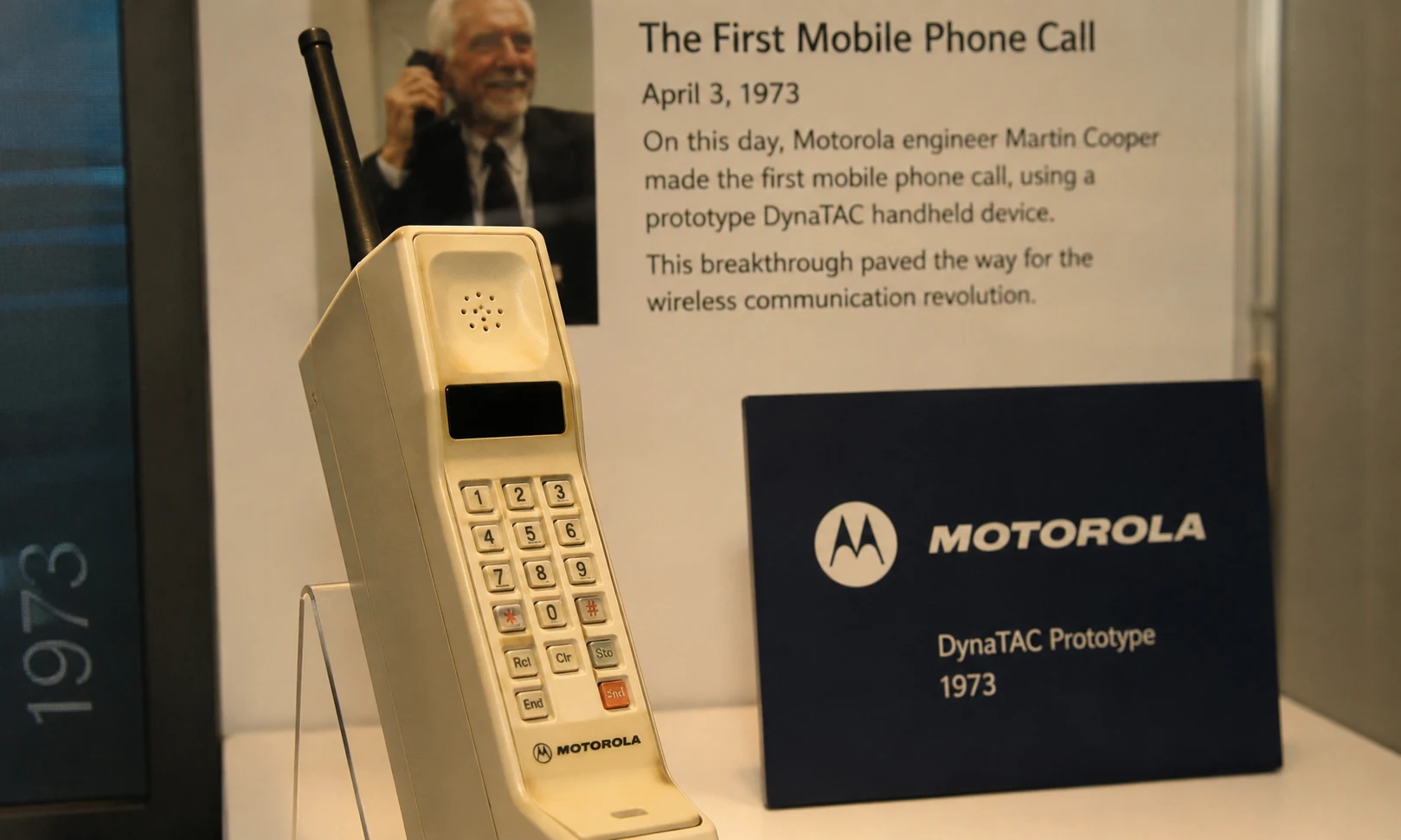
One of the most historic moments in technology history occurred on April 3, 1973. On that day, Martin Cooper made the first public handheld mobile phone call using a prototype Motorola device.
The call took place in New York City while Cooper stood on a public street holding the experimental mobile phone.
Interestingly, Cooper called a rival engineer working at Bell Labs to announce that he was speaking through a real handheld portable mobile phone. This moment symbolized Motorola’s victory in the race to create personal wireless communication.
The prototype device used during the call later evolved into the famous Motorola DynaTAC.
This event changed the world forever because it proved that personal portable communication was finally possible.
Although the prototype phone was large and heavy by modern standards, the achievement represented an enormous technological breakthrough.
News about the mobile phone demonstration spread rapidly. Many people were amazed by the idea of talking wirelessly while walking on a city street.
The first mobile phone call became one of the defining moments of twentieth-century technological innovation.
The Motorola DynaTAC 8000X
The Motorola DynaTAC 8000X became the first commercially available handheld mobile phone in history.
After years of testing, engineering improvements, and government approvals, Motorola officially launched the device in 1983.
The DynaTAC immediately became a symbol of technological advancement and business success.
Because of its size and shape, many people nicknamed it “The Brick.” Despite its bulky appearance, owning a mobile phone during the 1980s represented luxury, innovation, and social status.
The phone featured a long external antenna, physical keypad, rechargeable battery, and LED display. Although primitive compared to modern smartphones, it was revolutionary for its time.
The DynaTAC demonstrated that portable wireless communication could become a commercial reality rather than an experimental concept.
Business executives became some of the earliest users because mobile communication improved productivity and flexibility. Wealthy individuals and celebrities also adopted mobile phones as status symbols.
The DynaTAC opened the door for future generations of smaller, faster, and more advanced mobile devices.
Features of the First Mobile Phone
The Motorola DynaTAC 8000X had technical specifications that seem unbelievable compared to today’s smartphones.
The device weighed approximately 1.1 kilograms and measured nearly 10 inches tall without its antenna. Carrying the phone required significant effort compared to modern lightweight devices.
Battery performance was extremely limited. Users received only around 30 minutes of talk time before needing to recharge the phone. Charging itself required nearly 10 hours.
The phone could store approximately 30 contact numbers in memory, which was considered impressive during the early 1980s.
The LED display was small and basic, showing limited information compared to today’s high-resolution touchscreen displays.
Despite these limitations, the DynaTAC represented one of the most advanced consumer electronic devices of its era.
The phone proved that:
- Portable wireless calling was possible
- Cellular networks could support handheld devices
- Consumers were interested in mobile communication
- The future of communication would become wireless
The technology inside the DynaTAC paved the way for decades of future innovation in mobile electronics and wireless networking.
Cost and Public Reaction
When the Motorola DynaTAC 8000X was officially launched in 1983, it became one of the most talked-about technological products in the world. However, the phone was extremely expensive and far beyond the reach of ordinary consumers. Motorola priced the device at approximately $3,995, which was an enormous amount during the 1980s. After adjusting for inflation, the price would equal more than $10,000 in today’s money.
Because of its high cost, the first mobile phone was considered a luxury product mainly used by wealthy businessmen, corporate executives, celebrities, and government officials. Owning a mobile phone during that period became a symbol of status, power, and financial success. People carrying the large DynaTAC phone in public often attracted attention because very few individuals had ever seen a portable phone before.
Public reaction to the first mobile phone was mixed. Many people were amazed by the ability to make wireless calls while walking freely outside homes and offices. Newspapers, television channels, and technology experts described the invention as futuristic and revolutionary.
At the same time, critics pointed out several weaknesses:
- The phone was very heavy
- Battery life was poor
- Network coverage was limited
- Call charges were expensive
- The device looked bulky and awkward
Despite criticism, excitement around mobile communication continued growing rapidly. Businesses quickly recognized the advantages of staying connected while traveling. Executives no longer needed to remain near landline telephones to communicate with employees or clients.
The success of Motorola’s mobile phone proved that consumers were willing to pay for communication convenience and mobility. This public interest encouraged further investment in mobile technology across the world.
Problems With Early Mobile Phones
Early mobile phones were groundbreaking inventions, but they also faced many technical and practical challenges. Compared to modern smartphones, first-generation mobile phones were extremely limited and inconvenient.
One of the biggest problems was battery technology. Early batteries were large, heavy, and inefficient. Users could speak for only around 30 minutes before the battery needed recharging. Charging itself often required many hours, making daily usage difficult.
Another major issue was network coverage. Cellular networks during the 1980s existed only in limited urban areas. Outside major cities, users frequently lost signal completely. Traveling long distances often meant losing communication access entirely.
The size and weight of early mobile phones also created problems. Devices like the Motorola DynaTAC 8000X were bulky and difficult to carry comfortably. Unlike modern slim smartphones, early phones resembled large bricks with long antennas.
Call quality was another challenge. Wireless signals were not always stable, and calls sometimes experienced interference, static noise, or sudden disconnections.
Security and privacy were also weak in early mobile networks. Many first-generation systems lacked strong encryption, meaning radio scanners could sometimes intercept conversations.
In addition, early mobile services were expensive. Monthly bills and call charges were often very high, limiting mobile phone access mostly to wealthy users and business professionals.
Despite all these problems, demand for mobile phones continued increasing because people understood the enormous convenience offered by portable communication.
The challenges faced by early mobile phones also motivated engineers to improve:
- Battery technology
- Network infrastructure
- Device miniaturization
- Signal processing
- Mobile security systems
Over time, these improvements transformed mobile phones into the compact and powerful devices we use today.
How Motorola Changed the Technology Industry
Motorola changed the technology industry forever through its innovations in wireless communication. The invention of the first handheld mobile phone created an entirely new global industry worth trillions of dollars today.
Before Motorola’s breakthrough, communication technology was mostly tied to fixed locations such as homes, offices, or vehicles. Motorola’s portable mobile phone transformed communication into a personal experience that people could carry everywhere.
The company’s achievements influenced several major industries:
- Telecommunications
- Consumer electronics
- Semiconductor manufacturing
- Wireless networking
- Battery technology
- Portable computing
Motorola’s success encouraged countless companies to invest heavily in mobile communication research. Competitors around the world began developing their own wireless devices and cellular systems.
The invention of mobile phones also accelerated semiconductor development because companies needed smaller, faster, and more efficient electronic components. This miniaturization revolution later benefited computers, cameras, gaming devices, and many other technologies.
Motorola’s innovations also changed consumer expectations. People began demanding portable, convenient, and always-connected devices. This shift eventually influenced the development of laptops, tablets, smartwatches, and smartphones.
The company’s engineering achievements demonstrated that ambitious technological dreams could become reality through innovation and persistence.
Without Motorola’s contributions, modern communication technology may have developed much more slowly.
The Evolution of Mobile Phones After Motorola
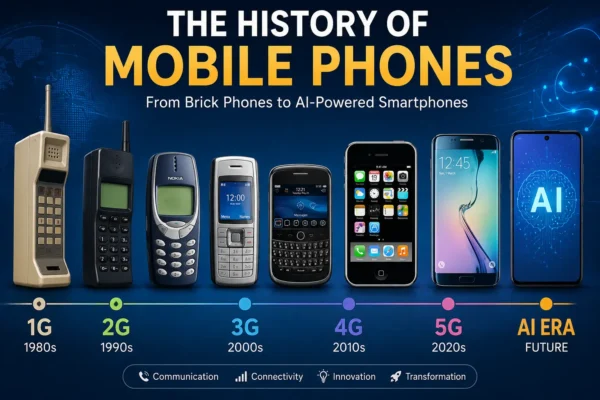
After Motorola introduced the first handheld mobile phone, the mobile industry evolved rapidly over the following decades. Technological progress transformed mobile phones from heavy luxury devices into powerful smartphones used by billions of people worldwide.
During the 1980s, mobile phones remained large and expensive. Networks were limited, and only business professionals or wealthy individuals could afford mobile communication. However, improvements in electronics gradually reduced phone size and increased performance.
In the 1990s, mobile phones became smaller, lighter, and more affordable. Manufacturers introduced better batteries, improved displays, and stronger network systems. Text messaging, also known as SMS, became extremely popular during this period.
Phones also started including:
- Contact storage
- Alarm clocks
- Basic games
- Calculator functions
- Custom ringtones
By the early 2000s, mobile phones evolved beyond simple calling devices. Companies added cameras, music players, internet access, color displays, and multimedia features.
Flip phones and sliding phones became fashionable worldwide. Mobile phones turned into both communication tools and lifestyle accessories.
The launch of smartphones completely changed the industry again. Touchscreen devices replaced physical keypads, and app ecosystems transformed phones into portable computers.
Modern smartphones now support:
- High-speed internet
- Artificial intelligence
- Professional photography
- Video streaming
- Mobile gaming
- Digital payments
- GPS navigation
- Social media platforms
The evolution of mobile phones after Motorola represents one of the fastest technological transformations in human history.
Motorola’s Most Popular Phones
Over the decades, Motorola released several iconic phones that became highly successful worldwide. These devices helped shape mobile phone culture and design trends.
Motorola DynaTAC
The Motorola DynaTAC 8000X remains one of the most important devices in technology history because it introduced handheld mobile communication to consumers.
Although bulky and expensive, the DynaTAC symbolized innovation and futuristic technology during the 1980s.
Motorola MicroTAC
The Motorola MicroTAC became one of the first popular flip phones. Its compact folding design represented a major advancement compared to earlier brick phones.
The MicroTAC showed that mobile phones could become smaller, more stylish, and easier to carry.
Motorola StarTAC
The Motorola StarTAC became one of the most iconic phones of the 1990s. Its futuristic clamshell design attracted millions of users worldwide.
The StarTAC was lightweight, compact, and fashionable. It became extremely popular among business users and consumers seeking stylish communication devices.
Motorola Razr
The Motorola Razr became one of the best-selling mobile phones ever created.
Released during the mid-2000s, the Razr featured an ultra-thin metallic design that looked modern and premium. The phone became a global fashion icon and helped Motorola regain major popularity.
The Razr’s success demonstrated that phone design and appearance could become as important as technical specifications.
Motorola’s popular devices helped define multiple generations of mobile phone design and innovation.
The Rise of Smartphones
The rise of smartphones transformed the mobile industry completely. Traditional mobile phones mainly focused on calling and texting, but smartphones introduced powerful computing features that changed how people interacted with technology.
Early smartphones combined communication tools with internet access, multimedia functions, and advanced software systems. Over time, smartphones evolved into portable computers capable of handling countless daily tasks.
The introduction of touchscreen devices revolutionized user experience. Instead of physical keypads, users could interact directly with large digital displays.
Companies like Apple, Samsung, and Google became major forces in the smartphone era.
Smartphones introduced:
- Mobile applications
- High-quality cameras
- Video streaming
- Social media integration
- GPS navigation
- Mobile gaming
- Cloud computing
- AI-powered features
The app ecosystem became one of the most important smartphone innovations. Users could download apps for education, entertainment, finance, fitness, shopping, productivity, and communication.
Social media platforms grew rapidly because smartphones allowed constant internet access. Apps like messaging services and video-sharing platforms became central parts of modern life.
The smartphone revolution also changed industries such as:
- Banking
- Transportation
- Photography
- Entertainment
- Healthcare
- Education
- Retail
Modern smartphones now contain more computing power than many early desktop computers.
Motorola’s Decline and Challenges
Despite pioneering the mobile phone industry, Motorola eventually faced serious challenges as competition increased.
During the early 2000s, Motorola achieved massive success with devices like the Razr. However, the company struggled to adapt quickly during the smartphone revolution.
Several factors contributed to Motorola’s decline:
- Increasing competition
- Rapid technological changes
- Software ecosystem limitations
- Marketing challenges
- Slow innovation cycles
Companies like Apple and Samsung introduced highly advanced smartphones with powerful software ecosystems and touchscreen interfaces.
Motorola initially struggled to compete effectively against these rapidly evolving platforms.
The company also faced difficulties maintaining market share as Chinese smartphone manufacturers entered the global market with affordable devices.
Eventually, Motorola underwent restructuring and ownership changes. Motorola Mobility later became part of Lenovo.
Although Motorola lost its position as the dominant mobile phone brand, the company’s historical impact on communication technology remained enormous.
Motorola’s journey demonstrated that even pioneering companies must continue innovating constantly to survive in fast-changing technology industries.
Motorola and Android Phones
Today, Motorola focuses primarily on Android smartphones. After becoming part of Lenovo, the company continued producing mobile devices for global markets.
Modern Motorola smartphones are known for:
- Clean Android software
- Reliable battery life
- Affordable pricing
- Smooth performance
- Durable designs
Motorola targets users seeking practical and budget-friendly smartphones with good everyday performance.
The company produces several smartphone series for different market segments, including budget devices, mid-range phones, and premium foldable models.
One of Motorola’s biggest modern innovations is the return of the Razr brand. The modern Motorola Razr combines nostalgic flip-phone design with foldable smartphone technology.
Foldable displays represent one of the latest advancements in mobile engineering. Motorola’s foldable Razr devices demonstrate how the company continues experimenting with innovative designs even decades after inventing the first handheld mobile phone.
Motorola smartphones also benefit from the Android ecosystem developed by Google, giving users access to millions of apps and services.
Although Motorola no longer dominates the industry like it once did, the company remains an important and respected smartphone brand worldwide.
Motorola’s Impact on Modern Communication
The invention of the mobile phone by Motorola completely transformed global communication.
Today, billions of people use mobile devices every day for personal, social, educational, and professional purposes. Communication is now instant, portable, and accessible almost everywhere.
Motorola’s invention influenced nearly every aspect of modern society:
- Business communication
- Emergency response systems
- Social interaction
- Global connectivity
- Education access
- Digital entertainment
Mobile communication also changed how companies operate. Employees can now work remotely, attend virtual meetings, and stay connected while traveling.
Families and friends can communicate instantly regardless of distance. Video calls and messaging applications allow people across different countries to remain connected easily.
The mobile revolution also accelerated internet adoption worldwide. Smartphones became the primary method of internet access for billions of users.
Without Motorola’s original breakthrough, today’s connected digital world might not exist in its current form.
The company’s innovations created the foundation for:
- Smartphones
- Mobile internet
- Wireless apps
- Social media platforms
- Portable computing systems
Motorola’s impact on human civilization remains one of the greatest technological achievements in history.
How Mobile Phones Changed Human Life
Mobile phones transformed human lifestyles more dramatically than almost any other invention of the modern era.
Before mobile communication, people depended heavily on physical locations for communication. Today, smartphones allow individuals to stay connected almost constantly.
One of the biggest changes involves instant communication. People can now contact family, friends, coworkers, and businesses immediately from nearly anywhere in the world.
Mobile phones also revolutionized social interaction through messaging apps and social media platforms. Communication became faster, more visual, and more global.
Education improved significantly because students gained access to:
- Online classes
- Educational videos
- Digital libraries
- Research tools
- Virtual learning platforms
Mobile banking and digital payment systems transformed financial services. People can now transfer money, pay bills, and shop online directly from smartphones.
Healthcare services also improved through telemedicine and mobile health applications. Patients can communicate with doctors remotely and monitor health conditions using mobile devices.
The entertainment industry changed completely because smartphones support:
- Video streaming
- Music platforms
- Mobile gaming
- Social media content
- Digital photography
Smartphones also improved navigation through GPS systems, making travel easier and more efficient.
The mobile phone became much more than a communication device. It evolved into an essential daily tool for work, entertainment, learning, and social life.
The Future of Mobile Technology
The future of mobile technology looks incredibly exciting. Smartphones continue evolving rapidly with new innovations appearing almost every year.
Artificial intelligence is becoming one of the most important parts of modern mobile devices. AI systems can improve photography, voice assistants, battery management, and personalization features.
Future smartphones may include:
- Advanced AI assistants
- Holographic displays
- Satellite communication
- Flexible screens
- Brain-computer interfaces
- Augmented reality systems
- Ultra-fast wireless networks
Foldable phones are already changing smartphone design. Companies are experimenting with devices that fold, roll, or expand into tablet-sized screens.
5G and future 6G networks will provide faster internet speeds and lower latency, improving gaming, streaming, and cloud computing experiences.
Augmented reality and virtual reality technologies may eventually become standard smartphone features. Users could interact with digital objects directly in real-world environments.
Battery technology will likely improve significantly, allowing phones to operate longer with faster charging times.
Security systems such as facial recognition and biometric authentication will continue becoming more advanced.
The future of mobile technology may eventually blur the line between smartphones, wearable devices, and artificial intelligence systems.
The mobile revolution that started with Motorola’s first handheld phone is still evolving today.
Lessons From Motorola’s Journey
The story of Motorola teaches several valuable lessons about innovation, business, and technological progress.
Innovation Requires Courage
Motorola invested heavily in handheld communication technology even when many experts believed portable phones were unrealistic. The company’s willingness to take risks eventually changed the world.
Vision Is Important
Motorola understood that communication should become personal and mobile. This vision guided the company’s engineering efforts for years.
Competition Drives Progress
The rivalry between Motorola and AT&T accelerated innovation across the telecommunications industry. Healthy competition often pushes companies to achieve technological breakthroughs faster.
Technology Evolves Constantly
Even industry pioneers can struggle if they fail to adapt quickly to changing markets and consumer preferences.
Persistence Matters
Developing the first mobile phone required years of research, experimentation, and problem-solving. Motorola engineers overcame enormous technical obstacles through determination and teamwork.
One Invention Can Transform Humanity
The mobile phone reshaped communication, business, education, entertainment, and modern society itself.
Motorola’s journey remains one of the most inspiring stories in technology history.
Final Thoughts
The story of Motorola and the invention of the first mobile phone represents one of the greatest technological achievements of the twentieth century.
What began as an ambitious dream eventually transformed human civilization forever. Motorola’s engineers proved that portable personal communication was possible and opened the door to the connected digital world we live in today.
From the bulky Motorola DynaTAC 8000X to modern AI-powered smartphones, mobile technology has evolved far beyond what early inventors could have imagined.
The invention of mobile phones changed:
- Communication
- Business
- Entertainment
- Education
- Healthcare
- Social interaction
- Global connectivity
Every smartphone user today benefits from the groundbreaking work of pioneers like Martin Cooper and the engineers at Motorola.
Although the company faced challenges and competition over time, Motorola’s legacy remains permanent in the history of technology.
The mobile phone was not simply another electronic device. It became one of humanity’s most powerful communication tools and forever changed how people connect with the world around them.
FAQs
The first handheld mobile phone was invented by Martin Cooper, an engineer working at Motorola. He is widely known as the “Father of the Mobile Phone” because he led the team responsible for creating the first portable cellular phone in history. On April 3, 1973, Martin Cooper made the world’s first public handheld mobile phone call in New York City using a Motorola prototype device. This historic moment changed the future of communication forever.
Before mobile phones existed, people relied mainly on landline telephones connected through wires. Communication was tied to homes, offices, or public telephone booths. If someone was outside these locations, contacting them became difficult or impossible. Portable communication systems existed in limited forms, such as car phones and radio devices, but they were large, expensive, and mainly used by government agencies or businesses.
Martin Cooper believed communication should become personal and mobile. Instead of calling places, people should be able to call individuals directly wherever they were. This idea was revolutionary during the 1970s because technology was still large and inefficient.
The invention of the first mobile phone became important because it introduced a completely new way for humans to communicate. It started the mobile communication revolution that eventually led to smartphones, mobile internet, social media, and global digital connectivity.
Today, billions of people around the world use smartphones daily for communication, education, banking, navigation, entertainment, and business. None of this would have been possible without the groundbreaking work of Martin Cooper and Motorola’s engineering team. Their invention permanently changed modern civilization and transformed how people interact with each other globally.
The Motorola DynaTAC 8000X was the world’s first commercially available handheld mobile phone. Released in 1983 by Motorola, the device became one of the most iconic products in technology history. Although primitive by modern standards, the DynaTAC represented a revolutionary breakthrough in wireless communication.
The phone became famous because it allowed people to make wireless calls while moving freely outside homes and offices. Before its release, communication depended mainly on wired landline systems. The DynaTAC proved that portable personal communication was finally possible.
The phone had several unusual features compared to modern smartphones. It weighed around 1.1 kilograms, measured nearly 10 inches tall, and included a long antenna. Because of its bulky design, many people nicknamed it “The Brick.” Battery life was also very limited, offering only around 30 minutes of talk time after nearly 10 hours of charging.
Despite these limitations, the DynaTAC became a status symbol during the 1980s. The phone cost approximately $3,995 at launch, making it affordable mainly for wealthy businessmen, executives, celebrities, and government officials. Carrying a mobile phone during that era represented financial success and technological sophistication.
The DynaTAC also became culturally significant because it appeared in movies, television shows, and business environments. It symbolized the beginning of the mobile age and futuristic technology.
Most importantly, the DynaTAC paved the way for future generations of mobile devices. Over time, phones became smaller, lighter, cheaper, and more powerful. Modern smartphones with internet access, cameras, and artificial intelligence can trace their origins directly back to the DynaTAC and Motorola’s early innovations in handheld communication technology.
Mobile phones have evolved dramatically since the introduction of the first handheld device by Motorola. The earliest mobile phones during the 1980s were large, heavy, expensive, and limited in functionality. Devices like the Motorola DynaTAC 8000X focused mainly on voice communication and required powerful batteries and large antennas.
During the 1990s, major improvements in semiconductor technology and battery development allowed phones to become smaller, lighter, and more affordable. Manufacturers introduced compact designs, flip phones, and sliding phones. Text messaging also became extremely popular during this era, changing how people communicated socially.
Mobile phones during the late 1990s and early 2000s began including additional features such as:
Contact storage
Alarm clocks
Simple games
Calculators
Color screens
Polyphonic ringtones
As internet technology improved, mobile devices started supporting web browsing, email services, and multimedia functions. Cameras were later added to phones, transforming mobile devices into portable photography tools.
The smartphone revolution began when companies introduced touchscreen devices with advanced operating systems. Smartphones replaced physical keypads with large digital displays and app ecosystems. Companies like Apple and Samsung became major leaders during this transformation.
Modern smartphones are essentially portable computers. They support:
High-speed internet
Artificial intelligence
GPS navigation
Mobile gaming
Video streaming
Social media apps
Cloud storage
Digital payments
Today’s smartphones contain far more computing power than early desktop computers. Foldable displays, AI assistants, and 5G connectivity represent the latest stages of mobile evolution.
The journey from bulky brick phones to advanced AI-powered smartphones is one of the fastest and most impressive technological transformations in human history.
Although Motorola invented the first handheld mobile phone and became one of the most successful mobile brands in the world, the company eventually lost its dominance during the smartphone era.
Motorola achieved major success during the 1990s and early 2000s with iconic devices such as the Motorola StarTAC and the Motorola Razr. The Razr, in particular, became one of the best-selling phones in history because of its slim metallic design and stylish appearance.
However, the mobile industry changed rapidly after the rise of smartphones. Traditional mobile phones focused mainly on calling and texting, but smartphones introduced touchscreens, internet browsing, mobile apps, multimedia features, and powerful software ecosystems.
One of Motorola’s biggest challenges was adapting quickly to these changes. Competitors such as Apple introduced highly advanced smartphones with user-friendly interfaces and strong app ecosystems. Samsung also expanded aggressively in the Android smartphone market.
Motorola struggled with:
Software development
Slow innovation cycles
Increasing competition
Market positioning problems
Brand strategy challenges
The company also faced pressure from emerging Chinese smartphone manufacturers offering affordable devices with strong specifications.
Eventually, Motorola underwent restructuring and ownership changes. Motorola Mobility later became part of Lenovo.
Despite losing market leadership, Motorola remains historically important because it created the first mobile phone and laid the foundation for the modern smartphone industry. The company still produces Android smartphones today and continues innovating with foldable devices like the modern Razr series.
Motorola’s journey demonstrates that even pioneering technology companies must continuously adapt to changing markets and consumer expectations to remain industry leaders.
Mobile phones completely transformed human life and modern civilization. What began as a communication tool eventually evolved into one of the most powerful technologies ever created. Today, smartphones affect nearly every aspect of daily life including communication, business, education, entertainment, healthcare, and social interaction.
One of the biggest changes caused by mobile phones is instant global communication. People can now contact family members, friends, coworkers, and businesses from almost anywhere in the world. Messaging apps, video calls, and social media platforms made communication faster and more accessible than ever before.
Mobile phones also revolutionized education. Students can now access:
Online classes
Educational videos
Digital libraries
Research materials
Language-learning apps
Healthcare improved significantly because smartphones support telemedicine, health monitoring applications, and emergency communication systems.
The business world changed dramatically due to mobile technology. Employees can work remotely, attend virtual meetings, manage businesses online, and communicate instantly while traveling. Mobile banking and digital payment systems transformed financial services by allowing users to transfer money and make purchases directly from smartphones.
Entertainment also became portable through smartphones. Users can stream movies, listen to music, play games, create content, and interact on social media platforms from anywhere.
Navigation became easier because smartphones include GPS systems and digital maps. Transportation services such as ride-sharing apps also became possible due to mobile connectivity.
Social media platforms fundamentally changed how humans interact socially. Smartphones created a globally connected digital culture where information spreads instantly.
At the same time, mobile phones introduced new challenges such as screen addiction, privacy concerns, cybercrime, and misinformation. Despite these issues, mobile phones remain one of humanity’s most influential inventions.
The mobile revolution that started with Motorola permanently reshaped modern society and continues evolving with new technologies like artificial intelligence, augmented reality, and foldable devices.
[…] The Story of Motorola and the First Mobile Phone […]
[…] The Story of Motorola and the First Mobile Phone […]