Introduction
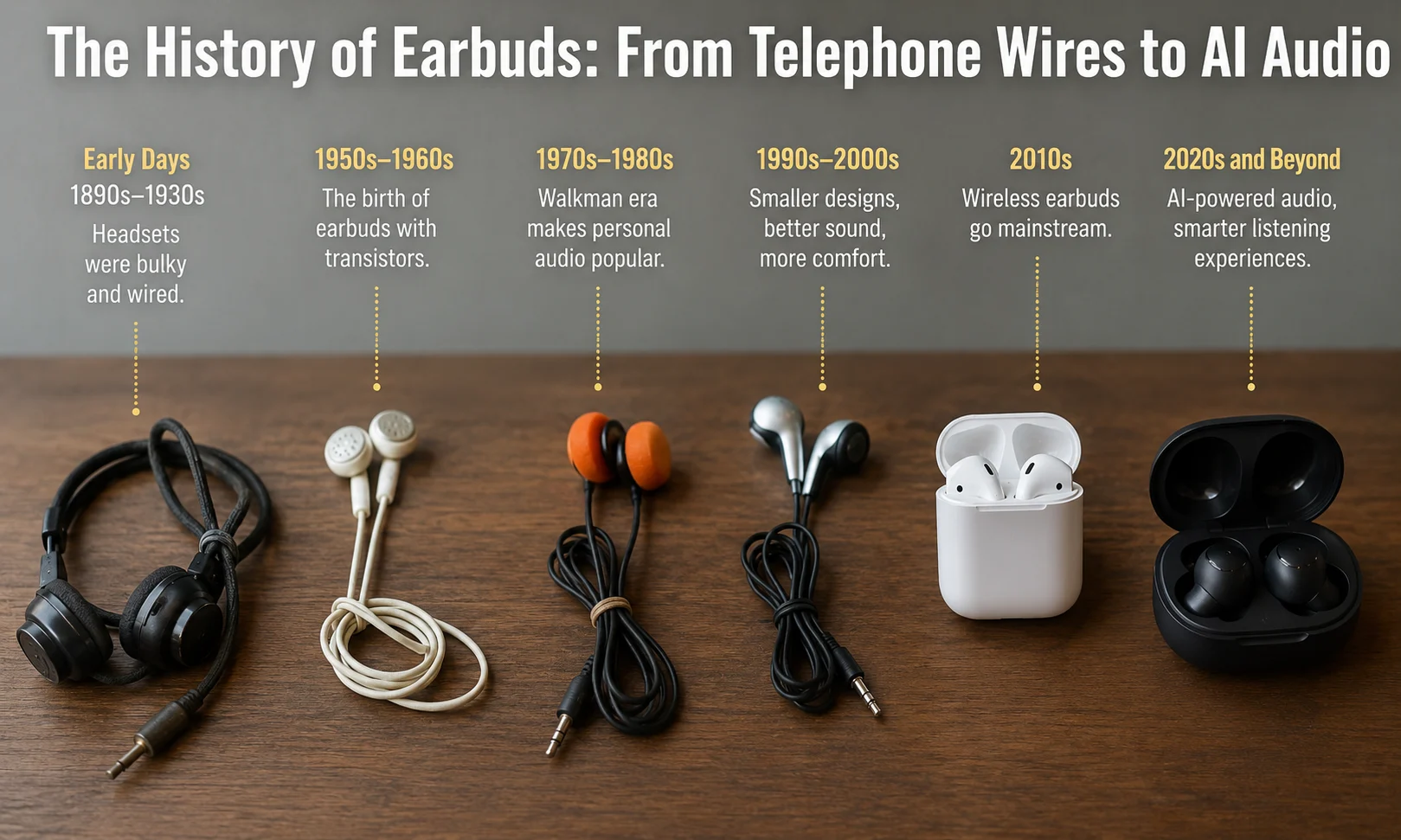
Hello readers, my name is Abhishek Gupta, and today I’m going to explore the fascinating history of earbuds — one of the most popular and revolutionary audio technologies in the modern world. From simple telephone wire earpieces to advanced AI-powered wireless earbuds, the journey of earbuds reflects how quickly technology has transformed our daily lives.
Today, earbuds are used for much more than just listening to music. People use them for gaming, online meetings, fitness tracking, podcasts, video streaming, voice assistants, and even real-time AI communication. But before sleek true wireless earbuds became common, audio devices were large, wired, and limited in sound quality.
Over the years, earbuds evolved through several major technological eras, including the Walkman generation, the iPod revolution, Bluetooth innovation, and the rise of smart AI audio systems. Modern earbuds now offer features like Active Noise Cancellation (ANC), spatial audio, adaptive sound tuning, and intelligent voice assistance.
In this article, I will take you through the complete history of earbuds — from their early beginnings in telephone communication to the futuristic AI-powered audio devices shaping the future of personal technology.
The History of Earbuds
Earbuds feel so normal now that it is easy to forget how strange they really are. We carry tiny speakers in our pockets, place them in our ears, and expect them to stream music, block noise, handle calls, track workouts, and switch between devices in seconds. That kind of convenience would have seemed almost magical a century ago.
Yet the history of earbuds did not start with smartphones or even with portable music players. It reaches back to the age of switchboards, military communications, radio experiments, and early electrical patents. That is what makes this story so fun! Earbuds are not just a modern gadget. They are the result of more than a hundred years of work in sound, comfort, miniaturization, and personal technology.
In this guide, we will trace the history of earbuds from the late 19th century to the present day. Along the way, we will look at the inventors and industries that shaped personal listening, the Sony Walkman’s role in making portable audio mainstream, the huge cultural power of Apple’s white earbuds, and the technical leaps that gave us modern wireless listening. We will also dig into balanced armature vs. dynamic drivers, Bluetooth codecs like aptX and LDAC, the rise of audiophile IEMs, and the fierce true wireless market beyond Apple. By the end, you will have a clear picture of how earbuds evolved and where they may go next.
The earliest roots of earbuds
The history of earbuds begins long before the word “earbud” became common. In the late 1800s, inventors were already trying to solve a simple but important problem: how do you send sound directly to one person’s ear?
Telephone operators and the first in-ear concepts
One of the earliest important names in this story is Ernest Mercadier, a French engineer who patented an in-ear listening device in the 1890s. His design aimed to reduce the discomfort caused by bulkier earpieces used in telephone work. That idea feels surprisingly modern. Even then, inventors understood that personal audio needed to be small, light, and comfortable enough for long use.
This was not a consumer product in the modern sense. It was a practical tool. Telephone operators, telegraph users, and communication workers needed private listening. They also needed equipment that would not tire them out during long shifts. Heavy headgear was a real problem. A lighter earpiece meant better comfort and better productivity.
That is one of the most important themes in the history of earbuds: convenience often drives innovation as much as sound quality does.
Other 19th-century and early 20th-century audio patents
The path from early telephone earpieces to modern earbuds was not straight. It came from many overlapping fields, including telephony, radio, military signaling, and hearing technology.
In the late 19th and early 20th centuries, patents related to receivers, diaphragms, electromagnetic transducers, and acoustic fittings all helped move personal listening forward. Inventors experimented with:
- smaller receivers that could sit closer to the ear
- better materials for diaphragms to improve clarity
- more efficient electromagnetic designs
- adjustable headbands and earpieces for comfort
- insulated wiring for safer, more durable use
These inventions may sound small on their own, but together they built the base for private listening devices. Early earpieces were often single-sided and designed for speech, not music. That matters. The first challenge was not rich sound. It was intelligibility. Could the user hear words clearly? Could they wear the device for hours? Could the signal travel reliably?
Those questions shaped the hardware.
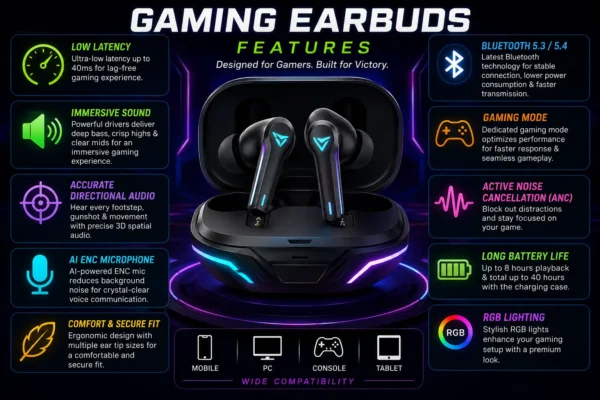
Best Gaming Earbuds in 2026 – Complete Guide for Mobile, PC & Esports Gamers
Nathaniel Baldwin and military headsets
A major step in personal audio came in the early 20th century with Nathaniel Baldwin, who built headphone prototypes by hand and attracted the attention of the US Navy. His designs were not earbuds, but they were crucial to the bigger story. They proved that head-worn listening devices could deliver useful, focused sound for professional work.
Military demand often speeds up communication technology, and that happened here too. Headsets for naval and radio use pushed improvements in sensitivity, fit, and ruggedness. Once a technology becomes reliable in demanding settings, it often finds its way into civilian life later.
So while earbuds were still far away as a mass-market item, the idea of personal listening was already firmly in place.
Radio, miniaturization, and the move toward personal listening
The next big chapter in the history of earbuds came with radio. When radio spread in the early 20th century, people became more used to the idea that audio could be delivered electrically and heard privately.
Crystal radios and single-ear listening
If you have ever seen an old crystal radio set, you may know about the simple earphones that often came with it. These were usually high-impedance earpieces designed to reproduce speech and simple signals rather than full, rich music. They were primitive by modern standards, but they introduced many people to the idea of plugging into sound directly.
That was a big cultural shift. Listening no longer had to be public. It could be private, focused, and personal.
Hearing aids and component shrinkage
Another quiet influence on earbud history was hearing aid design. As hearing aids became smaller through the 20th century, engineers learned a lot about compact receivers, battery management, and in-ear ergonomics. Not every breakthrough in mini audio came from music products. Some of it came from medical and accessibility technology.
This cross-pollination matters. Small transducers, better fit in the ear canal, and low-power operation all became important for later in-ear audio devices.
Portable music changes everything
For decades, personal listening existed, but portable music had limits. You could listen through radios, transistor devices, and later cassette players, but mass-market personal audio did not fully take off until products became truly portable, affordable, and stylish.
That brings us to one of the biggest turning points in the history of earbuds.
The Sony Walkman revolution
When Sony released the Walkman in 1979, it changed not just how people listened to music, but how they thought about it. Music became something you could carry anywhere. That shift was huge.
Why the Walkman mattered so much
Before the Walkman, listening was often tied to a place. You listened in your living room, in your car, or near a stereo system. The Walkman broke that link. Suddenly, your soundtrack could follow you down the street, onto a bus, or into a park.
That idea sounds ordinary now, but it was radical at the time.
The Walkman did three things at once:
- It made music mobile
- It made headphone listening socially visible
- It made lightweight personal audio desirable
The engineering behind the shift
Sony’s achievement was not just marketing. It was product design. The company had to make a cassette player compact, battery-powered, and efficient enough for everyday use. It also needed headphones light enough to support the promise of portability.
The bundled headphones, such as the MDR-3L2, were slim, lightweight, and far less intimidating than traditional home headphones. They sat on the ears rather than enclosing them with bulky cups. Foam padding kept costs and weight down.
This created a new expectation: audio gear should travel with you.
How the Walkman paved the way for earbuds
The Walkman did not make earbuds instantly dominant, but it made them make sense. Once the market accepted that people wanted personal, portable sound, the next step was obvious. Listening gear had to get even smaller.
That demand pushed manufacturers toward compact on-ear designs and, eventually, simple earbuds that rested in the outer ear. These early earbuds were easy to carry, cheap to bundle, and good enough for casual listening.
They were not great by modern standards. Bass was weak. Fit was inconsistent. Sound leakage was common. But they matched the moment. They were light, simple, and mobile.
The cultural impact of Walkman listening
The Walkman also changed behavior. People began curating private experiences in public spaces. That may be the most important cultural effect of portable audio. It gave listeners control over mood, pace, and personal space.
You could walk through a noisy city and hear your own soundtrack. You could tune out. You could create your own bubble.
That habit is now so deeply built into daily life that we barely notice it. But it started here.
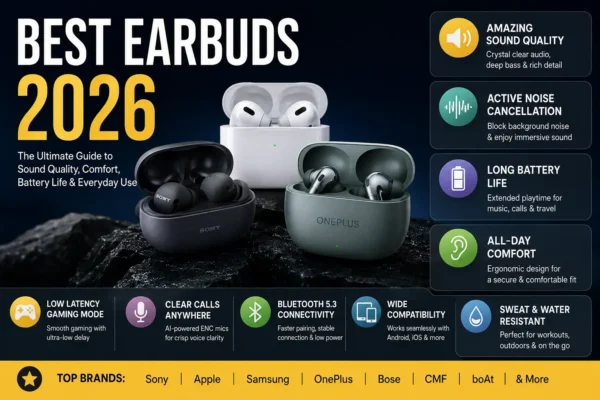
The Ultimate Guide to the Best Earbuds for Sound Quality, Comfort, Battery Life, and Everyday Use (2026)
The rise of consumer earbuds in the 1980s and 1990s
As portable music spread through cassette and CD players, basic earbuds became more common. Manufacturers liked them because they were inexpensive and compact. Consumers liked them because they fit in a pocket.
The classic foam-covered earbud
Many people still remember those simple plastic earbuds with thin foam covers. They came bundled with portable players and often sounded thin, bright, and a bit harsh. Yet they helped define a generation of listening.
Their strengths were clear:
- low cost
- easy packaging
- light weight
- broad compatibility
Their weaknesses were just as clear:
- poor isolation
- weak seal
- inconsistent fit
- limited bass response
Still, they kept growing in popularity because they served the basic need well. They let you listen privately without carrying large headphones.
The Discman era and portability pressure
Portable CD players raised the bar. CDs offered better fidelity than cassette tapes, but they also revealed the flaws of cheap earbuds more clearly. Listeners began to notice detail, treble sharpness, and bass limitations in new ways.
At the same time, people wanted slimmer gear. The better portable devices became, the more pressure there was to improve the things attached to them.
The iPod era and the power of white earbuds
If the Walkman made personal music mainstream, the iPod made it iconic. Apple did not invent the earbud, but it gave earbuds a cultural status few audio products had ever achieved.
Why Apple’s earbuds stood out
When Apple launched the iPod in 2001, one of its smartest choices was visual. The included earbuds were white. So were the cables. Most competing audio accessories were black, gray, or forgettable. Apple’s white earbuds were instantly visible.
That visibility mattered more than many people expected. The cords became a signal. They showed that the user had an iPod, and that meant they were participating in a new kind of digital lifestyle.
It was clever branding hiding in plain sight.
The iPod and mass digital listening
The iPod changed listening habits in a second major way. It moved users from carrying albums to carrying libraries. Once thousands of songs fit in your pocket, earbuds became the gateway to constant, flexible listening.
This had major effects:
- people listened for longer stretches
- playlists became part of identity
- commuting became a key listening time
- podcasts and spoken-word audio later fit naturally into the same habit
Earbuds were no longer just accessories. They were daily essentials.
The limits of early Apple earbuds
Of course, those famous white earbuds had flaws. Many users found the fit loose. Isolation was poor. They leaked sound and could slip out during movement. But they succeeded because they were simple, recognizable, and always there in the box.
Convenience beat perfection.
That is another recurring lesson in the history of earbuds. The best product on paper does not always win. The product that fits into daily life often does.
The rise of in-ear monitors and better sound
While mass-market earbuds focused on convenience, another branch of the market was getting serious about sound.
What are IEMs?
In-ear monitors, usually called IEMs, fit deeper into the ear canal and create a seal using silicone or foam tips. That seal is a game changer. It improves bass, boosts perceived detail, and blocks outside noise.
IEMs first gained strong traction in professional audio. Musicians and stage performers used them as an alternative to loud floor monitors. With IEMs, performers could hear a clearer mix at safer volumes and with more control.
From there, the technology moved into consumer and enthusiast markets.
Why audiophiles embraced IEMs
For listeners who cared deeply about sound, IEMs offered several advantages:
- better isolation than regular earbuds
- stronger bass response due to sealing
- improved clarity and imaging
- compact size compared with full headphones
Over time, brands such as Shure, Etymotic, Westone, Sennheiser, Ultimate Ears, and later many boutique companies helped build the audiophile IEM market. These products were not just about portability. They were about fidelity.
And that changed how people thought about in-ear audio. Earbuds no longer had to mean compromise.
Balanced armature vs. dynamic drivers
If you have ever looked at IEM specs and wondered what all the driver talk means, this is where things get interesting.
Dynamic drivers
Dynamic drivers are the most common type in earbuds and headphones. They work using a voice coil attached to a diaphragm that moves within a magnetic field. When current passes through the coil, the diaphragm moves and creates sound.
Dynamic drivers are popular because they:
- produce strong bass naturally
- offer good coherence across frequencies
- are often more affordable
- work well in many consumer designs
A well-tuned dynamic driver can sound full, smooth, and powerful. Many listeners love them for their natural low-end weight.
Balanced armature drivers
Balanced armature drivers were originally popular in hearing aids because of their small size and efficiency. In audio, they became especially important in IEMs.
A balanced armature driver uses a tiny armature balanced between magnets. When current flows, the armature moves and drives a diaphragm. These drivers are very compact and can be tuned for specific frequency ranges.
Their main strengths include:
- excellent detail retrieval
- high efficiency
- compact size
- the ability to combine multiple drivers in one earpiece
That last point is a big one. Many premium IEMs use several balanced armature drivers, with some tuned for bass, others for mids, and others for treble.
Which is better?
This is the fun part: neither is automatically better.
Dynamic drivers often deliver more natural bass and a cohesive presentation. Balanced armature designs can offer precision, speed, and fine detail. Many high-end IEMs now use hybrid systems that combine a dynamic driver for low frequencies with balanced armatures for mids and highs.
Some even add electrostatic or planar elements for extra refinement.
So when people debate balanced armature vs. dynamic drivers, the real answer is that implementation matters more than the label. Tuning, crossover design, shell shape, nozzle size, and ear tip fit all play huge roles.
Bluetooth changes earbud design
Wireless audio did not arrive all at once. It took years of protocol improvements, better batteries, and smarter chips.
Early Bluetooth headsets
The first wave of Bluetooth audio products focused on phone calls, not music. Single-ear business headsets were common. They offered hands-free convenience but limited sound quality.
At that stage, Bluetooth was more about utility than enjoyment.
Stereo Bluetooth and A2DP
As Bluetooth matured, the A2DP profile made stereo audio streaming practical. This opened the door to wireless music listening. Early products often used a cable between the left and right earbuds or a neckband design that housed electronics and batteries.
These designs solved one major problem: freedom from the phone cable. For exercise and commuting, that was a big improvement.
Still, sound quality and reliability had room to grow.

Top 10 Compact Phones in 2026 – Small Size, Big Power
The evolution of Bluetooth codecs
Once wireless music became normal, attention shifted to audio quality. That is where codecs come in.
A codec compresses and decompresses audio for wireless transmission. Different codecs balance sound quality, latency, and power use in different ways.
SBC: the baseline
SBC became the standard fallback codec for Bluetooth audio. It is widely supported and gets the job done, but its quality can vary. In early wireless audio, SBC often reinforced the idea that Bluetooth sounded worse than wired listening.
AAC
AAC became especially important in Apple’s ecosystem. It can deliver good quality when implemented well and works efficiently across many devices. For iPhone users, AAC became a common and practical standard.
aptX and aptX HD
Qualcomm’s aptX family helped shape the next phase of wireless listening. aptX aimed to improve perceived audio quality and reduce some of the compromises associated with standard Bluetooth transmission.
Later versions such as aptX HD pushed for higher-quality playback, while aptX Low Latency targeted better sync for video and gaming. More recently, adaptive versions have tried to respond to changing wireless conditions in real time.
For Android users in particular, aptX became a key selling point.
LDAC
Sony’s LDAC pushed the conversation even further by supporting higher data rates for wireless audio. For enthusiasts, LDAC became one of the most exciting codec names because it suggested that Bluetooth could get much closer to wired fidelity than many people assumed.
In practice, performance still depends on source quality, device support, signal stability, and implementation. But LDAC helped shift expectations. Wireless audio could be taken seriously.
Codec reality check
Here is a helpful tip: codec support matters, but it is not everything. Driver quality, tuning, antenna stability, DSP, microphone design, and fit often affect the real experience just as much.
A poorly tuned earbud with a fancy codec will still sound disappointing. A well-designed earbud using a simpler codec can still sound very good.
The true wireless explosion
The jump from wireless earbuds with cables to fully independent buds was one of the biggest design shifts in earbud history.
Early true wireless attempts
The first true wireless stereo products felt futuristic, but they were often rough around the edges. Connection reliability, battery life, and sync between left and right buds could be frustrating. Still, they proved the idea had real appeal.
No cable at all. That was the dream.
AirPods and frictionless design
Apple’s AirPods turned that dream into a mass habit. Their biggest strength was not raw sound quality. It was ease. Pairing was simple. The charging case was compact. Device switching within Apple’s ecosystem felt smooth.
This ease removed friction, and that changed the market.
The market beyond Apple
Apple may have led the cultural wave, but the true wireless market quickly became crowded and competitive.
Samsung
Samsung built strong alternatives, especially for Android users. Galaxy Buds models often offered comfortable fit, solid tuning, and tight integration with Samsung phones.
Sony
Sony became a major player by blending strong ANC, codec support like LDAC, and richer sound tuning. For many users, Sony true wireless earbuds became a serious premium choice.
Bose
Bose leaned into comfort and noise cancellation. For travelers and commuters, that focus made perfect sense.
Jabra
Jabra found a strong audience with earbuds aimed at calls, work, and fitness. Reliable microphones and practical design helped the brand stand out.
Sennheiser
Sennheiser targeted listeners who cared more about sound quality, bringing some of its audio reputation into the true wireless space.
Anker, Nothing, Beats, JBL, and many others
The broader market exploded across price points. Some brands focused on value. Others emphasized style, bass, battery life, gaming latency, or app customization.
This competition has been great for buyers. Features that once felt premium, such as ANC, transparency mode, multipoint pairing, and customizable EQ, have spread quickly through the market.
Noise cancellation, transparency, and smart features
Modern earbuds do far more than play music.
Active noise cancellation
ANC uses microphones and signal processing to reduce external sound, especially steady low-frequency noise like engines or air conditioning. This has transformed earbuds for travel, offices, and study.
Transparency and ambient modes
At the same time, users do not always want isolation. Transparency modes use microphones to feed outside sound back in so you can hear traffic, announcements, or conversation without removing the buds.
That balance between immersion and awareness has become a defining feature of premium earbuds.
Sensors and convenience
Modern earbuds may include:
- wear detection
- touch controls
- voice assistant support
- multipoint connection
- personalized EQ
- spatial audio processing
- adaptive sound modes
Each feature adds a layer to the earbud’s role. It is no longer just an audio device. It is becoming a wearable computer.
The future: biometrics and AI in earbuds
This next phase is especially exciting.
Biometrics
Because earbuds sit close to the head and remain in contact during movement, they are well positioned for health sensing. Companies are exploring or already offering features such as:
- heart rate tracking
- body temperature sensing
- motion and posture data
- workout metrics
- fatigue and recovery signals
The ear is a useful place for some health measurements, and that could make earbuds more valuable far beyond entertainment.
AI integration
AI is also set to reshape what earbuds do. We are likely to see more of:
- real-time language translation
- smarter noise filtering for calls
- personalized hearing profiles
- adaptive EQ based on environment
- voice assistants that understand context better
- audio summaries and intelligent notifications
Imagine earbuds that know you are on a train, reduce that specific noise pattern, boost voice clarity for a call, and switch to your preferred commute sound profile automatically. We are getting closer to that kind of experience.
Challenges ahead
Of course, there are trade-offs. More sensors and AI features raise questions about privacy, battery life, and data handling. Comfort remains critical too. The smartest earbuds in the world will fail if people do not enjoy wearing them.
That means the future of earbuds will depend on balance: useful intelligence, strong sound, long battery life, and trust.
Actionable takeaways: what earbud history teaches us
The long history of earbuds reveals a few clear lessons.
1. Convenience often wins first
People adopt the products that fit into daily life most easily. Great sound helps, but ease matters more than many brands expect.
2. Fit is everything
From early in-ear patents to modern IEMs, comfort and seal shape the experience. A better fit often improves both sound and usability.
3. Wireless quality is now good enough for most people
With better codecs, chips, and tuning, wireless earbuds can satisfy a huge range of users. Wired listening still matters for enthusiasts, but Bluetooth has come a long way.
4. Earbuds are now wearables
Audio is only one part of the modern earbud story. Health tracking, AI support, and environmental awareness are becoming central.
5. The market rewards specialization
Some users want the best ANC. Others want audiophile sound, workout security, or crystal-clear calls. The strongest brands know exactly whom they serve.
Conclusion
The history of earbuds is really the history of personal sound. What began with telephone earpieces and early communication patents grew through radio, military headsets, miniaturization, portable music, digital libraries, wireless protocols, and wearable computing. Each stage solved a different problem. Make it lighter. Make it smaller. Make it sound better. Make it easier. Make it smarter.
That is why modern earbuds feel so impressive. They are carrying the weight of more than a century of invention in a form small enough to disappear into your pocket.
The next time you open a charging case or push an ear tip into place, it is worth pausing for a second. You are using a product shaped by switchboard operators, radio hobbyists, cassette listeners, audio engineers, codec designers, and software teams chasing the perfect balance between sound and convenience. That is an amazing journey.
If you are choosing earbuds now, use that history to your advantage. Decide what matters most to you: comfort, sound quality, call performance, ANC, codec support, or fitness features. Then pick the pair that fits your real life, not just the marketing hype. The best earbuds have always been the ones that make listening feel easy, personal, and a little bit magical.
FAQs
The evolution of earbuds began with simple telephone earpieces used in the late 19th and early 20th centuries. These early devices were created mainly for communication and had very basic sound technology. They were large, uncomfortable, and designed only for mono audio transmission. As portable electronics started becoming popular in the 1950s and 1960s, lightweight wired earphones appeared alongside transistor radios. This allowed people to listen to music privately for the first time.
The biggest transformation came during the late 1970s and 1980s with the rise of portable cassette players like the Sony Walkman. Earbuds became smaller, lighter, and more stylish. During the 1990s, companies introduced in-ear designs with silicone tips that improved comfort and sound isolation. The launch of MP3 players and portable CD players further increased demand for compact personal audio devices.
A major turning point occurred in 2001 when Apple launched the iPod with its iconic white earbuds. These earbuds became a global symbol of portable digital music. Later, Bluetooth technology changed the industry by removing wires completely. Although early wireless earbuds had weak battery life and connectivity issues, the technology improved rapidly.
The release of true wireless earbuds, especially Apple AirPods in 2016, completely transformed the market. Users now enjoyed seamless wireless audio, charging cases, touch controls, and smart assistant integration. Modern earbuds include advanced technologies such as Active Noise Cancellation (ANC), spatial audio, AI-enhanced sound optimization, and real-time voice assistance. Today’s AI-powered earbuds are capable of learning user preferences, improving call quality automatically, and even translating languages in real time. The journey from telephone wires to AI audio shows how earbuds evolved alongside modern technology and digital lifestyles.
Wireless earbuds have become extremely popular because they offer convenience, portability, and advanced smart features that fit modern lifestyles. Unlike traditional wired earphones, wireless earbuds eliminate tangled cables and provide greater freedom of movement. This makes them ideal for commuting, workouts, gaming, travel, office work, and entertainment.
One major reason for their popularity is smartphone evolution. Many modern smartphones no longer include a headphone jack, encouraging users to adopt Bluetooth audio devices. True wireless earbuds became even more attractive after companies introduced compact charging cases, fast pairing systems, and improved battery performance.
Modern wireless earbuds also offer premium technologies that significantly improve the listening experience. Features such as Active Noise Cancellation (ANC) help block unwanted background noise, while transparency mode allows users to hear their surroundings when necessary. Spatial audio creates immersive 3D sound effects for movies, games, and music.
Another reason for the popularity of wireless earbuds is integration with voice assistants and artificial intelligence. Users can access Siri, Google Assistant, or Alexa directly from their earbuds for tasks such as setting reminders, controlling smart devices, checking weather updates, or making calls. AI-powered features can automatically optimize sound based on the environment and improve voice clarity during calls.
Fitness enthusiasts also prefer wireless earbuds because many models are water-resistant, lightweight, and designed for active lifestyles. Some earbuds even include fitness tracking sensors and health-monitoring features.
Fashion and design also contribute to their popularity. Modern earbuds are sleek, compact, and available in stylish designs that match personal preferences. Brands continue competing to create smaller, smarter, and more comfortable earbuds.
Overall, wireless earbuds combine entertainment, communication, convenience, and smart technology into one compact device, making them one of the most essential gadgets in today’s digital world.
AI audio technology refers to the use of artificial intelligence and machine learning systems inside earbuds to improve sound quality, communication, and user experience automatically. Modern earbuds are no longer simple audio devices. They now include intelligent software capable of adapting to user behavior and surrounding environments in real time.
One of the most common AI features in earbuds is adaptive noise cancellation. AI algorithms analyze external sounds and automatically adjust noise cancellation levels based on the environment. For example, earbuds may increase ANC in crowded public areas while reducing it during conversations or outdoor walking.
AI also improves voice call quality. Advanced earbuds use machine learning systems to separate human voices from background noise. This helps create clearer phone calls even in noisy environments such as traffic, airports, or cafes.
Some AI-powered earbuds include real-time language translation features. These systems can translate conversations instantly, helping users communicate across different languages more easily. This technology is becoming increasingly important for travelers and business professionals.
Modern AI earbuds may also personalize audio profiles automatically. The earbuds learn listening preferences, analyze ear shapes, and optimize sound settings for better bass, clarity, or vocal performance. Some models even perform hearing tests to create customized audio experiences.
Voice assistants are another major AI integration. Users can interact with Siri, Google Assistant, or Alexa directly through their earbuds using voice commands. AI systems help users control music, send messages, navigate maps, or manage smart home devices hands-free.
Future AI earbuds may include health monitoring, biometric authentication, emotional detection, and advanced contextual awareness. Researchers are already exploring earbuds with built-in cameras and visual intelligence systems.
AI audio technology is transforming earbuds into intelligent wearable companions rather than simple listening accessories. As artificial intelligence continues to evolve, earbuds will likely become even smarter and more deeply integrated into everyday life.
Even though wireless earbuds dominate the modern market, wired earbuds still offer several advantages that many users appreciate. The debate between wired and wireless earbuds depends mainly on personal preferences, usage needs, and audio priorities.
One of the biggest advantages of wired earbuds is consistent sound quality. Wired connections can transmit audio signals directly without Bluetooth compression, which may result in cleaner and more detailed sound. Audiophiles and professional music listeners often prefer wired earphones for this reason.
Wired earbuds also provide lower latency. This is especially important for gamers, video editors, and musicians who need audio synchronization without delays. Wireless earbuds may sometimes experience latency depending on Bluetooth technology and device compatibility.
Another major benefit is reliability. Wired earbuds do not require charging, software updates, or battery management. Users can simply plug them into compatible devices and start listening immediately. This makes wired earbuds useful during long travel sessions or emergencies when charging is not available.
Cost is another important factor. Wired earbuds are usually cheaper than premium wireless earbuds. Many affordable wired models still deliver excellent sound quality at a lower price point.
Durability can also favor wired models in certain situations. Some users find wireless earbuds easier to lose because of their compact size. Battery degradation over time may also reduce the lifespan of wireless earbuds.
However, wireless earbuds provide unmatched convenience and portability. Features like Active Noise Cancellation, touch controls, voice assistants, and fitness integration make them highly attractive for modern users.
Interestingly, some consumers are returning to wired earbuds in 2026 because of frustrations related to Bluetooth connectivity issues, battery limitations, and expensive replacements. The resurgence of wired audio shows that both technologies still have strong audiences.
Ultimately, neither option is universally better. Wired earbuds are ideal for pure audio quality and reliability, while wireless earbuds focus more on convenience, smart features, and mobility.
The future of earbuds looks incredibly advanced as companies continue combining artificial intelligence, wearable computing, and immersive audio technologies. Earbuds are rapidly evolving from simple listening devices into intelligent personal assistants capable of performing multiple functions beyond music playback.
One of the most exciting future developments is real-time AI translation. Future earbuds may allow seamless communication between people speaking different languages by instantly translating conversations directly into the user’s ears. This could revolutionize travel, international business, and education.
Health monitoring is another growing area. Future earbuds may include biometric sensors capable of tracking heart rate, body temperature, stress levels, and even early health conditions. Since earbuds sit close to important blood vessels and brain activity areas, researchers see major health-monitoring potential in wearable audio devices.
Spatial and immersive audio technologies will also continue improving. Future earbuds may create realistic 3D sound environments for gaming, movies, virtual reality, and augmented reality experiences. Ultra-low latency audio systems will become especially important for next-generation gaming and metaverse applications.
Artificial intelligence will play an even bigger role in sound optimization. Earbuds may automatically adjust sound profiles depending on location, mood, activity, or hearing conditions. AI systems could also predict user behavior and provide proactive assistance throughout the day.
Some experimental concepts already include camera-equipped earbuds with visual AI systems. These devices may help users navigate environments, identify objects, or access augmented information in real time.
Battery technology is also expected to improve significantly. Future earbuds may feature longer battery life, faster charging, and even wireless energy transfer technologies.
Additionally, earbuds may become more integrated with smart ecosystems, allowing seamless interaction with smartphones, laptops, cars, and smart homes. Advanced voice assistants could turn earbuds into central hubs for digital life management.
The future of earbuds is not just about listening to music. They are becoming intelligent wearable computers designed to enhance communication, entertainment, health, productivity, and everyday human interaction with technology.
[…] The History of Earbuds: From Telephone Wires to AI Audio […]
[…] The History of Earbuds: From Telephone Wires to AI Audio […]
[…] The History of Earbuds: From Telephone Wires to AI Audio […]
[…] The History of Earbuds: From Telephone Wires to AI Audio […]
[…] The History of Earbuds: From Telephone Wires to AI Audio […]