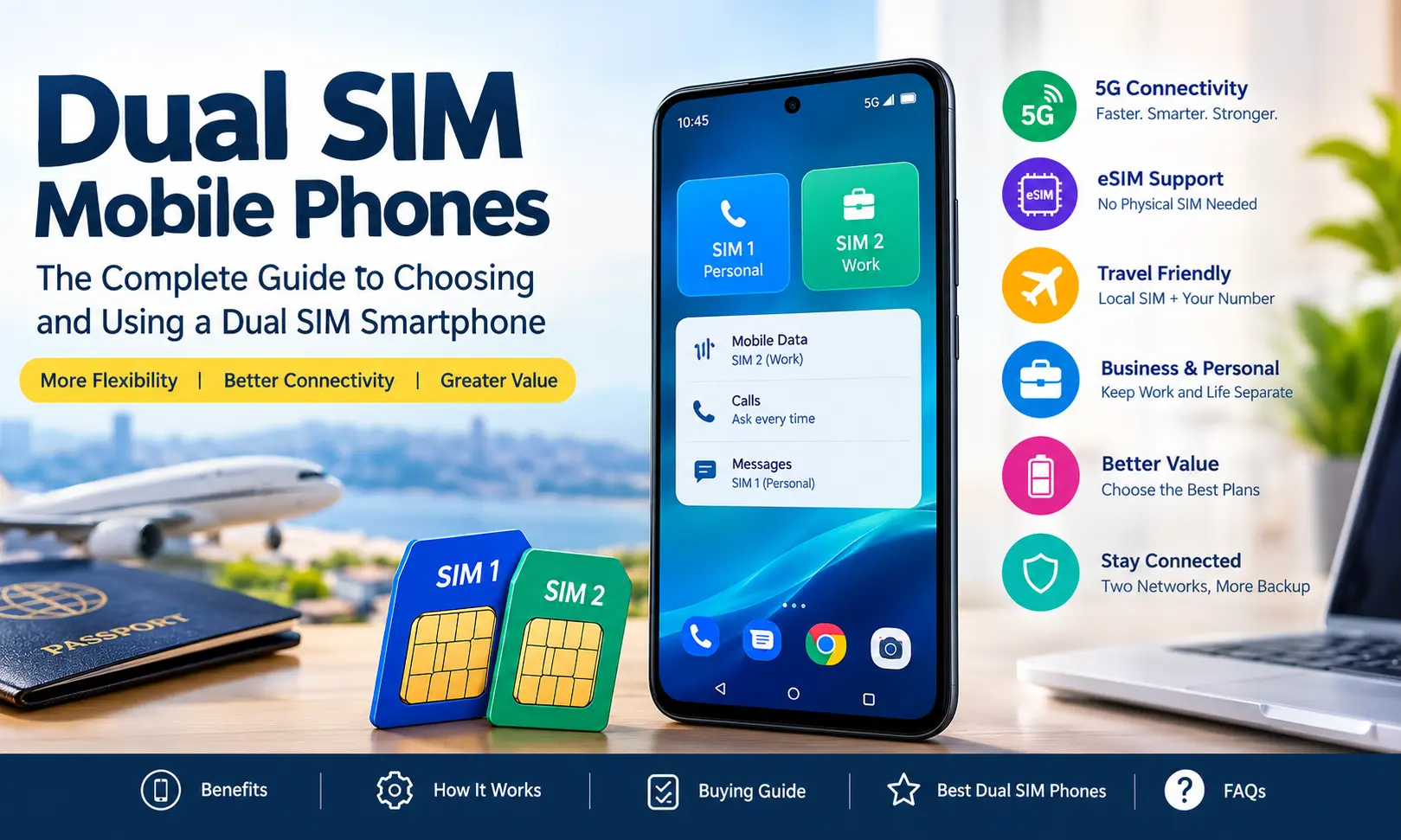
Dual SIM mobile phones have completely changed the way people manage their personal, professional, travel, and internet connectivity. Instead of carrying two separate smartphones, users can now operate two mobile numbers from a single device. This makes dual SIM smartphones especially useful for people who want to keep work and personal communication separate, use two different mobile networks, save money while travelling, or maintain a backup connection.
Modern dual SIM smartphones can support different combinations of physical SIM cards and eSIM technology. Depending on the phone model, users may be able to use two physical SIM cards, one physical SIM with one eSIM, or two eSIM profiles. Many modern smartphones use Dual SIM Dual Standby (DSDS), meaning both lines can remain available while the phone is idle, although the exact behavior during calls and mobile-data use depends on the device, carrier, and configuration.
This complete guide explains everything you need to know about dual SIM mobile phones, including how dual SIM technology works, its advantages and disadvantages, dual SIM vs single SIM, 4G and 5G support, eSIM, battery usage, travel benefits, business applications, security considerations, and how to choose the best dual SIM smartphone.
What Is a Dual SIM Mobile Phone?
A dual SIM mobile phone is a smartphone that can operate with two SIM connections. Each SIM can have a different phone number, mobile plan, carrier, or network.
For example, you could use:
- SIM 1 for your personal number
- SIM 2 for your business number
- SIM 1 for calls and SIM 2 for mobile data
- One SIM for your home country and another for international travel
- One network as your primary connection and another as a backup
The biggest advantage is convenience. Instead of carrying two phones, you can manage both connections from one smartphone.
A dual SIM phone does not necessarily mean that both SIMs work in exactly the same way. Smartphone manufacturers use different hardware and software configurations, so it is important to check the specifications of a particular device before buying it.
Modern dual SIM phones may use physical SIM cards, eSIMs, or a combination of both.
How Does a Dual SIM Mobile Phone Work?
The basic concept is simple: the smartphone has the ability to maintain two cellular subscriptions.
When both SIMs are configured, the phone identifies them as separate mobile lines. You can usually assign names such as:
- Personal
- Work
- Business
- Travel
- Primary
- Secondary
You can then select which SIM should be used for calls, text messages, and mobile data.
For example:
SIM 1: Personal number
SIM 2: Business number
Mobile Data: SIM 1
Alternatively:
SIM 1: Main carrier
SIM 2: Low-cost data plan
Mobile Data: SIM 2
This flexibility is one of the main reasons dual SIM smartphones have become popular.
Most current dual SIM smartphones use a system commonly known as Dual SIM Dual Standby, or DSDS. Both lines can remain registered while the phone is idle, but they generally share cellular radio resources rather than functioning as two completely independent cellular radios.
This distinction is important because many people assume that “dual SIM” automatically means that both lines can perform every cellular operation simultaneously.
What Is Dual SIM Dual Standby (DSDS)?
Dual SIM Dual Standby is one of the most common implementations of dual SIM technology.
In DSDS mode, both SIMs can remain on standby. This allows the phone to monitor both lines while the device is not actively using one of them for a cellular session.
For example, if you have:
SIM 1: Personal
SIM 2: Office
Both numbers can generally remain available while the phone is sitting idle.
However, the behavior can change when one line is actively being used. During a cellular call, for example, the second line may temporarily become unavailable depending on the phone, carrier, VoLTE support, and network configuration.
This is why buyers should not judge a dual SIM phone simply by looking at the number of SIM slots.
The underlying modem and network features matter too.
Dual SIM vs Dual Active
One of the most important differences to understand is the difference between dual standby and dual active technology.
Dual SIM Dual Standby
With DSDS:
- Both SIMs can remain on standby.
- Both numbers can generally receive calls and messages while idle.
- Cellular resources are shared.
- Only one cellular connection may be actively using the modem at a time.
- Exact behavior depends on the device and carrier.
Dual SIM Dual Active
Dual SIM Dual Active, commonly called DSDA, uses a more independent hardware configuration.
In theory, this allows both SIM connections to remain active simultaneously.
For example, a phone with true dual-active functionality could potentially handle a call on one line while maintaining activity on the other line.
However, true dual-active implementations are much less common than dual-standby designs in modern mainstream smartphones.
Therefore, when shopping for a dual SIM phone, it is important to check the manufacturer’s specifications instead of assuming that two SIM slots mean two fully independent cellular connections.
Benefits of Dual SIM Mobile Phones
Dual SIM smartphones offer numerous benefits for everyday users.
1. One Phone for Two Numbers
The most obvious benefit is the ability to operate two numbers from one device.
This eliminates the need to carry two smartphones.
For example:
Phone 1: Personal number
Phone 2: Business number
can become:
One smartphone: Personal SIM + Business SIM
This makes communication much easier.
 Earbuds
AB Abhishek Gupta| May 18, 2026| 29 min read
The History of Earbuds: From Telephone Wires to AI Audio
2. Separate Work and Personal Communication
Dual SIM technology is particularly useful for professionals, freelancers, entrepreneurs, salespeople, and business owners.
You can dedicate one number to work and another to personal communication.
For example:
SIM 1 – Personal
Used for:
- Family
- Friends
- Personal WhatsApp
- Personal calls
- Personal messages
SIM 2 – Business
Used for:
- Customers
- Clients
- Suppliers
- Business calls
- Professional messaging
This can provide a useful separation without requiring two devices.
3. Use Two Different Mobile Networks
Another major advantage is network flexibility.
Suppose Network A provides excellent coverage in your city but poor coverage in certain rural areas.
Network B may provide stronger coverage in those locations.
With a dual SIM phone, you can keep both networks available.
This can be especially helpful for people who travel frequently or live in areas where network coverage varies.
4. Better Network Backup
A second SIM can serve as a backup connection.
If your primary network experiences:
- Network congestion
- Temporary outage
- Poor coverage
- Weak indoor reception
- Local service problems
you may be able to switch your mobile data connection to the second SIM.
This is particularly useful for people who rely heavily on mobile internet.
5. Save Money on Mobile Plans
Different carriers may offer different prices for:
- Calls
- Text messages
- Mobile data
- International roaming
- Long-term plans
- Prepaid packages
A dual SIM phone lets you choose the best plan for each requirement.
For example, one SIM could provide inexpensive calls while the second SIM provides a better-value data package.
Instead of forcing one carrier to handle everything, you can combine plans based on your needs.
 Earbuds
AB Abhishek Gupta| May 16, 2026| 15 min read
Best Gaming Earbuds in 2026 – Complete Guide for Mobile, PC & Esports Gamers
6. Excellent for International Travel
Travel is one of the strongest use cases for dual SIM smartphones.
Suppose you normally live in one country but travel internationally.
You can keep your regular SIM active while adding a local SIM or travel eSIM.
For example:
SIM 1: Home-country SIM
SIM 2: Local travel SIM
The travel SIM can provide local data and potentially cheaper local calling, while the home SIM can remain available for important communication.
This is one of the biggest reasons eSIM and dual SIM functionality are valuable to frequent travelers.
However, users should carefully check roaming settings and carrier charges before travelling.
7. Easy Business and Personal Separation
Small-business owners often need multiple phone numbers.
Instead of purchasing a separate business phone, a dual SIM smartphone can provide a simple solution.
For example:
Business SIM
- Customer calls
- Business WhatsApp
- Client communication
- Professional contacts
Personal SIM
- Family
- Friends
- Personal services
This setup can reduce hardware costs and simplify daily communication.
8. Convenient for Freelancers
Freelancers frequently communicate with clients using a dedicated number.
A dual SIM smartphone lets them maintain:
- Personal number
- Freelance/business number
on the same device.
This can make professional communication more organized without requiring a second handset.
9. Useful for Students
Students can also benefit from dual SIM smartphones.
One number can be used for personal communication while another can be dedicated to:
- College communication
- Part-time work
- Internet data
- Family communication
- Travel
The flexibility makes dual SIM useful even for people who do not run a business.
 Earbuds
AB Abhishek Gupta| May 15, 2026| 20 min read
The Ultimate Guide to the Best Earbuds for Sound Quality, Comfort, Battery Life, and Everyday Use (2026)
10. More Flexibility With Mobile Data
Many smartphones allow users to choose which SIM handles mobile data.
For example:
SIM 1: Voice and SMS
SIM 2: Mobile data
This can be useful if one carrier offers better data pricing while another provides better calling coverage.
Dual SIM and 5G
5G has made dual SIM smartphones even more interesting.
However, buyers should understand that “dual SIM 5G” does not necessarily mean that both SIMs can independently maintain full-speed 5G data sessions simultaneously.
The actual behavior depends on:
- Smartphone modem
- SIM configuration
- Carrier
- 5G bands
- VoLTE support
- Regional model
- Software
- Network availability
Some devices support advanced dual-SIM configurations where both lines can remain registered on modern networks, while the active data connection is assigned to one SIM.
Therefore, if 5G is important to you, always check the exact model specifications.
Dual SIM and eSIM Technology
eSIM has become an important part of modern dual SIM smartphones.
An eSIM is an embedded SIM that does not require a removable plastic SIM card.
Instead, the mobile carrier profile is installed digitally.
This creates several advantages.
Benefits of eSIM
Easy activation
Depending on the carrier, an eSIM can often be activated using a QR code, carrier application, or another digital process.
Excellent for travel
You can purchase a travel eSIM before reaching another country and configure it on a compatible phone.
No physical card required
There is no tiny plastic SIM card to insert or remove.
Flexible SIM combinations
Some smartphones support a physical SIM together with an eSIM, while others may support multiple eSIM profiles or different combinations depending on the region.
However, eSIM availability varies by smartphone model and carrier.
Physical SIM vs eSIM for Dual SIM Phones
Both physical SIM and eSIM have advantages.
Physical SIM
Advantages:
- Easy to move between compatible phones
- Familiar to most users
- Widely supported
- Easy to replace
Disadvantages:
- Can be lost or damaged
- Requires a SIM tray
- Some phones use a hybrid slot
eSIM
Advantages:
- No physical card required
- Convenient for travel
- Easy to store multiple carrier profiles on supported devices
- Useful for devices with limited physical SIM slots
Disadvantages:
- Carrier compatibility is required
- Transfer procedures vary
- Some users find physical SIM cards easier to manage
The best choice depends on your carrier, phone, country, and personal requirements.
 Mobile Phones
AB Abhishek Gupta| May 05, 2026| 15 min read
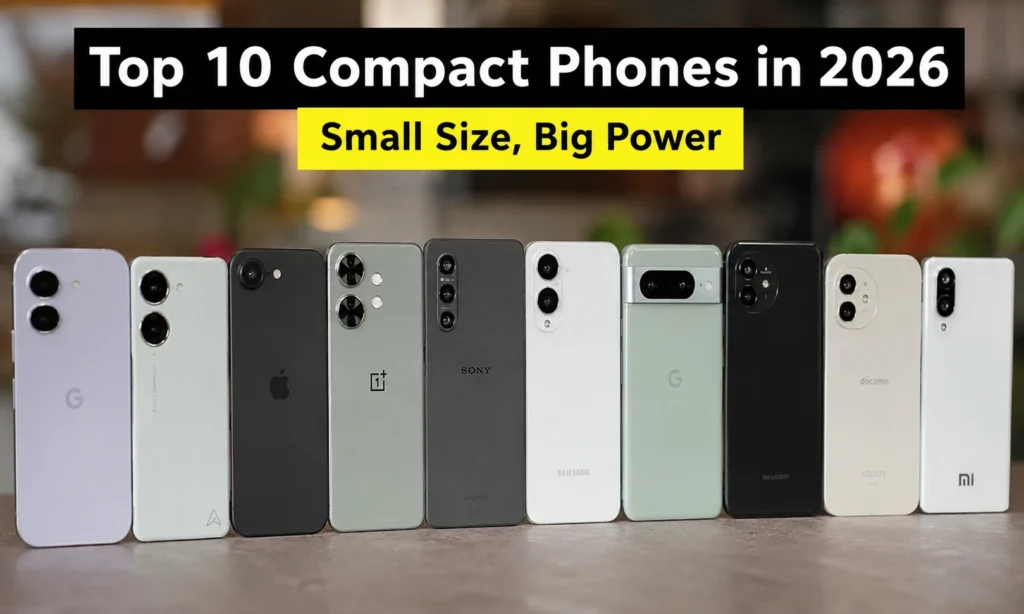
Top 10 Compact Phones in 2026 – Small Size, Big Power
Hybrid SIM Slot Explained
Some Android smartphones use a hybrid SIM tray.
A hybrid slot may allow you to choose between:
SIM 2
or
microSD card
This means you may not be able to use two physical SIM cards and a microSD card simultaneously.
For example:
Option A: SIM 1 + SIM 2
or
Option B: SIM 1 + microSD
This is an important specification to check before purchasing a smartphone.
If expandable storage is important to you, a hybrid SIM tray can affect your decision.
Dual SIM Battery Consumption
A common question is whether dual SIM phones use more battery.
The answer depends on several factors.
When two cellular lines are active or available, the smartphone may need to manage connections to two networks. Network strength also has a major influence on battery consumption.
A phone operating in an area with poor signal may consume more energy because it works harder to maintain connectivity.
Battery consumption can therefore depend on:
- Number of active SIMs
- Network strength
- 4G/5G availability
- Carrier configuration
- VoLTE
- Wi-Fi calling
- Background applications
- Screen usage
- Mobile data activity
If battery life is extremely important, using only the SIMs you actually need and disabling an unused line may help in some situations.
Does Dual SIM Slow Down a Smartphone?
Generally, dual SIM functionality does not mean that your processor suddenly becomes slower.
Performance depends mainly on:
- Processor
- RAM
- Storage
- Software optimization
- Cooling system
- Background applications
Dual SIM connectivity is primarily a cellular-network feature.
However, using two network connections and maintaining multiple services may have some impact on power consumption depending on the device and network conditions.
Dual SIM for Business Owners
For business owners, dual SIM can be an extremely useful feature.
Imagine a small-business owner who receives dozens of customer calls every day.
Instead of carrying two smartphones, they can use:
SIM 1: Customer/business number
SIM 2: Personal number
This setup can make communication simpler.
A business owner can also use different carriers to improve coverage.
For example:
- Carrier A for business calls
- Carrier B for data
This gives the user more flexibility when managing communication.
Dual SIM for Online Businesses
Online businesses often depend on mobile communication.
A business may use a dedicated number for:
- Customer support
- Orders
- WhatsApp Business
- Advertising inquiries
- Delivery communication
- Vendor communication
A dual SIM smartphone can keep that business number separate from the owner’s personal number.
This can be particularly useful for:
- E-commerce sellers
- Digital marketers
- Freelancers
- Consultants
- Real estate agents
- Local businesses
- Service providers
- Content creators
Dual SIM for Travelers
Frequent travelers should strongly consider dual SIM functionality.
A common setup is:
Primary SIM: Home number
Secondary SIM/eSIM: Travel data
Before travelling, users should check:
- Whether the phone is carrier unlocked.
- Whether the destination carrier supports the device.
- Whether the phone supports the required frequency bands.
- Whether eSIM is supported.
- Whether data roaming is enabled or disabled as intended.
- Which SIM is selected for mobile data.
This can prevent unexpected roaming charges and connectivity problems.
 Mobile Phones
AB Abhishek Gupta| Apr 28, 2026| 10 min read
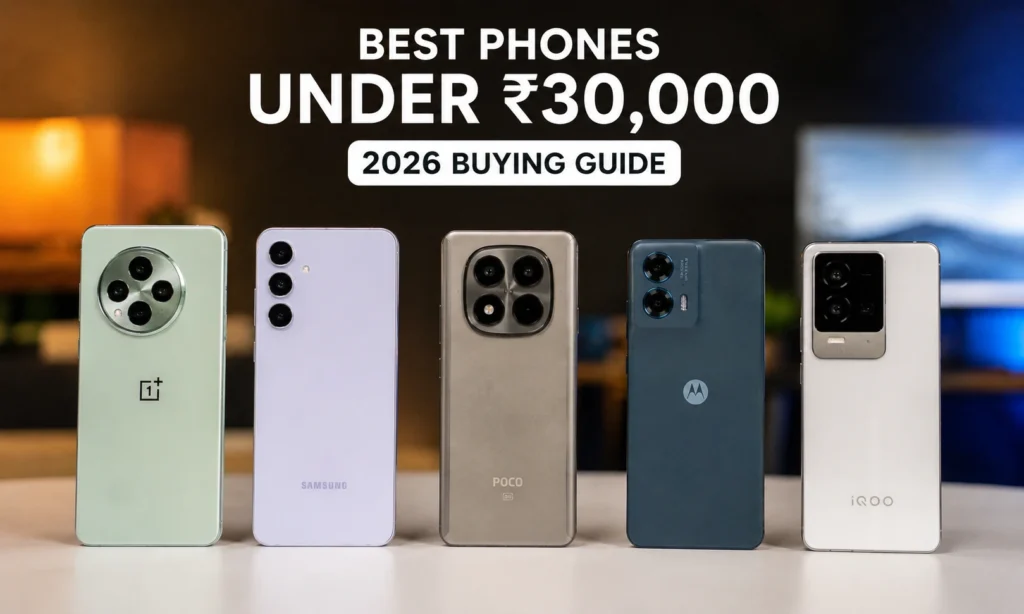
Best Phones Under 30k in 2026 – Complete Buying Guide
How to Set Up a Dual SIM Phone
The exact menu differs between Android phones and iPhones, but the general process is similar.
Step 1: Insert or activate the SIMs
Install your physical SIM cards or activate your eSIM profiles.
Step 2: Name the SIMs
Use meaningful names such as:
- Personal
- Work
- Travel
- Data
- Business
Step 3: Select your default calling SIM
Some phones allow you to choose a default line for outgoing calls.
Step 4: Select your messaging SIM
Choose which number should be used for SMS or supported messaging services.
Step 5: Select your mobile data SIM
This is particularly important.
Choose the SIM that has the best data plan and network coverage.
Step 6: Configure roaming
If you are travelling, carefully review data roaming settings for both lines.
Step 7: Test both numbers
Make a call to each number and send test messages.
This confirms that both SIMs are properly configured.
Can You Use Two WhatsApp Accounts on a Dual SIM Phone?
On supported devices and versions of the relevant apps, it may be possible to maintain separate accounts for two numbers.
This can be especially useful for people who want:
Personal WhatsApp
and
Business WhatsApp
on one phone.
Android manufacturers may also provide app-cloning or dual-app features.
However, availability and functionality depend on the operating system, phone manufacturer, and application.
Always use official application features rather than unofficial cloning software.
Can Both SIMs Receive Calls?
On most modern dual SIM standby phones, both lines can remain available while the device is idle.
However, the experience can change when one SIM is actively handling a cellular call.
This is one of the most important limitations to understand before buying a dual SIM phone.
If your work requires you to receive calls on both lines simultaneously, investigate the phone’s exact dual-SIM architecture and carrier support rather than assuming that all dual SIM phones behave identically.
What Happens When One SIM Is on a Call?
This depends on the phone, modem, carrier, and network features.
On many DSDS phones, the cellular radio is shared.
When SIM 1 is handling an active call, SIM 2 may temporarily become unavailable for incoming cellular communication.
Some devices and carrier configurations can reduce this limitation through features such as VoLTE and related network capabilities.
This is why two phones with “dual SIM” printed in their specifications may provide different real-world experiences.
Dual SIM and VoLTE
VoLTE stands for Voice over LTE.
It allows voice calls to use a 4G LTE network instead of relying on older network technologies.
VoLTE can be important for dual SIM users because modern network architectures depend heavily on IP-based voice services.
When both SIMs and carriers support appropriate VoLTE functionality, the dual-SIM experience can be more flexible.
However, VoLTE support is not automatically guaranteed simply because a smartphone has two SIM slots.
You need compatible:
- Phone hardware
- Firmware
- Carrier
- SIM
- Network
Disadvantages of Dual SIM Mobile Phones
Dual SIM phones are highly useful, but they are not perfect.
1. More Complicated Settings
Managing two lines can initially feel confusing.
You need to understand:
- Which SIM handles calls
- Which SIM handles data
- Which SIM is used for messages
- Roaming settings
- Carrier settings
Once configured, however, daily use becomes much easier.
2. Shared Cellular Resources
Many dual SIM phones use a shared modem architecture.
This means that having two SIMs does not necessarily provide two completely independent cellular connections.
3. Battery Impact
Depending on network conditions and hardware, maintaining two cellular lines may increase power consumption.
This is especially noticeable when one or both networks have weak signal.
4. Hybrid SIM Slots
Some phones force users to choose between:
- Second SIM
and
- microSD storage
This can be inconvenient for people who need both.
5. Regional Differences
The same smartphone model may have different SIM configurations in different countries.
For example, one regional version may support:
- Physical SIM + eSIM
while another version may support:
- Two physical SIM cards
Therefore, always check the exact regional model.
What Should You Look for When Buying a Dual SIM Smartphone?
If you are shopping for a dual SIM phone, don’t only check whether the specification says “Dual SIM.”
Consider the following factors.
1. SIM Configuration
Check whether the phone supports:
- 2 physical SIMs
- 1 physical SIM + eSIM
- 2 eSIMs
- Hybrid SIM
- Multiple eSIM profiles
2. 4G and 5G Support
Check whether both SIMs support the network technologies you need.
If 5G is important, verify the exact carrier and band compatibility.
3. Dual Standby or Dual Active
Find out whether the phone uses:
- DSDS
- DSDV
- DSDA
- Another manufacturer-specific implementation
This can affect how the second line behaves during calls and data sessions.
4. Carrier Compatibility
A phone may support eSIM technically but still require carrier support.
Always check whether your network provider supports the desired SIM configuration.
5. Battery Capacity
If you plan to keep two SIMs active every day, a phone with strong battery life can be beneficial.
Look beyond battery capacity and consider processor efficiency and software optimization.
6. Network Bands
If you travel frequently, network-band compatibility is extremely important.
A phone may support dual SIM but not support all frequency bands used by your destination carrier.
7. Storage
If the phone uses a hybrid SIM tray, determine whether you need a second SIM or microSD storage.
Best Dual SIM Phone for Different Types of Users
There is no single best dual SIM smartphone for everyone.
The right phone depends on your requirements.
Best for Business Users
Look for:
- Reliable cellular connectivity
- Strong battery life
- Good call quality
- eSIM or dual physical SIM support
- Excellent messaging support
- Good security
Best for Travelers
Look for:
- eSIM support
- Broad network-band compatibility
- Dual SIM functionality
- Strong battery life
- Fast charging
- Reliable 5G
Best for Students
Look for:
- Affordable price
- Good battery
- Dual SIM support
- Good camera
- Sufficient storage
Best for Heavy Data Users
Look for:
- Strong 5G support
- High-quality modem
- Good carrier compatibility
- Large battery
- Fast charging
Dual SIM Mobile Phones for India
Dual SIM smartphones are particularly useful in India because consumers may choose between different mobile operators depending on coverage, pricing, and data requirements.
A user may want:
SIM 1: Primary calling number
SIM 2: Backup network or data connection
This can be useful when travelling between cities, working remotely, or moving between areas with different network conditions.
However, network availability changes by location, so users should evaluate actual carrier coverage in the places where they spend the most time.
Dual SIM vs Two Separate Phones
Which is better?
It depends on your lifestyle.
Dual SIM Phone
Advantages:
- One device
- One charger
- One screen
- Easier to carry
- Two numbers
- Convenient travel setup
Disadvantages:
- Shared hardware
- Possible battery impact
- Limited simultaneous cellular behavior on many devices
Two Phones
Advantages:
- Completely independent devices
- Independent batteries
- Both phones can be used simultaneously
- Greater separation between personal and business life
Disadvantages:
- More expensive
- More equipment
- More chargers
- More difficult to carry
For most people who simply need two numbers, a dual SIM smartphone is much more convenient.
Is a Dual SIM Phone Worth Buying?
For many users, yes.
A dual SIM phone is particularly valuable if you:
- Have two phone numbers
- Own a business
- Work as a freelancer
- Travel internationally
- Need backup connectivity
- Want to combine two mobile plans
- Want to separate work and personal communication
- Use a local SIM while travelling
- Need a dedicated business number
If you only have one number and never need another network, dual SIM may not be an important purchasing factor.
Common Dual SIM Mistakes to Avoid
Mistake 1: Assuming Two SIMs Mean Two Independent Radios
Most modern dual SIM phones use shared cellular resources.
Always check the exact architecture.
Mistake 2: Ignoring eSIM Compatibility
If you plan to use an eSIM, verify both the smartphone and carrier support it.
Mistake 3: Forgetting Data Settings
Before travelling, verify which SIM is selected for mobile data.
Mistake 4: Ignoring Roaming
Keeping your home SIM active while travelling can be useful, but you should understand your carrier’s roaming charges and settings.
Mistake 5: Buying the Wrong Regional Model
SIM configurations can vary by country.
Always check the exact model sold in your market.
Mistake 6: Ignoring Network Bands
This is particularly important for international travellers.
How to Improve Dual SIM Battery Life
If you notice higher battery consumption, try these practical steps:
Keep only necessary SIMs active
If you don’t need one line temporarily, disabling it can reduce connectivity activity.
Use Wi-Fi when available
Wi-Fi can reduce cellular data usage.
Avoid weak-signal areas when possible
Poor signal can increase power consumption.
Manage 5G settings
If 5G provides little benefit in your location, a suitable network mode may sometimes improve battery life.
Review background apps
Social media, cloud synchronization, navigation, and messaging apps can consume significant power independently of dual SIM.
Dual SIM Security Considerations
A dual SIM phone does not automatically mean lower security.
However, because you are managing two phone numbers, you should keep track of which number is connected to:
- Banking
- Email recovery
- Social media
- Messaging
- Two-factor authentication
- Business accounts
If one SIM is used for important account recovery, protect that number carefully.
Use:
- Strong device passwords
- Biometric authentication
- Account-based security keys where available
- Authenticator applications when appropriate
- Secure backup methods
Avoid sharing verification codes with other people.
Dual SIM and Two-Factor Authentication
Dual SIM phones can be convenient for receiving verification codes on different numbers.
For example:
SIM 1: Personal accounts
SIM 2: Business accounts
However, SMS should not be treated as the only security method when stronger authentication options are available.
For important accounts, consider using an authenticator application, passkey, or hardware security key where supported.
Future of Dual SIM Smartphones
The future of dual SIM technology is increasingly connected to eSIM and software-defined connectivity.
Physical SIM cards are still widely used, but eSIM provides manufacturers with greater flexibility in device design.
Future smartphones may increasingly support:
- Multiple eSIM profiles
- Improved network switching
- Better travel connectivity
- More flexible carrier management
- Advanced 5G features
- Better dual-line call management
- More intelligent data switching
As mobile networks become more software-driven, managing multiple cellular plans will likely become easier.
Frequently Asked Questions About Dual SIM Mobile Phones
A dual SIM mobile phone is a smartphone capable of using two SIM connections, allowing users to maintain two phone numbers or mobile plans on one device.
Yes, provided the phone is compatible with both networks and is not restricted by carrier locking.
In many cases, yes. Compatibility depends on the device and carrier
Not necessarily. Many modern phones use Dual SIM Dual Standby, where both lines remain available while idle but share cellular resources during active use.
This depends on the phone, modem, carrier, and network configuration. “Dual SIM 5G” does not automatically mean two simultaneous independent 5G data connections.
Many modern smartphones support this configuration, but compatibility depends on the model and carrier.
Some modern phones support two active eSIM lines or multiple stored eSIM profiles, but this varies by model, region, and carrier.
It can, particularly when both lines have poor signal or are actively managing cellular connections. The actual effect varies by device and network.
Yes. It allows business and personal numbers to be managed from one smartphone.
Yes. One of the most useful travel setups is keeping your home line available while using a local SIM or travel eSIM for data.
Depending on the phone and app version, multiple accounts or separate supported app configurations may be available. Check the official features available on your device.
A hybrid SIM slot typically allows you to use either a second SIM or a microSD card in the same physical slot.
DSDS stands for Dual SIM Dual Standby. It is a common dual SIM architecture where both lines can remain on standby while sharing cellular resources
DSDA stands for Dual SIM Dual Active. It refers to a configuration designed to allow both cellular connections to remain active simultaneously using more independent radio resources.
Not necessarily. Dual SIM is better if you need two numbers, two networks, travel connectivity, or separate work and personal communication. A single SIM phone may be sufficient for users with simple connectivity needs.
Final Verdict: Are Dual SIM Mobile Phones Worth It?
Dual SIM mobile phones are one of the most practical smartphone technologies for people who need flexibility.
They allow you to combine two numbers, two mobile plans, or two networks into a single device. This makes them particularly valuable for professionals, business owners, freelancers, students, travelers, and anyone who wants a backup mobile connection.
The technology has also evolved significantly. Modern smartphones may combine physical SIM cards with eSIM, offer 4G and 5G connectivity, support sophisticated SIM management, and provide flexible data-selection options.
However, buyers should understand that “dual SIM” does not mean every phone provides two completely independent cellular connections. The exact experience depends on whether the device uses dual standby or another architecture, as well as the carrier, network technology, VoLTE support, eSIM compatibility, and regional model.
When buying a dual SIM smartphone, look beyond the number of SIM slots. Check the exact SIM configuration, eSIM support, 4G/5G compatibility, network bands, carrier compatibility, battery performance, and whether the second slot is shared with microSD storage.
For people who regularly use two numbers or travel internationally, a good dual SIM smartphone can eliminate the need for carrying two phones while providing greater control over connectivity.
Ultimately, the best dual SIM mobile phone is not simply the phone with the most SIM features. It is the device that provides the right combination of network compatibility, battery life, performance, camera quality, storage, software, security, and SIM flexibility for your specific needs.
If you need two numbers, want to combine mobile networks, or want a convenient travel connectivity solution, choosing a well-designed dual SIM smartphone can be an excellent long-term investment.
Leave a Reply