A smartphone has become one of the most important devices in modern life. It is no longer simply a mobile phone used to make calls and send text messages. Today’s smartphone can work as a camera, computer, entertainment center, navigation system, digital wallet, gaming device, communication tool, learning platform, and productivity assistant.
Whether you are buying your first smartphone, upgrading an old phone, choosing a budget mobile, looking for a powerful gaming phone, or comparing premium flagship devices, understanding the important features can help you make a smarter decision.
There are hundreds of smartphones available in different price ranges, and manufacturers often promote specifications such as megapixels, RAM, processor speed, display refresh rate, charging wattage, and artificial intelligence features. However, the phone with the largest numbers is not necessarily the best smartphone for every person.
The right smartphone depends on your budget, daily usage, performance requirements, camera needs, battery expectations, software preferences, storage requirements, connectivity, durability, and long-term support.
This comprehensive smartphone guide explains everything you need to know before buying and using a modern smartphone.
Table of Contents
- What Is a Smartphone?
- How Smartphones Have Changed
- Why Smartphones Are Important
- Types of Smartphones
- How to Choose the Right Smartphone
- Smartphone Display
- Smartphone Processor
- RAM and Performance
- Smartphone Storage
- Smartphone Camera
- Smartphone Battery Life
- Fast Charging and Wireless Charging
- 5G and Smartphone Connectivity
- Smartphone Operating Systems
- Android vs iPhone
- Smartphone Security and Privacy
- Smartphone Gaming
- Smartphones for Photography
- Smartphones for Students
- Smartphones for Business and Professionals
- Smartphones for Content Creators
- Budget Smartphones
- Mid-Range Smartphones
- Flagship Smartphones
- Foldable Smartphones
- AI Features in Smartphones
- Smartphone Durability
- Software Updates
- How to Maintain a Smartphone
- Common Smartphone Buying Mistakes
- How to Get Better Smartphone Performance
- Smartphone Accessories
- Smartphone Buying Checklist
- Future of Smartphones
- Frequently Asked Questions
- Final Thoughts
What Is a Smartphone?
A smartphone is a mobile electronic device that combines traditional telephone functions with computer-like capabilities.
Unlike older mobile phones that were primarily designed for voice calls and SMS messages, smartphones can connect to the internet, install applications, take high-quality photographs, record video, play games, stream movies, access social media, manage documents, use GPS navigation, make digital payments, and perform many other tasks.
Modern smartphones generally include a touchscreen, processor, RAM, internal storage, cameras, speakers, microphones, wireless connectivity, sensors, and an operating system.
The smartphone has effectively become a pocket-sized computer.
A modern smartphone can perform tasks such as:
- Making voice and video calls
- Sending messages
- Browsing websites
- Watching YouTube and streaming services
- Using social media
- Taking photos
- Recording videos
- Playing games
- Using navigation and maps
- Making online payments
- Managing email
- Editing documents
- Attending online meetings
- Learning through educational apps
- Shopping online
- Managing business activities
- Using artificial intelligence tools
This combination of communication, entertainment, productivity, and computing makes the smartphone one of the most versatile consumer technologies available today.
How Smartphones Have Changed
The smartphone industry has evolved dramatically over the last two decades.
Early mobile phones focused mainly on calling and messaging. Later, phones introduced color displays, cameras, internet connectivity, music players, and application platforms.
The introduction of touchscreen smartphones transformed the industry. Users could interact directly with applications, websites, photographs, videos, and games through a large touch-sensitive display.
Today, smartphones offer technologies that were once associated with computers and professional cameras.
Modern phones can include:
- High-refresh-rate displays
- Multi-camera systems
- Powerful processors
- Large batteries
- Fast charging
- 5G connectivity
- AI-powered photography
- Biometric security
- Satellite connectivity on some devices
- Advanced gaming capabilities
- Desktop-style productivity features
- Foldable screens
- Sophisticated image processing
The smartphone is now an important part of everyday digital life.
Why Smartphones Are Important
The biggest advantage of smartphones is convenience.
Instead of carrying separate devices for communication, photography, navigation, entertainment, payments, and productivity, one smartphone can perform most of these functions.
For example, a student can use a smartphone to attend an online class, research a topic, scan documents, communicate with classmates, take notes, and watch educational videos.
A business professional can use a smartphone for email, video meetings, banking, document management, customer communication, social media, and business applications.
A photographer or content creator can use a smartphone to capture photographs, record videos, edit content, and publish directly to social platforms.
This versatility explains why choosing the right smartphone is important.
Types of Smartphones
Smartphones can broadly be divided into several categories.
Budget Smartphones
Budget smartphones are designed for users who want essential features at an affordable price.
They are generally suitable for:
- Calling
- Messaging
- Social media
- Web browsing
- Video streaming
- Basic photography
- Everyday applications
Budget phones may compromise on premium cameras, processor performance, materials, or display technology.
However, modern budget phones can still provide a good everyday experience.
Mid-Range Smartphones
Mid-range smartphones provide a balance between price and performance.
They often include:
- Better processors
- Higher-quality displays
- Improved cameras
- Larger batteries
- Faster charging
- More storage
- Better build quality
For many users, the mid-range category provides an excellent balance between features and price.
Flagship Smartphones
Flagship smartphones represent the premium segment.
They typically offer:
- Powerful processors
- Advanced cameras
- Premium displays
- High-quality construction
- Advanced connectivity
- Fast performance
- Extensive software features
- Better long-term support
Flagship phones are designed for users who want premium hardware and are willing to pay more.
Foldable Smartphones
Foldable phones use flexible displays that allow the device to change form.
Some foldable phones open into a larger tablet-like screen, while others fold into a smaller compact form.
Their biggest advantages include:
- Large displays
- Multitasking
- Compact folded designs
- New productivity possibilities
However, foldables can be more expensive and may require greater care than conventional smartphones.
How to Choose the Right Smartphone
The best smartphone is not necessarily the most expensive smartphone.
Before buying a phone, first determine how you use your current device.
Ask yourself:
- Do I play demanding games?
- Do I take lots of photos?
- Do I record videos?
- Do I need excellent battery life?
- Do I use my phone for business?
- Do I watch movies frequently?
- Do I need large storage?
- Do I prefer Android or iOS?
- Do I need a compact phone?
- Do I need 5G?
- How many years do I plan to keep the phone?
Current buying guidance similarly recommends starting with your priorities instead of simply comparing specification numbers.
Once you understand your needs, compare smartphones based on the features that actually matter to you.
Smartphone Display
The display is one of the most important parts of a smartphone because you interact with it constantly.
A good smartphone display should provide:
- Clear images
- Good brightness
- Accurate colors
- Smooth scrolling
- Strong outdoor visibility
- Good viewing angles
- Responsive touch
AMOLED and OLED Displays
AMOLED and OLED displays are popular in modern smartphones because they can produce deep blacks, strong contrast, and vibrant colors.
They are especially useful for:
- Watching movies
- Viewing photographs
- Gaming
- Reading
- Social media
LCD displays remain useful in some devices and can offer good quality depending on implementation.
Refresh Rate
Refresh rate describes how frequently the screen refreshes its image.
Common refresh rates include:
- 60Hz
- 90Hz
- 120Hz
- Higher rates on some specialized devices
A higher refresh rate can make scrolling and animations appear smoother.
However, refresh rate should not be considered in isolation. Display brightness, color accuracy, touch response, resolution, and power efficiency also matter.
Screen Size
Large displays are useful for:
- Movies
- Games
- Reading
- Multitasking
- Editing documents
Smaller phones can be easier to carry and operate with one hand.
The ideal screen size depends on personal preference.
Smartphone Processor
The processor, or chipset, is one of the main components responsible for smartphone performance.
It affects:
- Application speed
- Gaming
- Camera processing
- Multitasking
- Artificial intelligence functions
- Battery efficiency
- Video processing
Modern smartphone processors are extremely powerful.
However, processor performance should not be judged only by benchmark scores.
A good smartphone chipset should provide a balance between performance and efficiency.
An extremely powerful processor is useful for gaming, video editing, and demanding applications, but casual users may not benefit significantly from paying extra for the highest-end chipset.
RAM and Smartphone Performance
RAM helps a smartphone keep applications and data available for quick access.
More RAM can be useful for:
- Multitasking
- Gaming
- Editing
- Running multiple applications
- Keeping applications active in the background
However, more RAM does not automatically make every phone better.
The operating system, processor, storage speed, software optimization, and memory management all contribute to the overall experience.
When comparing phones, look at the complete system rather than focusing only on the RAM number.
Smartphone Storage
Storage determines how much data your smartphone can hold.
Your storage may contain:
- Applications
- Photos
- Videos
- Music
- Documents
- Games
- Downloads
- Offline content
Common storage capacities include:
- 64GB
- 128GB
- 256GB
- 512GB
- 1TB or more on some premium devices
For many modern users, 128GB can be a practical starting point, while people who record lots of high-resolution video or install many large games may benefit from 256GB or more.
Storage technology also matters. Faster storage can improve application installation, file transfers, and general responsiveness. Current smartphone buying guidance specifically recommends considering storage technology rather than looking only at capacity.
Smartphone Camera
The camera has become one of the most important smartphone features.
Modern smartphones can include multiple cameras such as:
- Main camera
- Ultra-wide camera
- Telephoto camera
- Macro camera
- Depth-related sensors
- Front-facing selfie camera
However, camera quality cannot be determined by megapixels alone.
A camera system depends on:
- Sensor quality
- Lens quality
- Image stabilization
- Image processing
- Dynamic range
- Low-light performance
- Autofocus
- Video capabilities
A phone with a 200MP camera is not automatically better than a phone with a lower-megapixel sensor.
Software processing plays a major role in modern smartphone photography.
Smartphone Photography
Smartphone photography has become accessible to almost everyone.
Modern phones can automatically adjust exposure, color, focus, HDR, noise reduction, and other settings.
For everyday photography, look for:
- Good main-camera quality
- Reliable autofocus
- Optical or electronic stabilization
- Good low-light performance
- Natural colors
- Consistent image processing
If you frequently photograph distant subjects, a useful telephoto camera may be more valuable than an extremely high megapixel count.
If you photograph landscapes, architecture, or groups, an ultra-wide camera can be useful.
Smartphone Video Recording
Smartphones are also increasingly used for video creation.
Important video features include:
- Resolution
- Frame rate
- Stabilization
- Autofocus
- Microphone quality
- Low-light performance
- HDR support
- Storage capacity
Content creators should also consider whether the phone can sustain long recording sessions without excessive heat or storage problems.
A phone with excellent video quality can be valuable for YouTube creators, social media creators, vloggers, students, and small businesses.
Smartphone Battery Life
Battery life determines how long you can use your smartphone before needing to recharge.
Battery capacity is generally measured in milliamp-hours, or mAh.
However, battery capacity alone does not determine real-world battery life.
Battery performance also depends on:
- Processor efficiency
- Display technology
- Screen brightness
- Refresh rate
- Mobile network usage
- Background applications
- GPS
- Gaming
- Camera usage
- Software optimization
A larger battery can help, but an efficient phone can sometimes outperform a phone with a larger battery.
Current smartphone buying guides also emphasize that battery endurance and optimization are more useful than simply comparing advertised battery capacity.
Fast Charging and Wireless Charging
Fast charging allows a smartphone to recover battery power quickly.
This can be particularly useful when you have only a short time to charge before leaving home.
For example, a short charging session can provide enough power for several hours of moderate use, depending on the device.
Wireless charging provides convenience because you can place the phone on a compatible charging pad instead of connecting a cable.
However, charging speed should not be the only consideration.
Users should also consider:
- Charger availability
- Charging standards
- Heat management
- Battery health features
- Long-term battery performance
5G and Smartphone Connectivity
5G is a newer generation of cellular connectivity that can provide higher speeds and lower latency in supported areas.
A modern smartphone may also support:
- 4G LTE
- Wi-Fi
- Bluetooth
- NFC
- GPS
- USB connectivity
- Mobile hotspot
When buying a smartphone, do not assume that every 5G phone supports exactly the same network bands.
If mobile connectivity is important to you, check whether the device supports the bands and network features used by your carrier.
Smartphone Operating Systems
The operating system controls how your smartphone works.
The two major smartphone ecosystems are:
- Android
- iOS
Android
Android is used by many smartphone manufacturers.
One of its biggest advantages is variety.
Users can choose from:
- Budget phones
- Gaming phones
- Camera phones
- Foldable phones
- Premium flagship devices
- Compact phones
Android also provides extensive customization options on many devices.
iOS
iOS is Apple’s smartphone operating system.
It is known for:
- Strong integration with Apple’s ecosystem
- Consistent software experience
- Regular updates
- Hardware and software integration
- Strong application ecosystem
The choice between Android and iOS is largely personal.
Android vs iPhone
There is no universal answer to which platform is better.
Choose Android if you prioritize:
- More hardware choices
- Greater customization
- Flexible device selection
- Features across many price ranges
- Foldable options
- Different hardware designs
Choose iPhone if you prioritize:
- Apple’s ecosystem
- Simple device integration
- Long-term software support
- Consistent user experience
- Integration with other Apple products
The best choice depends on your existing devices and personal preferences.
Smartphone Security and Privacy
Security is one of the most important smartphone considerations.
Your phone may contain:
- Personal photographs
- Messages
- Emails
- Banking applications
- Payment information
- Contacts
- Documents
- Passwords
- Business information
Important smartphone security features include:
- Screen locks
- Fingerprint authentication
- Face recognition
- Encryption
- Secure application permissions
- Security updates
- Two-factor authentication
Always use a strong screen lock.
Avoid installing applications from unreliable sources.
Keep the operating system and applications updated.
Review application permissions regularly.
Smartphone Gaming
Smartphones have become powerful gaming devices.
Gaming performance depends on:
- Processor
- GPU
- RAM
- Display refresh rate
- Touch response
- Cooling
- Battery
- Storage speed
A gaming-focused smartphone may offer additional cooling systems, gaming software, physical controls, high refresh rates, and larger batteries.
However, you do not necessarily need a specialized gaming phone for casual gaming.
If you mostly play simple games, a good mid-range smartphone may be sufficient.
Smartphones for Photography
If photography is your primary reason for buying a smartphone, prioritize camera quality over unnecessary specifications.
Look for:
- High-quality main sensor
- Optical stabilization
- Good autofocus
- Strong low-light performance
- Reliable HDR
- Good portrait processing
- Useful telephoto capability
Also examine real photographs rather than relying entirely on megapixel numbers.
Smartphones for Students
Students often need a smartphone for communication, education, entertainment, and productivity.
Important features include:
- Good battery life
- Reliable performance
- Clear display
- Good storage
- Decent camera
- Strong connectivity
- Long software support
Students may not need a premium flagship device.
A well-balanced budget or mid-range smartphone can often handle:
- Online classes
- Notes
- Research
- Video streaming
- Social media
- Messaging
- Productivity applications
Smartphones for Business and Professionals
Professionals should consider smartphones that provide reliability and productivity.
Important features include:
- Long battery life
- Secure biometric authentication
- Strong network connectivity
- Good call quality
- Email support
- Document compatibility
- Reliable software updates
- Sufficient storage
Business users should also consider security and manufacturer update policies.
Smartphones for Content Creators
Content creators often have different requirements.
A creator may need:
- Excellent cameras
- High-quality video recording
- Large storage
- Powerful processor
- Fast storage
- Good microphones
- Long battery life
- Bright display
- Strong image stabilization
Storage is especially important because high-resolution videos can consume large amounts of space.
Cloud storage or external storage solutions can also be useful depending on the phone.
Budget Smartphones
A budget smartphone should focus on essential everyday performance.
Instead of looking for the maximum specification in every category, prioritize the features you actually use.
For example, a budget buyer may benefit more from:
- Reliable software
- Good battery life
- Bright display
- Stable performance
- Adequate storage
- Decent camera
than from a specification that sounds impressive but provides little practical benefit.
Mid-Range Smartphones
The mid-range smartphone category is attractive because it often provides a strong balance between price and features.
Depending on the device, users may find:
- AMOLED displays
- High refresh rates
- Fast processors
- Good cameras
- Large batteries
- Fast charging
- 5G
- Improved software support
Current Indian buying guides commonly divide smartphone shopping into budget, mid-range, and premium categories because expectations and feature priorities change substantially with price.
Flagship Smartphones
Flagship phones are designed for users who want premium hardware.
A flagship smartphone may offer:
- High-end processor
- Advanced camera system
- Premium materials
- Excellent display
- Advanced video capabilities
- Wireless charging
- Water resistance
- Advanced connectivity
- Long software support
However, flagship phones are not automatically the best value.
If you primarily use WhatsApp, YouTube, web browsing, calls, and social media, you may not need a premium flagship.
Foldable Smartphones
Foldable phones represent one of the most interesting smartphone designs.
There are two common approaches.
A book-style foldable opens into a larger display.
A flip-style foldable becomes smaller when closed.
Foldable phones can provide excellent multitasking capabilities.
For example, users may be able to view two applications simultaneously.
However, buyers should consider:
- Price
- Durability
- Hinge design
- Display protection
- Repair costs
- Battery life
- Camera performance
before choosing a foldable phone.
Artificial Intelligence in Smartphones
Artificial intelligence is becoming increasingly important in smartphones.
AI features can help with:
- Photo editing
- Object removal
- Translation
- Voice transcription
- Writing assistance
- Search
- Personalization
- Image processing
- Battery optimization
- Call-related features
However, buyers should not purchase a phone solely because it advertises AI.
Ask whether the AI functions are genuinely useful for your daily activities.
A useful AI feature is one that saves time or improves the experience rather than simply appearing in a specification list.
Smartphone Durability
Durability matters because smartphones are expensive devices that many people use every day.
Consider:
- Frame material
- Glass protection
- Water resistance
- Dust resistance
- Screen durability
- Case availability
- Repairability
A protective case and screen protector can reduce the risk of accidental damage.
Even water-resistant smartphones should not automatically be treated as waterproof.
Software Updates
Software support is one of the most overlooked smartphone features.
A smartphone may remain physically functional for years, but software updates can affect:
- Security
- Compatibility
- Performance
- New features
- Application support
Before purchasing a smartphone, check how long the manufacturer promises operating system updates and security updates.
Longer software support can significantly improve the long-term value of a phone.
Current buying guides increasingly emphasize update commitments as a major factor when evaluating a smartphone for multi-year ownership.
How to Maintain a Smartphone
Taking care of your smartphone can extend its useful life.
Keep the Device Clean
Clean the display and exterior using appropriate materials.
Avoid exposing the phone unnecessarily to dust, moisture, or extreme temperatures.
Protect the Screen
A quality screen protector can help reduce scratches and minor damage.
Use a Good Case
A protective case can reduce damage from accidental drops.
Keep Storage Under Control
Avoid filling internal storage completely.
Remove unnecessary:
- Videos
- Downloads
- Duplicate photos
- Applications
- Temporary files
Install Updates
Keep the operating system and applications updated.
Updates may include important security fixes and performance improvements.
Common Smartphone Buying Mistakes
Many buyers make decisions based on marketing rather than actual needs.
Mistake 1: Choosing Only by Megapixels
More megapixels do not automatically mean better photographs.
Mistake 2: Choosing Only by RAM
More RAM does not guarantee a faster phone.
Mistake 3: Ignoring Software Support
A cheap phone with poor long-term support may become less attractive over time.
Mistake 4: Buying More Storage Than Necessary
Extra storage is useful only if you actually need it.
Mistake 5: Ignoring Battery Optimization
Battery capacity is not the entire story.
Mistake 6: Buying a Gaming Phone Without Gaming
Gaming-focused hardware may be unnecessary for casual users.
Mistake 7: Ignoring Ergonomics
A phone can have excellent specifications and still feel uncomfortable in your hand.
Mistake 8: Forgetting Accessories
Check whether the smartphone includes a charger, case, cable, or other accessories before calculating the total cost.
How to Get Better Smartphone Performance
You can improve everyday smartphone performance by following a few simple practices.
Remove Unnecessary Applications
Applications running in the background can consume resources and battery.
Keep Storage Available
Extremely full storage can make device management more difficult and may affect performance.
Update Applications
Developers regularly release bug fixes and optimizations.
Restart Occasionally
A simple restart can resolve temporary software problems.
Avoid Untrusted Applications
Malicious or poorly designed applications can affect performance and security.
Manage Background Activity
Restrict unnecessary applications from continuously running in the background.
Smartphone Accessories
The smartphone itself is only part of the experience.
Useful accessories can include:
- Protective cases
- Screen protectors
- Chargers
- USB cables
- Wireless chargers
- Power banks
- Wireless earbuds
- Smartwatches
- Car mounts
- Mobile gaming controllers
- Tripods
- Smartphone gimbals
Content creators may particularly benefit from tripods, microphones, lights, and gimbals.
Smartphone Buying Checklist
Before purchasing a new smartphone, use this checklist.
Budget
Set a realistic maximum spending limit.
Processor
Choose a processor suitable for your workload.
Display
Check panel type, brightness, resolution, refresh rate, and size.
RAM
Choose enough physical RAM for your applications and multitasking needs.
Storage
Consider how many applications, photographs, videos, and games you store.
Camera
Look beyond megapixels and evaluate actual image quality.
Battery
Consider both capacity and real-world endurance.
Charging
Check charging speed and charger availability.
Connectivity
Check 5G, Wi-Fi, Bluetooth, NFC, and network compatibility.
Software
Check the operating system and manufacturer interface.
Updates
Check the promised security and operating system support.
Durability
Consider water resistance, materials, and screen protection.
Warranty
Understand the manufacturer’s warranty terms.
Service
Check whether reliable service and repair facilities are available in your region.
Reviews
Read several independent reviews before buying.
How to Compare Two Smartphones
When comparing two smartphones, avoid looking at specifications one by one.
Instead, compare them by category.
| Category | What to Check |
|---|---|
| Display | Brightness, panel technology, refresh rate |
| Processor | Performance and efficiency |
| RAM | Physical memory |
| Storage | Capacity and storage speed |
| Camera | Sensor, stabilization, processing |
| Battery | Capacity and real-world endurance |
| Charging | Wired and wireless charging |
| Software | OS and user interface |
| Updates | Security and OS support |
| Connectivity | 5G, Wi-Fi, Bluetooth, NFC |
| Build | Materials and durability |
| Price | Total ownership value |
This method makes it easier to identify which phone is actually better for your needs.
Best Smartphone for Different Users
There is no single smartphone that is perfect for everyone.
Best Smartphone for Battery Life
Prioritize battery capacity, processor efficiency, display efficiency, and charging speed.
Best Smartphone for Camera
Prioritize sensor quality, stabilization, image processing, autofocus, and video performance.
Best Smartphone for Gaming
Prioritize processor/GPU performance, cooling, display refresh rate, touch response, and sustained performance.
Best Smartphone for Students
Prioritize battery life, reliability, display quality, storage, and price.
Best Smartphone for Business
Prioritize security, software support, battery life, connectivity, and productivity.
Best Smartphone for Content Creation
Prioritize cameras, video quality, microphones, storage, processor performance, and battery life.
Best Smartphone for Everyday Use
A balanced mid-range phone can be an excellent choice for many people.
The Importance of Real-World Smartphone Performance
Specifications provide useful information, but real-world performance is more important.
For example, two smartphones may have similar processors but different software optimization.
Two phones may have identical battery capacities but deliver different battery life because of display and processor efficiency.
Two cameras may have similar megapixel counts but produce very different photographs.
This is why professional reviews and hands-on testing can be useful.
Current smartphone testing commonly evaluates areas such as real-world performance, camera consistency, battery endurance, display quality, software experience, and overall value rather than relying exclusively on specifications.
Smartphone and Mobile Internet
Smartphones have changed how people access the internet.
Instead of using a desktop computer for every online activity, users can access websites and applications from almost anywhere.
Mobile internet enables:
- Online banking
- Digital payments
- Shopping
- Social networking
- Streaming
- Remote work
- Online education
- Navigation
- Cloud storage
- Business communication
For many people, the smartphone is their primary internet-connected device.
 Earning
SH Shiva Verma| Jun 06, 2026| 31 min read
How to Earn Through Sponsored Posts (Complete Guide for Beginners in 2026)
Smartphone for Online Payments
Smartphones can also be used for digital payments.
Depending on your region and device, payment methods may include:
- Banking applications
- Mobile wallets
- NFC payments
- QR-code payments
- Payment applications
Security should be a priority when using smartphones for financial activities.
Always protect your device with a secure lock and use official applications.
Smartphone and Social Media
Social media has become deeply integrated with smartphone usage.
Popular social platforms allow users to:
- Share photos
- Upload videos
- Communicate
- Livestream
- Create short-form content
- Build businesses
- Follow news and trends
For social media creators, camera and video performance can therefore be more important than raw processor specifications.
Smartphone for Remote Work
A modern smartphone can support many remote-work activities.
Users can:
- Join video conferences
- Respond to email
- Edit documents
- Communicate through messaging applications
- Access cloud files
- Manage calendars
- Review presentations
- Use productivity applications
A large display and strong battery can be particularly helpful for professionals who work from their phones.
 YouTube
AB Abhishek Gupta| Jun 16, 2026| 15 min read
YouTube Play Button: Everything You Need to Know
Smartphone Health and Fitness Features
Many smartphones can work with fitness and health applications.
They may connect to:
- Smartwatches
- Fitness bands
- Wireless accessories
- Health applications
GPS can be used for activities such as running, cycling, and walking.
Sensors inside smartphones can also support applications involving motion, location, and activity tracking.
Smartphone Privacy
Privacy should be considered before installing applications.
Review:
- Camera permissions
- Microphone permissions
- Location permissions
- Contacts access
- Photo access
- Notification permissions
Only grant permissions that an application genuinely needs.
Use privacy settings to control how applications access personal information.
The Future of Smartphones
The smartphone industry continues to evolve.
Future smartphones are likely to focus on several major areas.
Artificial Intelligence
AI will increasingly become part of cameras, communication, search, productivity, and device management.
Better Cameras
Computational photography will continue to improve smartphone photography.
Foldable Designs
Foldable devices may become more refined as manufacturers improve screens, hinges, durability, and software.
Better Battery Technology
Battery technology and power efficiency will remain major areas of development.
Faster Connectivity
Mobile networks and Wi-Fi technologies will continue to improve.
More On-Device Processing
Powerful processors may allow more AI and computational tasks to happen directly on the smartphone.
Improved Durability
Manufacturers are likely to continue improving water resistance, materials, screens, and repairability.
 Mobile Phones
SH Shiva Verma| Sep 13, 2026| 18 min read
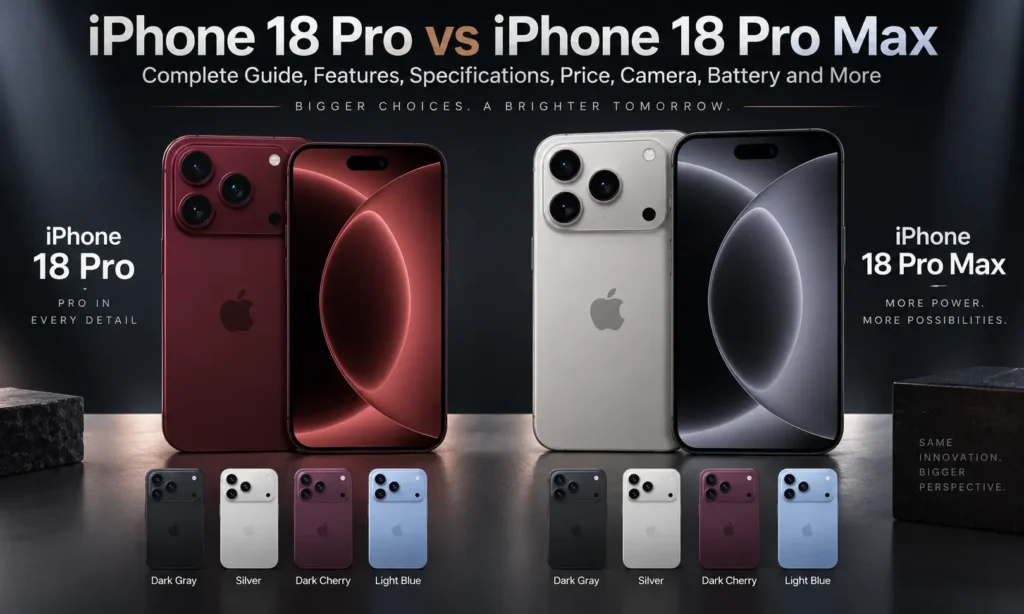
iPhone 18 Pro vs iPhone 18 Pro Max: Complete Guide, Features, Specifications, Price, Camera, Battery and More
How Long Should a Smartphone Last?
The useful life of a smartphone depends on hardware quality, software support, battery health, and user requirements.
A smartphone can remain physically usable for several years, but battery degradation and software support can eventually become important limitations.
A phone with long software support can provide better value because it can remain secure and compatible for longer.
If you want to keep your phone for several years, prioritize:
- Long software support
- Strong battery health
- Durable construction
- Adequate storage
- Reliable processor
- Good repair availability
Is an Expensive Smartphone Worth It?
An expensive smartphone can be worth the money if you use the features it provides.
For example, a professional photographer, gamer, business user, or content creator may benefit from premium hardware.
But a person who primarily uses messaging, social media, calls, and video streaming may not need the most expensive device.
The best smartphone purchase is the one that provides the features you actually use without forcing you to pay for capabilities you do not need.
How to Buy a Smartphone Online
Online shopping can provide a large selection of smartphones, but buyers should remain careful.
Before purchasing:
- Verify the exact model.
- Check storage and RAM configuration.
- Confirm the warranty.
- Check the seller.
- Review return policies.
- Compare the final price.
- Check included accessories.
- Look for official specifications.
- Read independent reviews.
- Record the unboxing if appropriate for your purchase and local return procedures.
Do not purchase a phone simply because a listing displays an unusually large discount.
 Mobile Phones
SH Shiva Verma| Oct 05, 2026| 23 min read
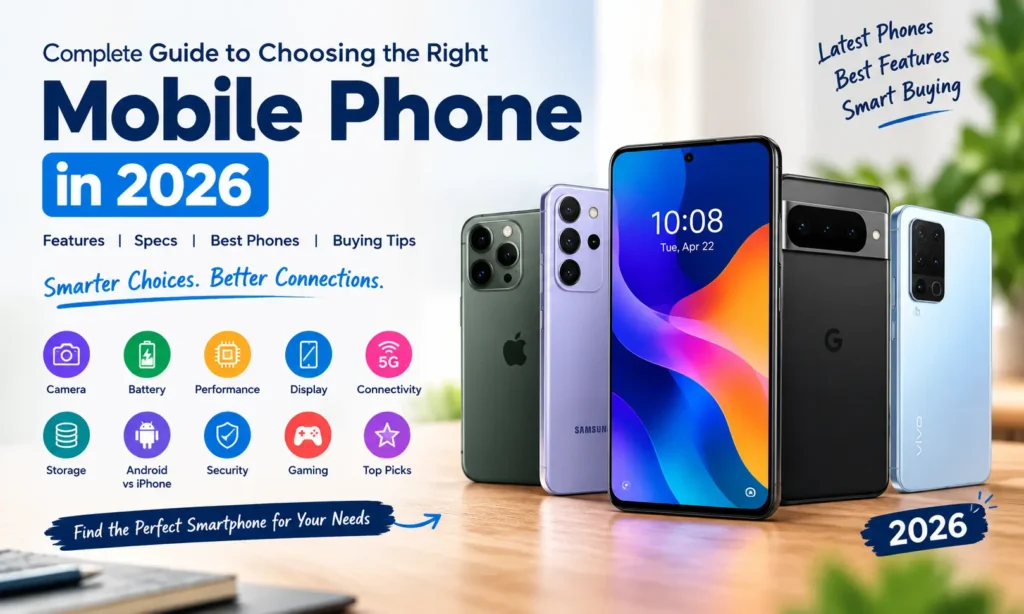
Mobile Phone: The Complete Guide to Choosing, Using, and Understanding the Right Smartphone in 2026
What to Check After Buying a Smartphone
After receiving a new smartphone, check:
- Display
- Touch response
- Cameras
- Speakers
- Microphone
- Charging
- Buttons
- SIM connectivity
- Wi-Fi
- Bluetooth
- GPS
- Fingerprint or face unlock
- Storage capacity
- Battery behavior
Also check the device’s model number and warranty information.
If something appears damaged or incorrect, contact the seller or manufacturer promptly.
Smartphone SEO Keywords and Search Topics
For website owners creating content around smartphones, relevant keyword topics can include:
- smartphone
- best smartphone
- best smartphone in India
- smartphone buying guide
- mobile phone
- best mobile phone
- latest smartphone
- new smartphone
- Android smartphone
- iPhone
- budget smartphone
- affordable smartphone
- premium smartphone
- flagship smartphone
- gaming smartphone
- camera smartphone
- 5G smartphone
- smartphone camera
- smartphone battery
- smartphone processor
- smartphone display
- smartphone RAM
- smartphone storage
- smartphone comparison
- smartphone reviews
- mobile phone comparison
- best phone under budget
- smartphone features
- smartphone specifications
- smartphone technology
- smartphone tips
- smartphone accessories
- smartphone security
- smartphone privacy
- smartphone maintenance
- smartphone troubleshooting
These topics can be developed into supporting articles that link back to a central smartphone pillar page.
Frequently Asked Questions About Smartphones
There is no single feature that matters most to everyone. For most users, performance, battery life, display quality, camera quality, storage, software support, and connectivity are important.
The ideal amount depends on usage. Casual users need less memory than gamers, professionals, and people who frequently multitask. Physical RAM is more important than advertised virtual RAM.
No. Camera quality depends on the sensor, lens, stabilization, image processing, autofocus, and other factors.
5G can be useful if your network and location support it. Check compatibility with your mobile carrier before buying.
AMOLED can provide excellent contrast and deep blacks, while LCD technology can also offer good viewing quality. The overall panel implementation matters.
A higher refresh rate can make scrolling and animations feel smoother. However, brightness, color quality, battery efficiency, and touch response also matter.
128GB can be a practical starting point for many users, while heavy photographers, videographers, and gamers may benefit from 256GB or more.
No. A mid-range smartphone can be sufficient for many everyday users.
Neither is universally better. The right choice depends on your preferred ecosystem, features, budget, customization preferences, and existing devices.
A foldable can be useful if you value a large screen, multitasking, or compact folded dimensions. Consider price, durability, battery, cameras, and repair costs.
How can I make my smartphone battery last longer?
Reduce unnecessary screen brightness, manage background applications, use battery-saving features when appropriate, keep software updated, and avoid excessive heat.
How long should I keep my smartphone?
Many users can keep a smartphone for several years if the hardware remains reliable and software support continues. Battery condition and update availability are major factors.
Final Smartphone Buying Advice
Choosing a smartphone does not need to be complicated.
Start with your needs.
Set your budget.
Then evaluate the features that directly affect your daily experience.
Do not buy a smartphone simply because it has the highest megapixel count, the largest RAM number, the fastest charging specification, or the newest marketing term.
Instead, look at the complete package:
Display + Processor + RAM + Storage + Camera + Battery + Charging + Software + Security + Connectivity + Durability + Long-Term Support.
For everyday users, balance is often more important than extreme specifications.
For gamers, performance and cooling may be the priority.
For photographers, camera hardware and image processing may matter most.
For students, battery life and value may be more important.
For professionals, reliability, security, software support, and productivity can take priority.
For content creators, camera, video, storage, audio, and processing performance become especially important.
The best smartphone is ultimately not the phone with the biggest specification sheet. It is the smartphone that fits your lifestyle, budget, priorities, and long-term expectations.
As smartphone technology continues to develop, devices will become more powerful, intelligent, connected, and capable. Understanding the fundamentals will help you make better buying decisions regardless of which brands or models are available in the market.
If you are planning to buy a new smartphone, use this guide as your starting point, create a shortlist based on your budget and priorities, compare real-world reviews, and choose the device that delivers the best overall experience for the way you actually use your phone.
Leave a Reply