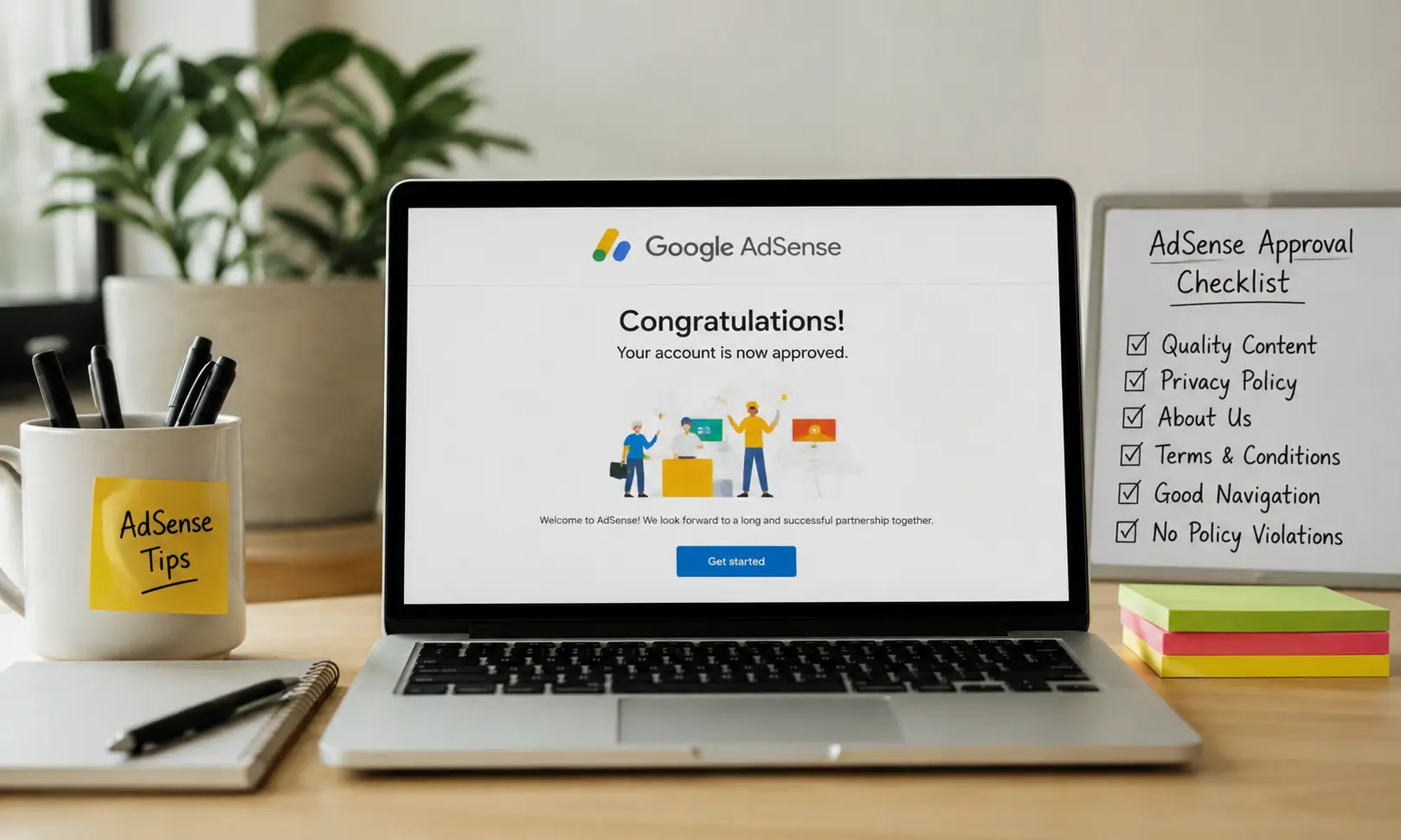
Table of Contents
- Introduction
- What is Google AdSense?
- Why AdSense Approval Matters for New Bloggers
- Basic Requirements for AdSense Approval
- Choose the Right Blogging Niche
- Buy a Custom Domain Name
- Create High-Quality Original Content
- Publish Enough Blog Posts Before Applying
- Make Your Blog Design Professional
- Essential Pages Every Blog Must Have
- Improve Website Speed and Mobile Friendliness
- Avoid Copyright Content
- Focus on SEO Before Applying
- Remove Low-Quality Content
- Check Grammar and Readability
- Get Organic Traffic to Your Blog
- Use Proper Navigation Structure
- Connect Important Tools to Your Blog
- Common Reasons Why AdSense Rejects Blogs
- Best Practices to Increase Approval Chances
- Future of Google AdSense in 2026
- Final Thoughts
- Conclusion
Introduction
Hello readers! I’m Shiva Verma, and welcome to this complete guide on Google AdSense Approval Tips for New Blogs.
If you have recently started a blog, one of your biggest goals is probably getting approved for Google AdSense and starting to earn money online. However, many beginner bloggers face rejection because they don’t fully understand what Google expects from a website before granting approval.
The truth is that getting AdSense approval is not as difficult as many people think. You don’t need thousands of visitors or hundreds of blog posts. What matters most is having a professional blog, valuable content, and following Google’s guidelines correctly.
In 2026, competition in blogging is growing rapidly, and Google is becoming stricter about content quality and user experience. That means new bloggers need to focus on creating original, helpful, and trustworthy content instead of trying shortcuts.
In this complete guide, you will learn the best Google AdSense approval tips for new blogs, common mistakes to avoid, essential requirements, and proven strategies that can improve your chances of approval quickly. Whether you use WordPress, Blogger, or another blogging platform, these practical tips will help you prepare your blog for success.
So, if you are serious about monetizing your website and earning passive income through blogging, keep reading — this guide could help you get your AdSense approval faster than you expect.
What is Google AdSense?
Google AdSense is one of the most popular advertising programs that allows bloggers and website owners to earn money by displaying ads on their websites. It is managed by Google and helps publishers monetize their blogs through different types of advertisements, including display ads, text ads, video ads, and interactive ads.
When visitors come to your blog and interact with these ads by viewing or clicking them, you can earn revenue. The amount you earn depends on several factors such as website traffic, niche, visitor location, and advertiser competition.
For beginner bloggers, Google AdSense is often the first step toward making money online because it is easy to use and does not require technical knowledge. Once your website gets approved, Google automatically starts showing relevant ads based on your content and audience interests.
Some major benefits of Google AdSense include:
1. Easy Monetization
You can start earning money without selling products or services.
2. Passive Income Opportunity
Ads generate income even when you are not actively working.
3. Trusted by Millions
Since it is operated by Google, AdSense is one of the safest and most reliable advertising platforms.
4. Automatic Ads
Google automatically places ads according to your website layout and visitor behavior.
5. Multiple Ad Formats
You can display banner ads, native ads, video ads, and responsive ads.
For new bloggers, AdSense can become a great source of passive income once traffic starts growing consistently.

How Bloggers Make Money in 2026: Complete Guide for Beginners
Why AdSense Approval Matters for New Bloggers
Getting approved by Google AdSense is a major milestone for beginner bloggers. It not only helps you monetize your content but also shows that your blog meets Google’s quality standards.
Many bloggers work hard for months creating content, and getting AdSense approval becomes proof that their website is trustworthy and professional.
Here are some reasons why AdSense approval matters:
1. Start Earning Passive Income
One of the biggest reasons bloggers apply for AdSense is to earn money online. Once your blog is approved, ads begin appearing on your website, allowing you to generate revenue whenever visitors interact with them.
Although earnings may start small, consistent blogging and traffic growth can increase your income over time.
2. Builds Website Credibility
AdSense approval gives your blog more professional value. Visitors often trust websites that display Google ads because they appear more legitimate and established.
It also increases confidence among advertisers and affiliate partners.
3. Motivation to Continue Blogging
For beginners, earning even a small amount of money can be highly motivating. Seeing your blog generate income encourages consistency and helps you stay committed to content creation.
Many successful bloggers started with very small AdSense earnings before growing into full-time income.
4. Opportunity to Reinvest in Your Blog
The revenue earned from AdSense can help improve your website.
You can invest money in:
- Premium themes
- Better hosting
- SEO tools
- Content writing
- Website speed optimization
This creates faster growth for your blogging business.
5. Long-Term Online Income Potential
Unlike one-time income methods, blogging with AdSense can create recurring passive income. A single article can keep bringing visitors and ad earnings for months or even years.
This makes blogging one of the best long-term online business models.
SEO Tips to Increase Blog Traffic Fast (Complete Guide for Beginners)
Basic Requirements for AdSense Approval
Before applying for Google AdSense, it is important to understand the minimum requirements Google expects from websites.
Many blogs get rejected because owners apply too early without preparing their websites properly.
Below are the basic requirements for AdSense approval:
1. High-Quality Original Content
Google wants blogs that provide value to readers.
Your articles should:
- Be original
- Solve reader problems
- Provide useful information
- Be free from plagiarism
Avoid copying content from other websites because Google can easily detect duplicate material.
2. Enough Content on Your Blog
Although Google does not officially mention an exact number, many successful bloggers recommend publishing at least 20–30 quality articles before applying.
Each article should ideally be:
800–2000+ words
More valuable content increases approval chances.
3. Professional Website Design
Your website should look clean and easy to navigate.
Google prefers websites with:
- Simple layout
- Fast loading speed
- Mobile-friendly design
- Readable fonts
- Organized categories
A messy website may create a poor user experience.
4. Essential Pages
Your blog should include important pages such as:
About Us Page
Explain who you are and what your website offers.
Contact Us Page
Allow visitors to contact you.
Privacy Policy
Very important for AdSense approval.
Disclaimer Page
Explains legal limitations.
Terms and Conditions
Adds professionalism and transparency.
Missing these pages often leads to rejection.
5. Custom Domain Name
Using a custom domain looks professional.
Instead of:
myblog.blogspot.com
Choose:
myblog.com
Custom domains improve trust and credibility.
6. No Policy Violations
Google does not approve blogs containing prohibited content such as:
- Adult material
- Gambling content
- Piracy websites
- Copyright violations
- Harmful content
Always follow Google’s publisher policies.

Best Affiliate Programs for Beginners in 2026: Complete Guide to Start Earning Online
Choose the Right Blogging Niche
Selecting the right niche is one of the smartest decisions for getting AdSense approval and earning higher income later.
A niche simply means the main topic of your blog.
Choosing a profitable and advertiser-friendly niche increases approval chances because advertisers actively spend money in those categories.
Here are some of the best blogging niches for AdSense approval:
1. Technology
Technology blogs are highly profitable.
You can write about:
- Smartphones
- Apps
- Software reviews
- AI tools
- Gadgets
Tech advertisers often pay higher rates.
2. Finance
Finance blogs have some of the highest ad earnings.
Topics include:
- Saving money
- Personal finance
- Investing
- Banking tips
- Insurance
Financial keywords usually have high CPC (Cost Per Click).
3. Health and Fitness
Health content attracts millions of readers.
You can cover:
- Weight loss tips
- Fitness workouts
- Healthy eating
- Yoga
- Wellness advice
Helpful content performs well.
4. Education
Educational blogs are great for beginners.
Popular ideas include:
- Study tips
- Online courses
- Career advice
- Exam preparation
- Language learning
Education content often gets steady traffic.
5. Digital Marketing
This niche continues growing in 2026.
Topics include:
- SEO
- Blogging
- Affiliate marketing
- Social media marketing
- Online business tips
It is highly monetizable.
Niches to Avoid for AdSense
Avoid risky or restricted niches like:
- Adult content
- Gambling
- Hacking tutorials
- Illegal downloads
- Copyright piracy
- Fake news websites
These niches can lead to instant rejection.
When choosing a niche, focus on topics you enjoy writing about and can consistently create valuable content for. Passion plus consistency usually leads to long-term blogging success.

How to Earn Money with Affiliate Marketing in 2026
Buy a Custom Domain Name
One of the most important steps for getting Google AdSense approval is purchasing a custom domain name. Although free subdomains can work for blogging, a custom domain makes your website look more professional and trustworthy.
For example:
Free Domain:
yourblog.blogspot.com
Custom Domain:
yourblog.com
A professional-looking website increases credibility not only with visitors but also with Google.
Why a Custom Domain Matters for AdSense Approval
Google prefers websites that appear serious and trustworthy. A custom domain signals that you are committed to your blog and willing to invest in it.
Benefits of Using a Custom Domain
1. Builds Professional Trust
Visitors trust websites with custom domains more than free subdomains.
A website ending in “.com”, “.in”, or “.net” looks more reliable.
2. Better Brand Identity
A custom domain helps build your online brand.
For example, instead of:
besttipsblog.blogspot.com
You can create:
BestTipsGuide.com
This is easier to remember and looks more professional.
3. Higher AdSense Approval Chances
Although Google does not officially require a custom domain, many successful bloggers report higher approval success with one.
A premium-looking website creates a stronger first impression.
4. Better SEO Benefits
Custom domains are easier to optimize for search engines and long-term rankings.
They also improve trust with search algorithms.
Tips for Choosing a Good Domain Name
Choose a domain that is:
- Short and easy to remember
- Easy to spell
- Related to your niche
- Brandable and unique
- Free from unnecessary symbols or numbers
Avoid complicated names because visitors may forget them.

Best Blogging Niches That Make Money in 2026
Create High-Quality Original Content
Content quality is one of the biggest factors for AdSense approval.
Google wants blogs that genuinely help users by providing useful, informative, and original information.
If your blog contains copied, low-quality, or AI-spam content, approval becomes very difficult.
Why High-Quality Content Matters
Google values websites that improve user experience.
Your content should:
- Answer user questions
- Solve problems
- Provide real value
- Be easy to understand
- Stay unique and original
The better your content quality, the higher your approval chances.
Tips to Create High-Quality Blog Content
1. Write Original Articles
Never copy content from other blogs.
Google can easily detect plagiarism and duplicate content.
Always write in your own words and add personal insights whenever possible.
2. Focus on Solving Problems
Think about what readers are searching for.
Instead of writing random information, create useful solutions.
For example:
Bad topic:
“Blogging Tips”
Better topic:
“10 Blogging Tips to Increase Website Traffic Fast”
Specific content performs better.
3. Write Detailed Articles
Short, thin content often gets rejected.
Try writing:
1000–2000+ words per article
Detailed content shows expertise and authority.
4. Use Proper Formatting
Make articles easy to read by adding:
- Headings
- Subheadings
- Bullet points
- Short paragraphs
Good formatting improves readability.
5. Add Images
Relevant images make content more engaging.
However, never copy copyrighted images from Google search.
Instead, use:
- Copyright-free images
- Self-designed graphics
- Screenshots (when necessary)
6. Update Old Content
Fresh and updated content performs better.
Review older posts regularly and improve them.
Avoid These Content Mistakes
Do not publish:
- Copied articles
- Keyword-stuffed content
- Thin blog posts
- Poor grammar articles
- Clickbait without value
Google values helpful content more than quantity.

How to Start a Profitable Blog in 2026: Complete Beginner’s Guide
Publish Enough Blog Posts Before Applying
A common beginner mistake is applying for AdSense too early.
Many bloggers publish only a few articles and expect instant approval.
Unfortunately, this often leads to rejection.
How Many Posts Should You Publish?
Google does not officially specify an exact number, but most successful bloggers recommend:
20–30 high-quality blog posts
before applying.
The key is quality over quantity.
Ten excellent articles are better than fifty poor ones.
Ideal Blog Post Length
Your articles should ideally be:
800–2000+ words
Long-form content often performs better because it provides detailed information.
Why Publishing Enough Content Matters
Google reviews your website to determine whether it provides enough value to users.
Having more useful content helps because:
1. Shows Website Activity
An active blog looks more trustworthy.
2. Demonstrates Expertise
More quality articles signal authority in your niche.
3. Improves User Experience
Visitors can explore multiple pages instead of leaving quickly.
4. Increases Search Engine Visibility
More content means more opportunities to rank on Google.
Recommended Blogging Strategy Before Applying
A good beginner strategy is:
- Publish 20–30 quality posts
- Cover multiple topics in your niche
- Focus on helpful information
- Optimize articles for SEO
- Maintain consistency
Once your website looks complete, you can confidently apply for AdSense.

Freelancing vs Full-Time Job: Which Pays More?
Make Your Blog Design Professional
Website design plays a major role in AdSense approval.
Even if your content is good, a poorly designed blog can reduce approval chances.
Google values websites that provide a smooth and professional user experience.
Why Professional Design Matters
Visitors should feel comfortable navigating your website.
A professional blog:
- Builds trust
- Improves readability
- Reduces bounce rate
- Increases engagement
- Creates a positive first impression
Simple websites usually perform better than cluttered ones.
Essential Features of a Professional Blog Design
1. Clean Layout
Avoid messy designs with too many colors or distractions.
Minimal designs look professional and user-friendly.
2. Mobile-Friendly Design
In 2026, most visitors browse from smartphones.
Your website must work perfectly on mobile devices.
Always test your blog on:
- Mobile phones
- Tablets
- Desktop screens
3. Fast Loading Speed
Slow websites frustrate users.
Improve speed by:
- Compressing images
- Using lightweight themes
- Removing unnecessary plugins
- Choosing fast hosting
Fast-loading websites often perform better.
4. Easy Navigation
Visitors should quickly find important pages.
Add:
- Categories
- Search bar
- Main menu
- Internal links
Simple navigation improves user experience.
5. Readable Fonts
Choose clear fonts with proper spacing.
Avoid decorative fonts that are difficult to read.
Mistakes to Avoid in Blog Design
Do not:
- Use too many ads before approval
- Add distracting popups
- Use dark unreadable colors
- Overload pages with widgets
- Create confusing menus
A clean, fast, and user-friendly website dramatically improves AdSense approval chances.

How to Start an Online Business with Low Budget in 2026
Essential Pages Every Blog Must Have
Before applying for Google AdSense, your blog must include some important pages that improve transparency and trust. These pages help Google understand that your website is genuine, professional, and focused on user experience.
Many beginner bloggers get rejected simply because they forget to create these essential pages.
Here are the most important pages every blog should have:
1. About Us Page
The About Us page tells visitors and Google who you are and what your website is about.
This page should include:
- Your name or brand identity
- What your blog covers
- Your blogging mission
- How your content helps readers
A strong About page builds trust and credibility.
For example, if your blog is about digital marketing, explain your expertise and what readers can expect from your content.
2. Contact Us Page
Google prefers websites that provide ways for visitors to contact the owner.
Your Contact page can include:
- Email address
- Contact form
- Social media profiles
This page makes your blog look legitimate and trustworthy.
3. Privacy Policy Page
A Privacy Policy page is extremely important for AdSense approval.
It explains:
- How visitor information is collected
- Cookie usage
- Third-party advertising information
- Data handling practices
Since AdSense uses cookies for personalized ads, Google expects websites to have a privacy policy.
Missing this page can significantly reduce approval chances.
4. Disclaimer Page
A disclaimer page explains your website’s limitations and responsibilities.
For example:
- Affiliate disclaimers
- Informational content disclaimers
- Earnings disclaimers
This page helps maintain transparency with visitors.
5. Terms and Conditions Page
A Terms and Conditions page explains how users should interact with your website.
It improves professionalism and shows Google that your site follows proper standards.

Best Online Jobs for Beginners in 2026 (Complete Guide to Start Earning)
Why These Pages Matter for AdSense
These pages:
- Increase trust
- Improve transparency
- Show professionalism
- Enhance user experience
- Help meet AdSense requirements
Before applying, double-check that all pages are working properly and easily accessible from your website menu or footer.
Improve Website Speed and Mobile Friendliness
Website speed and mobile optimization are major ranking and approval factors for Google AdSense.
A slow or poorly optimized website creates a bad experience for users, which may reduce your approval chances.
Google wants websites that are fast, responsive, and easy to use on all devices.
Why Website Speed Matters
Visitors dislike waiting for slow pages to load.
If your website takes too long:
- Visitors leave quickly
- Bounce rate increases
- User experience decreases
- Search rankings may suffer
Fast websites perform better in both SEO and AdSense approval.
Ways to Improve Website Speed
1. Compress Images
Large image files slow websites significantly.
Use compressed images to reduce loading time while maintaining quality.
2. Use a Lightweight Theme
Heavy themes often contain unnecessary features.
Choose simple, fast, and responsive themes for better performance.
3. Remove Unnecessary Plugins
Too many plugins can slow down your website.
Only keep essential tools.
4. Choose Good Hosting
Cheap and slow hosting can hurt website performance.
Reliable hosting improves speed and uptime.
5. Enable Caching
Caching helps pages load faster for returning visitors.
This improves overall performance.

Top Websites to Earn Money Online Daily in 2026
Why Mobile Friendliness Matters
In 2026, most users browse websites on smartphones.
Google uses mobile-first indexing, meaning it evaluates the mobile version of your site first.
Your website should:
- Adjust properly to smaller screens
- Have readable text
- Use responsive design
- Load quickly on mobile internet
How to Check Mobile Friendliness
Before applying for AdSense:
- Test your blog on different smartphones
- Check tablet compatibility
- Ensure buttons and menus work correctly
A responsive website improves both user satisfaction and approval chances.
Avoid Copyright Content
One of the fastest ways to get rejected by Google AdSense is publishing copyrighted content.
Google strongly prefers original websites and may reject blogs containing copied material.
What is Copyright Content?
Copyright content includes anything copied without permission, such as:
- Articles
- Images
- Videos
- Graphics
- Logos
- Audio files
Using copyrighted material without permission may violate Google policies.
Why Original Content Matters
Google rewards originality.
Unique content helps:
- Build authority
- Improve SEO
- Increase trust
- Improve approval chances
Original websites are viewed as more valuable to users.
Avoid Copying Articles
Never copy blog posts from:
- Competitor websites
- News websites
- Other blogs
Even rewriting poorly copied content can still hurt your website.
Always write in your own words and provide original value.
Avoid Copyrighted Images
Many beginners make the mistake of downloading images directly from search engines.
Instead, use:
- Copyright-free images
- Royalty-free photos
- Self-designed graphics
- Screenshots when appropriate
This protects your website from copyright issues.
Create Unique Content
The best strategy is creating original content based on:
- Your knowledge
- Personal experience
- Research
- Practical tips
Google values blogs that genuinely help readers.
Common Copyright Mistakes Beginners Make
Avoid:
- Copy-paste articles
- Downloading images from random websites
- Reposting videos without permission
- Using copyrighted logos
Always prioritize originality.
Focus on SEO Before Applying
Search Engine Optimization (SEO) plays an important role in preparing your blog for Google AdSense approval.
SEO helps search engines understand your website and improves visibility in search results.
Although traffic is not mandatory for AdSense approval, having SEO-optimized content increases trust and professionalism.
Why SEO Matters for AdSense
Good SEO helps:
- Improve website visibility
- Increase organic traffic
- Build authority
- Improve user experience
- Help Google crawl your website properly
A well-optimized blog appears more professional.
Basic SEO Tips Before Applying
1. Use Keywords Naturally
Add relevant keywords to your content naturally.
Avoid stuffing the same keyword repeatedly because it may look spammy.
Instead of:
“Best blogging tips blogging tips blogging tips”
Write naturally and focus on readability.
2. Write SEO-Friendly Titles
Your headlines should be clear and clickable.
For example:
Bad title:
Blog Tips
Better title:
10 Best Blogging Tips to Grow Traffic Fast
Specific titles attract more clicks.
3. Add Meta Descriptions
Meta descriptions help explain your article to search engines and users.
Keep them:
- Clear
- Short
- Relevant
- Keyword optimized
Good descriptions improve click-through rates.
4. Use Internal Linking
Link related blog posts together.
For example:
If you write about blogging SEO, you can link to an article about keyword research.
Internal linking helps:
- Improve navigation
- Increase time on site
- Help search engines crawl pages
5. Optimize Images
Add ALT text to images so Google understands image content.
Optimized images also improve accessibility.
6. Use Proper Headings
Structure content with:
- H1 for titles
- H2 for sections
- H3 for subsections
This improves readability and SEO.
SEO Mistakes to Avoid
Do not:
- Stuff keywords unnaturally
- Use duplicate content
- Ignore mobile optimization
- Publish thin content
- Forget internal links
Strong SEO makes your website look more complete and ready for AdSense approval.
Remove Low-Quality Content
Before applying for Google AdSense, it is important to review your entire website and remove any low-quality content. Even if you have published many blog posts, poor-quality articles can negatively affect your approval chances.
Google prefers websites that provide valuable, useful, and trustworthy information to readers. Thin or poorly written content can make your website appear unprofessional.
What is Low-Quality Content?
Low-quality content usually includes:
- Very short articles with little value
- Duplicate or copied content
- Poorly researched information
- Keyword-stuffed articles
- AI-generated spam content without editing
- Articles full of grammar mistakes
If your blog contains these types of content, Google may reject your AdSense application.
Why Removing Low-Quality Content Matters
High-quality blogs create better user experiences.
Removing weak content helps:
- Improve website trust
- Increase professionalism
- Improve SEO performance
- Enhance readability
- Increase AdSense approval chances
Remember, quality is more important than quantity.
How to Identify Weak Blog Posts
Ask yourself:
1. Does the Article Solve a Problem?
Your content should answer questions or provide practical value.
2. Is the Content Original?
Avoid duplicate or copied information.
3. Is the Article Too Short?
Very short articles may not provide enough value.
Aim for at least:
800–2000+ words
for important topics.
4. Is the Information Helpful?
If an article feels incomplete or confusing, improve it.
What to Do Instead of Deleting
Instead of removing content completely, try:
- Updating information
- Adding more details
- Improving formatting
- Fixing grammar
- Adding examples and images
Refreshing old content often works better than deleting it.
Quality Over Quantity
Having 20 excellent blog posts is far better than publishing 100 poor articles.
Google values usefulness, originality, and reader satisfaction.
Check Grammar and Readability
Grammar and readability play a major role in how visitors and Google view your website.
Even if your content is useful, poor writing can create a negative impression.
A blog full of spelling mistakes, confusing sentences, or poor formatting may reduce your credibility and AdSense approval chances.
Why Grammar Matters
Good grammar makes content:
- Easier to understand
- More professional
- More trustworthy
- More enjoyable to read
Visitors stay longer on websites that are easy to read.
Improve Readability for Better User Experience
Readable content keeps readers engaged.
Here are some ways to improve readability:
1. Use Short Paragraphs
Large blocks of text can feel overwhelming.
Keep paragraphs short and simple.
This improves mobile reading.
2. Write Simple Sentences
Avoid overly complicated words.
Write in a way that beginners can understand easily.
Clear writing performs better.
3. Use Headings and Subheadings
Break articles into sections using:
- H2 headings
- H3 subheadings
- Bullet points
This improves structure and readability.
4. Fix Spelling Mistakes
Always proofread before publishing.
Even small mistakes can reduce professionalism.
5. Use Proper Formatting
Formatting makes articles visually appealing.
Include:
- Bullet points
- Bold text
- Short paragraphs
- Spacing between sections
Readable articles create better engagement.
Common Grammar Mistakes to Avoid
Avoid:
- Broken sentences
- Incorrect punctuation
- Repeated words
- Spelling errors
- Poor sentence structure
Well-written content creates a stronger impression on both readers and Google.
Get Organic Traffic to Your Blog
Although traffic is not officially required for Google AdSense approval, getting some organic visitors can improve trust and website quality.
Organic traffic means visitors coming from search engines like Google rather than paid advertisements.
A blog receiving natural traffic often looks more authentic.
Why Organic Traffic Helps
Organic traffic signals that:
- People find your content useful
- Search engines trust your blog
- Your content is discoverable
- Users are engaging with your website
Even a small amount of traffic can help.
Ways to Get Organic Traffic
1. Focus on SEO
Search Engine Optimization is one of the best ways to attract free traffic.
Optimize:
- Keywords
- Meta descriptions
- Headings
- Internal links
- Images
SEO increases visibility.
2. Publish Helpful Content Consistently
Consistency matters.
Publishing valuable articles regularly helps Google trust your website.
Aim for:
2–5 quality articles per week
if possible.
3. Target Long-Tail Keywords
Long-tail keywords are easier to rank for.
Example:
Instead of:
“Blogging”
Try:
“Best Blogging Tips for Beginners in 2026”
Specific keywords attract targeted visitors.
4. Share Content on Social Media
Promote articles on:
- Twitter/X
Social sharing increases visibility.
5. Build Internal Links
Connecting related blog posts improves:
- Navigation
- SEO
- Visitor engagement
This helps users spend more time on your website.
Don’t Buy Fake Traffic
Avoid:
- Bot traffic
- Paid fake visitors
- Traffic exchange sites
Google can detect unnatural behavior, which may harm approval chances.
Organic growth is always safer.
Use Proper Navigation Structure
Website navigation is extremely important for user experience and AdSense approval.
Visitors should easily find information without confusion.
If your website feels messy or difficult to browse, Google may see it as low quality.
Why Navigation Matters
Good navigation helps visitors:
- Find content quickly
- Explore more pages
- Stay longer on the website
- Improve overall experience
Google values websites with organized structures.
Important Navigation Elements
1. Main Menu
Your menu should include important sections such as:
- Home
- Blog
- Categories
- About Us
- Contact Us
A clear menu improves usability.
2. Categories
Organize articles into categories.
For example:
A blogging website may include:
- SEO Tips
- Affiliate Marketing
- Blogging Guides
- AdSense Tips
This makes browsing easier.
3. Search Bar
Adding a search feature helps users quickly find content.
This improves convenience.
4. Internal Linking
Link related articles together.
Example:
If you write about SEO, link to articles about keyword research or traffic generation.
This improves navigation and engagement.
5. Footer Navigation
Your footer should include important pages like:
- Privacy Policy
- Disclaimer
- Contact Us
- Terms and Conditions
This makes your site look complete.
Navigation Mistakes to Avoid
Do not:
- Create confusing menus
- Add too many categories
- Hide important pages
- Use broken links
- Overcrowd navigation bars
A simple, organized website structure improves both user experience and AdSense approval chances.
Connect Important Tools to Your Blog
Before applying for Google AdSense, it is important to connect a few essential tools to your blog. These tools help you monitor website performance, improve SEO, track visitors, and make your website look more professional.
Although these tools are not mandatory for AdSense approval, using them improves your website quality and increases your chances of success.
Here are some important tools every blogger should connect:
1. Google Search Console
Google Search Console is one of the most important free tools for bloggers.
It helps you:
- Submit your website to Google
- Monitor indexing status
- Find SEO issues
- Track keyword rankings
- Check website performance in search results
Why It Matters for AdSense
A blog that is indexed by Google looks more active and trustworthy.
If Google cannot crawl your pages properly, approval may become difficult.
How to Set It Up
- Verify your website ownership
- Submit your sitemap
- Request indexing for blog posts
This helps Google discover your content faster.
2. Google Analytics
Google Analytics helps you understand visitor behavior.
You can monitor:
- Traffic sources
- Visitor locations
- Popular pages
- Bounce rate
- User engagement
Why Analytics Helps
Even small traffic data helps you understand how users interact with your blog.
You can improve weak areas before applying for AdSense.
3. XML Sitemap
A sitemap helps search engines understand your website structure.
It lists:
- Blog posts
- Pages
- Categories
- Website URLs
Submitting a sitemap improves crawling efficiency.
Why It Matters
A properly indexed blog looks more organized and professional.
Search engines can find content faster.
4. SEO Plugin
If you use WordPress, installing an SEO plugin helps optimize content.
Benefits include:
- Better SEO titles
- Meta descriptions
- XML sitemaps
- Keyword optimization
- Readability improvements
Good SEO makes your blog stronger before AdSense review.
5. Website Speed Tools
Website performance matters for user experience.
Use speed-testing tools to identify:
- Slow-loading pages
- Large images
- Performance issues
Improving speed increases professionalism.
6. Security Certificate (SSL)
Your website should use HTTPS instead of HTTP.
A secure website:
- Builds visitor trust
- Protects user information
- Improves credibility
Google prefers secure websites.
Why Connecting Tools Matters
These tools help make your website:
- Faster
- More professional
- Better optimized
- Easier to crawl
- More user-friendly
A properly managed website creates a stronger impression during AdSense review.
Common Reasons Why AdSense Rejects Blogs
Many bloggers get frustrated after receiving AdSense rejection emails. However, most rejections happen because websites are not fully prepared.
Understanding common mistakes can help you avoid rejection and improve your approval chances.
Here are the biggest reasons AdSense applications fail:
1. Insufficient Content
One of the most common reasons is having too little content.
Blogs with only a few articles often get rejected.
Try publishing:
20–30 quality posts
before applying.
Google wants websites with enough useful information.
2. Thin or Low-Quality Content
Short and low-value articles reduce approval chances.
Examples include:
- Poorly researched content
- Thin articles
- AI-generated spam
- Repetitive information
Focus on detailed, helpful posts.
3. Copied or Copyright Content
Google strictly rejects websites using copied material.
This includes:
- Copied blog posts
- Copyrighted images
- Duplicate content
Always publish original work.
4. Missing Essential Pages
Many beginners forget important pages.
Missing these pages may cause rejection:
- About Us
- Contact Us
- Privacy Policy
- Disclaimer
- Terms and Conditions
These pages improve trust and transparency.
5. Poor Website Design
A messy website creates a bad first impression.
Common problems include:
- Confusing navigation
- Too many popups
- Unreadable fonts
- Slow loading speed
A clean design improves approval chances.
6. No Mobile Optimization
Google uses mobile-first indexing.
If your website does not work well on smartphones, approval becomes harder.
Always test mobile responsiveness.
7. Policy Violations
Google does not approve websites containing restricted content such as:
- Adult content
- Gambling
- Illegal downloads
- Piracy content
- Harmful content
Always follow AdSense policies carefully.
8. Unclear Website Purpose
If your blog lacks focus, Google may reject it.
For example:
Random articles about unrelated topics can look unprofessional.
Choose a niche and maintain consistency.
9. Broken Pages or Technical Errors
Broken links and error pages reduce trust.
Check your website for:
- 404 errors
- Missing pages
- Broken navigation
Fix technical issues before applying.
Best Practices to Increase Approval Chances
If you want faster AdSense approval, following proven best practices can greatly improve your chances.
Here are some expert tips beginners should follow:
1. Publish High-Quality Content
Quality matters more than quantity.
Write articles that:
- Solve problems
- Provide real value
- Answer reader questions
- Stay original
Aim for:
1000–2000+ words
on important topics.
2. Publish Enough Blog Posts
Avoid applying too early.
A safer strategy is having:
20–30 valuable blog posts
before submission.
Consistency builds trust.
3. Use a Professional Theme
Choose a simple and responsive design.
Your website should be:
- Clean
- Fast
- Easy to navigate
- Mobile-friendly
Simple designs often perform best.
4. Add Essential Pages
Never forget pages like:
- About Us
- Contact Us
- Privacy Policy
- Disclaimer
- Terms and Conditions
These pages improve legitimacy.
5. Improve Website Speed
Fast websites create better user experiences.
Optimize:
- Images
- Hosting
- Themes
- Plugins
A quick website looks more professional.
6. Focus on SEO
Basic SEO helps Google understand your website.
Optimize:
- Titles
- Meta descriptions
- Keywords
- Headings
- Internal links
Good SEO strengthens your website.
7. Avoid Copyright Problems
Only use:
- Original content
- Copyright-free images
- Properly licensed media
Originality matters.
8. Maintain Consistency
An inactive blog may appear abandoned.
Try posting regularly.
For example:
2–5 articles per week
shows website activity.
9. Wait Before Applying
Patience is important.
Instead of rushing, spend time improving:
- Content quality
- User experience
- Website design
- SEO optimization
Applying too early often leads to rejection.
10. Review Everything Before Submission
Before applying, double-check:
✅ Essential pages exist
✅ Content quality is strong
✅ Website is mobile-friendly
✅ Navigation works properly
✅ No broken links
✅ Original content is published
Preparation significantly improves approval chances.
Following these best practices can make your website look professional, trustworthy, and ready for Google AdSense approval in 2026.
Future of Google AdSense in 2026
The future of Google AdSense in 2026 looks promising, but it is also becoming more competitive. As technology continues to evolve, Google is improving how ads are displayed, how publishers are rewarded, and how websites are evaluated for monetization.
For new bloggers, this means there are still plenty of opportunities to earn money through AdSense — but success will depend more on content quality, user experience, and smart SEO practices.
Here are some important trends shaping the future of Google AdSense in 2026:
1. AI-Powered Ad Optimization
Artificial Intelligence (AI) is transforming digital advertising.
Google is using smarter systems to:
- Show more relevant ads
- Improve ad targeting
- Increase user engagement
- Optimize publisher earnings
This means bloggers may earn better revenue when their content targets the right audience.
AI-driven ad placements are expected to become more personalized and effective.
2. Higher Content Quality Standards
Google is becoming stricter about website quality.
Blogs with:
- Thin content
- Spammy articles
- Keyword stuffing
- Low-value information
may struggle to get approved or maintain strong earnings.
In 2026, helpful, original, and trustworthy content will matter more than ever.
Bloggers who focus on genuine value will continue to grow.
3. Mobile-First Monetization
Most internet users now browse websites on smartphones.
Because of this, Google prioritizes:
- Mobile-friendly layouts
- Fast loading pages
- Responsive ad formats
Blogs optimized for mobile users are likely to perform better.
If your website is slow or difficult to navigate on phones, earnings may suffer.
4. Better User Experience Will Matter More
Google increasingly rewards websites that provide smooth user experiences.
Important factors include:
- Fast website speed
- Easy navigation
- Clean design
- Low bounce rate
- Helpful content
Websites that prioritize visitors instead of excessive advertising are expected to succeed long-term.
5. Increased Focus on Privacy
Privacy laws and cookie restrictions are changing online advertising.
Google is working toward privacy-friendly advertising systems.
This means bloggers may need to:
- Improve first-party audience building
- Focus on content quality
- Grow email subscribers
- Increase organic traffic
Strong branding will become more important.
6. SEO and AdSense Will Work Together More Closely
Search Engine Optimization (SEO) will continue playing a major role in AdSense success.
Blogs that rank higher on search engines naturally receive more traffic, leading to higher ad impressions and revenue.
Bloggers who invest in SEO can build sustainable long-term income.
What This Means for New Bloggers
The biggest opportunity in 2026 is simple:
Quality wins.
If you consistently publish valuable content, optimize your blog for SEO, improve user experience, and stay patient, AdSense can still become an excellent source of passive income.
The future remains bright for bloggers willing to focus on long-term growth instead of shortcuts.
Final Thoughts
Getting approved for Google AdSense may feel challenging for beginners, but it becomes much easier when you understand what Google truly wants from a website.
Instead of rushing to apply immediately, focus on building a blog that genuinely helps people. Publish useful content, improve your website design, optimize for SEO, and create a smooth experience for visitors.
Remember, Google does not approve blogs simply because they exist — it approves websites that provide real value.
Even if your first application gets rejected, do not lose motivation. Many successful bloggers faced rejection before eventually getting approved.
Success comes from:
- Patience
- Consistency
- High-quality content
- Proper SEO
- Professional website management
Keep improving your website step by step, and your approval chances will naturally increase over time.
Blogging is a long-term journey, and AdSense approval is only the beginning of building a successful online income stream.
Conclusion
Google AdSense approval is achievable for new bloggers if they follow the right strategy and avoid common mistakes.
The key to success is preparing your blog properly before applying. Focus on creating original content, improving website speed, using professional design, and ensuring all essential pages are available.
To increase approval chances, remember to:
- Publish high-quality blog posts
- Use a custom domain name
- Optimize your blog for SEO
- Avoid copyright content
- Improve mobile friendliness
- Maintain proper website navigation
- Follow Google policies carefully
Avoid rushing the process. A well-prepared blog has a much better chance of approval than one submitted too early.
In 2026 and beyond, bloggers who focus on quality, consistency, and user experience will continue to succeed with Google AdSense.
Start building your blog the right way today, stay patient, and your journey toward earning passive income through blogging can become a reality.
Frequently Asked Questions (FAQs) About Google AdSense Approval for New Blogs
One of the most common questions new bloggers ask is how many blog posts are needed before applying for Google AdSense. The truth is that Google has never officially announced an exact number of posts required for approval. However, based on the experience of many successful bloggers, having at least 20–30 high-quality blog posts significantly increases your approval chances.
Instead of focusing only on quantity, you should focus more on content quality. A blog with 10 detailed and valuable articles can sometimes perform better than a website with 50 poor-quality posts.
Your content should be:
Original and plagiarism-free
Helpful and informative
Well-structured with headings
Easy to read
SEO optimized
Try to publish articles between 800–2000+ words, especially for important topics. Google values websites that genuinely help users, so your goal should be creating useful content rather than simply increasing article count.
Yes, it is possible to get Google AdSense approval without significant traffic. Google mainly reviews the quality and structure of your website, not just visitor numbers.
Many beginners believe they need thousands of visitors before applying, but this is not true.
Google usually checks:
Content quality
Website design
User experience
Essential pages
Mobile responsiveness
Policy compliance
Even if your blog receives little or no traffic, you can still get approved if your website looks professional and offers useful content.
However, having some organic traffic from search engines can improve trust signals. Small traffic indicates that your content is being discovered and indexed by Google.
To increase traffic naturally:
Focus on SEO
Publish helpful content consistently
Target long-tail keywords
Share articles on social media
While traffic is not mandatory, building a healthy foundation before applying is always a smart idea.
Google AdSense may reject blogs for several reasons, and understanding these mistakes can help improve your chances during the next application.
The most common rejection reasons include:
Low-Quality Content
Thin, short, or poorly written articles often lead to rejection.
Insufficient Content
A blog with only a few articles may not appear valuable enough.
Missing Essential Pages
If your website lacks pages like:
About Us
Contact Us
Privacy Policy
Disclaimer
Google may view it as incomplete.
Copyright Content
Copied text, images, or videos can instantly hurt approval chances.
Poor Website Design
Slow loading speed, confusing menus, and messy layouts create a poor user experience.
Policy Violations
Blogs about restricted topics such as gambling, adult content, or piracy often get rejected.
The best solution is to improve weak areas, publish more quality content, and apply again after making corrections.
A custom domain is not officially required for AdSense approval, but it is highly recommended.
Technically, free domains like:
yourblog.blogspot.com
can still get approved.
However, a custom domain such as:
yourblog.com
offers several advantages.
Benefits of a custom domain include:
More professional appearance
Better trust and credibility
Stronger branding
Improved SEO opportunities
Better long-term growth
Google generally trusts websites that appear professional and serious.
If you are planning to build a long-term blogging business, investing in a custom domain is one of the smartest decisions you can make.
Fortunately, domain names are affordable and can significantly improve your website’s overall image.
The time required for Google AdSense approval varies depending on your website quality and Google’s review process.
In many cases, approval may take:
A few days to 2 weeks
However, some applications may take longer.
Google reviews factors such as:
Website content quality
Policy compliance
User experience
Mobile friendliness
Website structure
If your website is well-prepared, approval can happen quickly.
To improve approval speed:
Publish enough quality articles
Add all essential pages
Improve website speed
Fix broken links
Optimize for SEO
Ensure mobile responsiveness
Avoid applying repeatedly without improving your website because this may delay the process.
Patience is important. Instead of worrying about timing, focus on building a high-quality blog that deserves approval naturally.
Leave a Reply